KBR TODAY
Today's Key Content

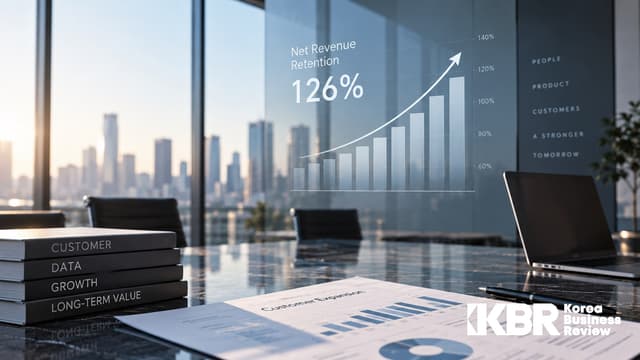
Essential CEO Competencies for Successful AX Implementation — 88% Adoption Rate, Only 6% Achieving Results: Five Kinds of Leadership Driving the Divide
Adoption is a constant, results are a variable — While 88% of companies use AI according to a McKinsey survey, only about 6% are high-performing companies contributing 5% or more to company-wide profits.<br>Governance Ownership — Direct supervision of AI governance by the CEO emerged as the factor most strongly correlated with generative AI's contribution to profits and losses.<br>Redesign Sensibility — 55% of high-performing companies fundamentally redesigned workflows upon AI implementation. The rest hovered around 20%.<br>The Power of Environmental Design — According to Korea Chamber of Commerce and Industry analysis, the 13.8 percentage point gap in AI utilization between large and small-to-medium enterprises narrowed to 4 percentage points when controlling for organizational environment.<br>Skeptical Judgment — In a Korn Ferry survey, the number one top-priority competency for hiring was not AI technology, but critical thinking (73%) to evaluate and reject AI outputs.
김민경 책임기자 · 08/12/2026
“We're Hiring, But Fewer Than 10 People”… The 2026 Second-Half Recruitment Market Trend Through Hiring Data
08/12/2026
Semiconductor Special Act Enforcement Decree Takes Effect August 11: Priority Designation for Non-Capital Region Clusters and Special Account to Run Until 2036
08/12/2026
Where Do Advanced Global Companies Stand on AI Transformation? The Widening Gap Between 'Deep Transformation' (34%) and 'Surface-Level Adoption' (37%)
08/12/2026
Employment Contracts, Annual Salary Contracts, and the Labor Standards Act: Which Prevails?
08/12/2026
KBR STRATEGIC ANALYSIS
KBR Analysis

Cash Disappearing from Wallets... Only 1 in 6 Payments Uses Cash: How Far Has the 'Cashless Society' Come?
According to a Bank of Korea survey, the proportion of cash payments among domestic adults stood at 15.9% by transaction count, plunging by about 61.5% over 11 years from 41.3% in 2013, leaving only 38.5% of that previous level. The year 2023 marked the first time (at 50.5%) that methods where physical cards are not presented surpassed physical cards in domestic merchant card transactions, with the gap widening further to 52.4% in 2024 and 54.3% in 2025. Simple payment services grew to an average of KRW 1.1053 trillion per day. According to parliamentary data, commercial bank ATMs decreased by approximately 7,700 units from the end of 2020 through mid-2025, with the reduction rate generally higher in regional areas than in Seoul. However, 88% of people still had experience using cash in face-to-face transactions within the past month, making the guarantee of cash accessibility a new policy challenge. On July 15, 2026, the Financial Services Commission officially designated Project Hangang Phase 2 as an innovative financial service, expanding participating banks to 9 and the deposit token holding limit per wallet to KRW 10 million, while the exact start date for live transactions has not yet been officially finalized.
김민경 책임기자 · 08/09/2026

South Korean Game Market Reaches KRW 23.85 Trillion… Entering a 5-Year Phase of 'Moderate Expansion'
South Korea's domestic game industry sales in 2024 increased by 3.9% year-on-year to reach a record-high KRW 23.8515 trillion, but the growth rate dropped to 3.9% from 21.3% in 2020, signaling that the market has entered a phase of 'moderate expansion.' By sector, mobile games maintained more than half the share at KRW 14.071 trillion (59.0%), while console games posted the highest growth rate at 4.8%, indicating a shift in momentum toward console and PC blockbusters. Export values rebounded slightly to USD 8.50346 billion, maintaining the country's 4th place global market share at 7.2% behind China, the US, and Japan, while export diversification progressed with increased shares in North America and China. In 2025 corporate earnings, Nexon (KRW 4.5072 trillion) and Krafton (KRW 3.3266 trillion) achieved record-high performances, whereas companies like Kakao Games and Webzen struggled, sharpening the polarization based on the ownership of global IPs. In summary, the South Korean game market has already achieved growth in scale and now stands at a turning point moving toward a phase of 'qualitative competition' centered on IP and global competitiveness.
최수진 기자 · 08/02/2026

Where is Population Growth Highest? South Korea's 2026 Population Map Led by Gwangmyeong, Hwaseong, and Pyeongtaek
Driven by large-scale redevelopment and reconstruction apartment moves, Gwangmyeong, Gyeonggi Province, saw its population rebound by approximately 8.5%, rising from 277,281 in October 2024 to 300,826 in February 2026, recovering the 300,000 mark after about five years. Hwaseong and Pyeongtaek in southern Gyeonggi Province posted population growth rates of 12.5% and 9.6% respectively over the past five years, backed by massive investments from semiconductor giants like Samsung Electronics and SK hynix, with a notable influx of the 3040 generation. Several other cities and counties in Gyeonggi Province, including Uiwang, showed population growth driven by the creation of new residential districts. Conversely, the administrative capital Sejong experienced three consecutive months of population decline from December 2025 to February 2026, turning into a net outflow due to factors such as the relocation of the Ministry of Oceans and Fisheries. Separately from domestic migration, the number of foreign nationals residing in South Korea surpassed 2.8 million for the first time in October 2025, setting a new all-time high.
이태민 책임기자 · 07/18/2026

Is Soju Sales Still Tied to the Economy? The 'Inverted Correlation' Revealed by Data
Soju and alcohol are no longer 'recession buffers,' shifting instead into items where consumption declines even amid economic stagnation. Over the past decade, total alcohol and soju shipments have structurally decreased regardless of economic cycles, showing a post-COVID brief rebound followed by a continued downturn. During the sluggish domestic demand period from 2023 to 2026, household alcohol expenditure, soju retail sales, and major corporate soju revenue simultaneously declined, demonstrating that the 'soju in a recession' formula no longer works. With shrinking drinking populations and frequencies, the spread of preference-driven alcohol consumption, and the subordination of soju demand to dining-out economies, soju is becoming a product tied to dining and cultural trends rather than an inferior or recession-proof good. As the domestic market structurally stagnates, the industry is focusing on low-proof and premium products and export expansion, reading soju sales no longer as an economic thermometer, but as a cultural indicator reflecting Korean drinking culture and the spread of K-content.
이태민 책임기자 · 07/10/2026

June 2026 CEO and Board Appointment Analysis: A Closed H1 Appointment Cycle and What Boards Chose
June 2026 marked the actual implementation of global management successions announced at the beginning of the year, with AIG's Eric Andersen and Conagra's John Brase both taking office as CEOs on June 1. Wendy's replaced its CFO on June 23, wrapping up a leadership reorganization under its third CEO regime in three years. According to Boardroom Alpha, the first week of June alone saw 17 CEO changes and 23 CFO changes among U.S. listed companies. According to The Wall Street Journal, roughly one-ninth of the top 1,500 U.S. listed companies changed their CEOs last year, marking the highest turnover rate since 2010, with AI transformation and shareholder pressure cited as key drivers. Domestically, according to UnicornSearch, the expiration cycle for 1,269 inside directors and 596 chief executive-level officers across the top 30 conglomerates officially closed at the end of June, with year-end appointments for Samsung, LG, and Lotte concluded within this cycle. Ahead of the September 10, 2026, mandatory implementation of cumulative voting and the expansion of separate election for audit committee members, the center of gravity for domestic boards has shifted from 'who to elect' to 'what procedures to elect them through.'
이태민 책임기자 · 07/04/2026

Korean Factories Are Now Heading to the U.S.: Direct Investment Hits $10.1 Billion, Highest in 4 Years
According to the Ministry of Economy and Finance, South Korea's overseas direct investment in the first quarter of 2026 rose by 36.2% to $21.74 billion, with U.S.-bound investment surging 107.6% to $10.15 billion—a four-year high confirming the United States as the top destination for Korean factories. Country-specific statistics for the second quarter of 2025 also showed the U.S. ($5.23 billion) overwhelmingly leading, more than seven times that of Vietnam ($700 million). The U.S. is chosen due to three main factors: a 15% tariff structure finalized through Korea-U.S. tariff negotiations, a $350 billion strategic investment package comprising $200 billion in cash investments and $150 billion in shipbuilding cooperation, and localization strategies in the world's largest market. While advanced industry investments by major conglomerates—such as $26 billion by Hyundai Motor Group, $37 billion by Samsung Electronics, and $10.8 billion by SK On—are concentrated in the U.S., a dual structure persists where Asia, including Vietnam, maintains the base for small and medium-sized enterprise production sites. However, underlying challenges such as domestic manufacturing hollowing and foreign exchange burdens make concurrent domestic investments of 800 trillion won and foreign exchange market management key variables going forward.
이지영 기자 · 07/02/2026
PRACTICAL MANAGEMENT INSIGHT
INSIGHT 4.0
How to Design Competency Modeling Tailored to Your Organization
Competency modeling is the process of identifying required competencies based on specific behaviors observed in high performers within an organization. It is theoretically grounded in the Spencer family's iceberg model, which encompasses self-concept and motives alongside knowledge and skills. Competencies must be approached through three distinct tiers—company-wide core competencies, leadership competencies by rank, and job-specific competencies—as combining them into a single standard easily leads to a model disconnected from the field. The execution process spans six stages: setting objectives and scope, selecting target groups, data collection via behavioral event interviews or expert panels, developing a provisional model, validation, and finalization into a competency dictionary. This work should be carried out jointly by business unit leaders and management rather than the HR team alone. Rather than directly importing external frameworks, a hybrid approach that starts from and refines the actual behaviors of an organization's high performers is realistic, utilizing public standards such as the National Competency Standards (NCS) as reference frameworks. Once completed, the competency model serves as a common standard across all areas of human resource management—ranging from hiring interviews, competency evaluations, training, and succession planning to placement and compensation linkage—and risks remaining merely a document without regular reviews.
김민경 책임기자 · 08/10/2026

Can a Company Without an Org Chart or Reporting Structure Really Function?
From the mid-2020s, companies like Amazon, Google, and Citigroup began reducing middle management layers, a trend that accelerated in 2026 with layoffs at Meta (8,000), Cisco (4,000), and Block (4,000). In March 2026, Block CEO Jack Dorsey published an essay suggesting that middle management might not be permanently necessary, citing Zappos' holacracy and Valve's flat structure as direct reference points. However, Zappos and Buffer—both of which actually eliminated their org charts—eventually reintroduced managerial roles and 'natural hierarchies,' while even Valve has faced recurring criticism internally for 'hidden hierarchies.' Haier, often cited as a success story, did not eliminate hierarchy; rather, it redesigned management functions through market mechanisms such as profit-and-loss accountability and contracts. Gallup's latest 2026 data (showing a sharp decline in global engagement to 20% and manager engagement to 22%) demonstrates that the core of the problem is not the existence of managers, but their quality. It also shows that even the most radical redesign attempts in the AI era are ultimately reverting to the lessons left by past experiments: that the functions of coordination, evaluation, and development cannot be eliminated.
박소유 책임기자 · 08/10/2026

Successful AX: What and How to Succeed — 5 Conditions That Determine Performance
Despite rising adoption rates, only a minority of companies are achieving tangible results from AI Transformation (AX). While South Korea's domestic AI adoption rate stands at 37.1% (65.1% for large enterprises, 35.6% for small and medium-sized enterprises), and about 90% of global companies invest in AI, only around 40% actually achieve financial performance. The core of successful AX is not introducing tools, but redesigning workflows themselves, backed by data preparation, governance frameworks, and employee readiness. Pre-defining measurable performance indicators allows pilots to scale enterprise-wide, and for SMEs, it is more realistic to start small with their 'most painful task' rather than mimicking large corporations. Ultimately, AX is not a technology project but an organizational transformation project, and the winners are determined by organizations that systematically build the fundamentals: workflows, data, governance, people, and measurement.
강지혜 선임기자 · 07/18/2026

Characteristics of Companies Where Employees Stay Long-Term — Respect, Not Salary, Drives Long-Term Employment
Statistics Korea data shows that the average duration of a youth's first job is only 1 year and 6.4 months, and Incruit data indicates that the primary cause of early resignation is not salary but 'job mismatch' (58.9%), demonstrating that the key to long-term employment lies in organizational culture. According to Gallup's 2026 report, global employee engagement stands at only 20%, and while a 'great stay' phenomenon driven by economic uncertainty is emerging in South Korea, this resembles defensive retention rather than voluntary engagement. Companies where employees stay long-term share five common traits: phased onboarding, systematic handover processes, non-aggressive managerial feedback styles, clear roles and responsibilities, respect for rest and leaving work on time, and a peer culture free of hazing. Notably, 70% of the variance in team engagement stems from managers, and as Google's Project Aristotle confirmed, 'psychological safety'—where mistakes and questions do not lead to punishment—forms the foundation of high-performing teams and long-term employment. Long-term employment is not a matter of chance, but the result of an operational system designed to 'respect people'; because salary can be a reason to join, but respect is the reason to stay, investing in organizational culture is ultimately a matter of profitability.
김민경 책임기자 · 07/10/2026

What Problems Arise in an Organization Led by a Leader Without Principles?
A leader without principles refers to someone whose judgments in decision-making, evaluation, and resource allocation vary depending on situations and relationships without consistent criteria, continuously generating a cost called 'unpredictability' for the organization. According to DDI's 'Global Leadership Forecast 2025,' direct manager trust plummeted from 46% in 2022 to 29% in 2024, and Gallup surveys show global employee engagement dropping to 21%, numerically confirming the collapse of trust in leadership. The absence of principles destroys 'consistency,' which is the core of procedural fairness, spreading quiet quitting and office politics, while making leader reactions unpredictable, causing psychological safety and organizational execution to plummet simultaneously. An adverse selection structure is formed where key talent with many external options leaves first while constituents skilled in political survival techniques remain, leading the leader to prolong unprincipled leadership without recognizing the problem. The solution lies in codifying decision-making criteria, transparently explaining exceptions, disciplining reversal costs, and regularly reviewing principles, backed by organizational-level devices that reflect consistency indicators in multi-rater evaluations and promotion reviews.
박찬호 선임기자 · 07/07/2026

In an Era Overflowing with One-Person Startups, What Are the Conditions Needed to Survive?
According to a survey by the Ministry of SMEs and Startups, domestic solo creative businesses surged by 15.4% year-on-year to exceed 1.16 million, while globally, solo startups are estimated to account for about 36% of new ventures. Success stories of ultra-small organizations, such as Gumroad (generating $23.8 million in revenue after dissolving its staff) and Base44 (sold for $80 million with 8 employees), have proven the viability of 'AI-driven one-person enterprises.' The first condition for survival is not AI technology itself, but 'problem definition capability,' with practical career-experienced founders equipped with industrial expertise (domain knowledge) emerging as the new mainstream. The second condition is orchestration capability, operating AI not as individual tools but as a 'virtual organization,' where context engineering serves as a substitute for organizational strength. The third condition is niche focus and capital efficiency, with the power to endure the average 29.8-month 'death valley' until reaching the breakeven point stemming from low fixed costs and reliable revenue sources.
류현진 선임기자 · 07/04/2026
PREMIUM MANAGEMENT INSIGHT
KBR ARTICLE
Essential CEO Competencies for Successful AX Implementation — 88% Adoption Rate, Only 6% Achieving Results: Five Kinds of Leadership Driving the Divide
Adoption is a constant, results are a variable — While 88% of companies use AI according to a McKinsey survey, only about 6% are high-performing companies contributing 5% or more to company-wide profits.<br>Governance Ownership — Direct supervision of AI governance by the CEO emerged as the factor most strongly correlated with generative AI's contribution to profits and losses.<br>Redesign Sensibility — 55% of high-performing companies fundamentally redesigned workflows upon AI implementation. The rest hovered around 20%.<br>The Power of Environmental Design — According to Korea Chamber of Commerce and Industry analysis, the 13.8 percentage point gap in AI utilization between large and small-to-medium enterprises narrowed to 4 percentage points when controlling for organizational environment.<br>Skeptical Judgment — In a Korn Ferry survey, the number one top-priority competency for hiring was not AI technology, but critical thinking (73%) to evaluate and reject AI outputs.
김민경 책임기자 · 08/12/2026

Can an Organization Grow Without Delegation? Gallup and McKinsey Data Reveal the Upper Limit of Growth
The upper limit of growth is a leader's capacity to delegate — A 2014 Gallup study of 143 Inc. 500 CEOs showed that executives with high delegating talent achieved a 3-year growth rate of 1,751%, outperforming peers by 112 percentage points, and generated 33% higher revenue in 2013 ($8 million vs. $6 million). The 2026 managerial collapse heightens the urgency of delegation — The Gallup 2026 report showed manager engagement dropped from 27% to 22%, the largest decline on record for managers, demonstrating that the middle-management model of bearing responsibility without authority has reached its limit. Delegation creates a multiplier effect on decision-making — In a benchmark study by McKinsey, organizations combining empowerment and coaching were 3.2 times more likely to have delegated decisions that were both high-quality and fast, while outperforming peers in financial performance. In the AI era, delegation has become a talent strategy — According to Deloitte's 2026 report, 7 out of 10 leaders cited agility as a core strategy, and because judgment cannot be cultivated without the experience of delegation, delegation is a prerequisite for talent development in the AI era. Delegation must be a system, not a decision — Four principles—categorizing decisions, result-oriented delegation, accompanying coaching, and safe spaces for failure—transform delegation from an individual leadership trick into an organizational capability.
박소유 책임기자 · 07/07/2026

The Illusion That 'Those Who Stay Late Work Best': Shorter Hours Improve Productivity, Hiring, and Retention
Longest yet least productive—Korea remains high in annual working hours at approximately 1,865 hours in 2024 (7th in the OECD), yet ranks 31st in hourly productivity, remaining in the 30s for seven consecutive years and demonstrating that working hours and performance are not proportional. The economics of overtime—according to Stanford researcher John Pencavel, productivity plummets after 48–49 hours per week, and the total output of a 70-hour workweek is virtually identical to that of a 56-hour workweek. Overtime is not free; its costs simply do not appear immediately on the income statement. Korea’s first empirical evidence—released in March 2026, a one-year pilot of Gyeonggi Province’s 4.5-day workweek across 107 institutions and 3,050 individuals showed that despite a 4.7-hour reduction in weekly hours, productivity per worker rose by 2.1% and turnover dropped from 22.8% to 17.4%. The measurement trap—overtime culture survives because performance is hard to measure while time is easy to measure. Comprehensive wage systems dull the sense of overtime costs, and chronic overtime is a sign of management design failure rather than an indicator of dedication. Redesign, not just reduction—cutting time without improving work processes leads to the side effect of 'compressed labor.' The real question managers must ask is not 'How long do they work?' but 'How much value does that time create?'
박소유 책임기자 · 06/24/2026

Learning Management from the 90-Minute Pitch: Strategic and Tactical Lessons the 2026 World Cup Offers to Businesses
The World Cup stadium is a microcosm of corporate management—the process of mobilizing an organization toward goals with limited time and resources, analyzing opponents, and responding to variables in real time is fundamentally similar to management. Distinguish yet align strategy and tactics—when you think of broad direction (strategy) and specific execution (tactics) separately while connecting them consistently, you can avoid the trap of vision and execution operating in silos. Data does not replace intuition; it prompts better questions—the discernment to filter out indicators that have actual causality with performance, rather than easily measurable surface-level numbers, is key to decision-making in the data era. Structure, placement, and selection and concentration dictate performance—competitiveness is created by the structure in which an individual works rather than their individual ability, and by resource allocation focused on critical junctures rather than equal distribution. Ultimately, people move organizations—leadership that prepares for crises with multiple scenarios, motivates each member appropriately, and leads the team with an unshakeable identity is the final completion of all strategy.
강지혜 선임기자 · 06/19/2026

Feedback Focused on Strengths Boosts Profitability by 8.9% — The Principles of High-Performing Organizations Through Data
Frequency — Treating feedback as a weekly habit rather than an annual review makes employees five times more likely to be engaged and 48% less likely to look for another job. Strength-Centered — Weighting discovery over fault-finding leads to a 12.5% increase in productivity and an 8.9% rise in profitability. Combination of Recognition — Amplifying feedback with recognition drastically boosts employee engagement to 61% compared to 38% without it at the same frequency. Two-Way Flow — Managers must also receive feedback, and coaching, often the weakest area, is a cultivated competency rather than an innate trait. AI Era — The faster AI provides insights, the more human feedback skills that convert data into motivation become a core competitive advantage.
박소유 책임기자 · 06/18/2026

People Don't Leave Companies, They Leave Managers: The True Cause of the Engagement Crisis
According to the Gallup 2026 report, global employee engagement has plummeted to 20%, meaning only one in five workers is emotionally invested in their work, marking the first time in Gallup's history that engagement has declined for two consecutive years. Low turnover should not provide false comfort, as 51% of employees are actively preparing to leave and 16% remain in a state of "active disengagement," slowly eroding the organization from within. This engagement slump carries a heavy financial toll, generating roughly $10 trillion in global productivity losses (about 9% of GDP), with the cost of replacing a single employee reaching 50% to 200% of their annual salary. The root cause lies with middle managers: manager engagement plunged from 31% in 2022 to 22% in 2025, erasing the "engagement premium" and causing entire teams to falter under struggling leadership. The solution is to invest heavily in managers; best-practice organizations that provide training, coaching, and well-being support achieved a manager engagement rate of 79% (roughly four times the global average), proving that this crisis is not a matter of fate, but the result of choices.
박소유 책임기자 · 06/15/2026
SEO KNOWLEDGE ASSET
K KNOWLEDGE
Employment Contracts, Annual Salary Contracts, and the Labor Standards Act: Which Prevails?
Employment and annual salary contracts are agreements between parties, but they cannot fall below the minimum standards set by the Labor Standards Act (Articles 3, 4, and 15 of the Labor Standards Act). The minimum wage for 2026 is set at 10,320 won per hour (2,156,880 won per month), and contract provisions falling short of this are automatically voided, with statutory standards applying instead (Ministry of Employment and Labor Notice No. 2025-47). The hierarchy of documents runs from the Constitution to the Labor Standards Act, collective agreements, rules of employment, and employment contracts, but if a lower-level document contains more favorable conditions, that part prevails (Principle of Priority for Favorable Conditions, contrary interpretation of Article 97 of the Labor Standards Act). An annual salary contract is a separate agreement specifying or modifying wage conditions, but provisions violating mandatory regulations, such as an annual salary scheme including severance pay, are generally void (Supreme Court Full Bench Decision 2007Da90760 delivered on May 20, 2010). The Supreme Court Full Bench decision in December 2024 abolished the 'fixity' requirement in calculating ordinary wages, opening the way so that ordinary wage status cannot be excluded solely by a tenure-condition phrase in a contract.
박찬호 선임기자 · 08/12/2026

Blistering Korean Peninsula: How Much Hotter Has South Korea Become Over the Past Decade?
South Korea's annual average temperature has distinctly shifted upward over the past decade, rising from 13.4℃ in 2016 to 14.5℃ in 2024, the first time it entered the 14℃ range and the highest on record. Record highs were concentrated in recent years, with 2023 (13.7℃), 2024 (14.5℃), and 2025 (13.7℃) ranking 1st to 3rd historically. In the summer of 2025, the nationwide average temperature hit a record 25.7℃, and the average daily maximum temperature reached an all-time high of 30.7℃. Furthermore, Yangsan recorded 41.4℃ on July 31, 2026, and 41.6℃ on August 1, surpassing Hongcheon's 2018 record of 41.0℃ to set a new all-time high temperature. The normalization of extreme heat—marked by a restructured three-tier heatwave warning system featuring the new 'severe heatwave warning' and the earliest-ever first fatality on the opening day of heat-related illness monitoring—is expanding into a structural variable across institutional, health, and industrial sectors.
강지혜 선임기자 · 08/02/2026

Same AI, Different Results: Core Principles of Prompt Writing According to Experts
Criticism is mounting that even when using the same AI, the quality of results and work processing speed vary depending on how prompts are written. Experts highlight six core principles: providing context, assigning roles, specifying output formats, presenting examples, inducing step-by-step thinking, and iterative correction. However, generative AI is not free from hallucinations where it plausibly fabricates non-factual information, requiring separate verification for important figures and facts. While core principles apply commonly to most models, service-specific results may vary slightly due to differences in system settings and tool integration methods. Ultimately, even as tools evolve, the user's communication capability to clearly convey what is desired remains the core variable determining the quality of the output.
이우리 선임기자 · 06/30/2026

How Strategy and Tactics Differ: The Crucial Distinction Between Designing Victory and Executing It
Strategy is a high-level concept that determines where an organization will win in the long term, while tactics are the specific execution methods used to achieve that goal. Strategy addresses long-term, comprehensive direction, whereas tactics are short-term, field-oriented action plans that flexibly adjust to changing circumstances. In the perspectives of both Sun Tzu and Carl von Clausewitz, strategy is distinguished as achieving the overarching purpose of an entire war, while tactics are the execution methods for individual battles. In modern management, strategy is a matter of market positioning and choice, while tactics are execution tools such as campaigns, pricing, channels, and programs. Ultimately, tactics without strategy is busywork without a purpose, and strategy without tactics is a plan that is never executed, meaning the two concepts must always work together.
박찬호 선임기자 · 06/27/2026

What is AX? A Transformation That Changes Not Just Tools, But 'How We Work'
AI Transformation (AX) goes beyond simply adding AI to a few tasks, representing a shift in which organizations completely redesign their ways of working around AI. While DX (Digital Transformation) focused on 'automation' by moving analog to digital, AX enters an 'autonomy' stage where AI learns, predicts, and judges on digitized data, with both concepts existing on a continuum rather than as opposites. Approximately 65% of global companies already utilize AI in daily operations (McKinsey, 2024), and governments and domestic companies like Samsung and Daesang have declared '2026 the First Year of AX' to accelerate the transition. The core of AX lies in 'redesigning work' beyond mere 'efficiency,' requiring a balanced interlock of four key elements: data, infrastructure, people (AI literacy), and culture. Because it can begin in small work units without massive investments, it presents an opportunity particularly for small and medium-sized enterprises, shifting the core question from 'Will we adopt AI?' to 'How will we redesign our work?'
이태민 책임기자 · 06/23/2026

Inflation and Interest Rates: The Two Invisible Hands Shaping Corporate Fate
Inflation and interest rates are core variables underlying all corporate decision-making, including production costs, pricing, financing, and investment. Rising inflation increases the burden of raw materials and labor costs, with the ability to pass costs onto prices determining financial performance. Interest rates represent both the cost of capital and a traffic light for investments, with corporate borrowing thresholds rising as corporate bond and loan rates settled in the 4% range in 2026. Both variables move in tandem through monetary policy, and inflation trends serve as a signal for upcoming interest rate changes. With the base rate frozen at 2.50% and inflation in the high 2% range as of 2026, fortunes diverge by industry and size, requiring businesses to prepare by managing costs and capital simultaneously.
이태민 책임기자 · 06/22/2026
POLICY & BUSINESS
POLICY INSIGHT
Semiconductor Special Act Enforcement Decree Takes Effect August 11: Priority Designation for Non-Capital Region Clusters and Special Account to Run Until 2036
The Semiconductor Special Act and its enforcement decree took full effect on August 11, formally activating the national support system approximately six months after the law's enactment on February 10. A new Presidential Committee on Strengthening Semiconductor Industry Competitiveness has been established as the overarching control tower to oversee cluster designations and review master plans. Infrastructure costs for clusters will be subsidized by the central and local governments at 50% to 100% of total project expenses, with complete funding for redundancy and supply chain stability facilities, and a non-capital region priority principle explicitly codified. A dedicated special account operational until 2036 secures a mid-to-long-term financial channel, complemented by the designation of training institutions to connect regional professionals with employment and retraining. However, the 52-hour workweek exemption clause was ultimately excluded due to strong opposition from labor unions. With the implementation coinciding with a boom period—July semiconductor exports reaching $41.0 billion, accounting to 40.3% of total exports—the speed of execution and securing financial resources remain key focal points.
류현진 선임기자 · 08/12/2026

Employment Bounces Back After a Month, But Youth Employment Rate Falls for 26th Consecutive Month; Government Announces 'Youth Job Recovery Plan' for Q3
박소유 책임기자 · 07/18/2026

Samsung's 2,655 Trillion Won and SK's 2,100 Trillion Won: The Launch of South Korea's AI Great Transformation with All-In Bets on Semiconductors, Physical AI, and Data Centers
강지혜 선임기자 · 06/30/2026

Medical Data as a 'Strategic Asset of the AI Era'… Public Hearing for 'Digital Healthcare Act' Begins in Earnest
이지영 기자 · 06/23/2026

May Export Prices Hit 28-Year High While Import Prices Fall for Two Consecutive Months: The Decoupling of Korea's Export-Import Index
박소유 책임기자 · 06/16/2026
NEWS BRIEFING
KBR NEWS
“We're Hiring, But Fewer Than 10 People”… The 2026 Second-Half Recruitment Market Trend Through Hiring Data
According to a JobKorea survey of 569 human resources managers, 78.7% of companies plan to hire in the second half of the year, but 78.9% of them plan to hire 10 or fewer people, with 74.3% allocating budgets of less than 3 million won, pointing to the spread of 'long-tail hiring'. Data compiled by Catch showed that regular full-time job postings plummeted by 64% over two years, lowering their share to 50%, while the proportions of contract workers (from 25% to 34%) and interns (from 7% to 11%) increased. A Korea Chamber of Commerce and Industry (KCCI) survey found that postings exclusively for entry-level applicants stood at just 2.6%, while a Wantedlab survey showed that companies most frequently sought workers with 4 to 7 years of experience (49.7%), demonstrating a clear preference for personnel who can be immediately deployed to practical tasks. While sales maintained the largest scale based on JobKorea platform data, postings increased in human resources/HR (+12%), planning (+9%), and marketing (+7%), while AI, development, and data alone decreased (-4%), a decline JobKorea analyzed as the impact of shifting to ad-hoc, small-scale recruitment (JobKorea's own interpretation). Amid the July employment trends announced the same day showing the youth unemployment rate rising by 6.8%—the largest increase in 5 years and 6 months—various indicators commonly point to the likelihood that an increase in second-half job postings and 'narrow gates' will appear together.
White-Collar Employment and Organizational Restructuring Accelerate Amid AI Expansion

Companies That Post the Same Job Openings All Year Long: Job Seekers Already Know


Samsung Injecting 200,000 Million Won into Samsung Miso Financial Foundation to Expand Low-Interest Loans for Vulnerable Groups and Self-Employed in Financial Blind Spots
SUSTAINABILITY WATCH
ESG WATCH
Beyond Paper Checks: Hyundai Motor's Supply Chain ESG Moves to On-Site Verification at Mines and Smelters
Hyundai Motor conducted ESG written assessments for 2,086 suppliers and on-site audits for 25 suppliers in 2025, while 25 suppliers with potential regulatory violations completed corrective action plans. Independent third-party RCS Global audited 3 mines and smelters in the Democratic Republic of Congo and Indonesia, identifying 58 non-conformities (47 major, 11 minor), with corrective actions currently underway. Legal experts generally view the EU Omnibus Directive, which took effect in March 2026, as clarifying risk-based due diligence rather than simply reducing audit volume. Through a mutual growth agreement signed with the Korea Fair Trade Commission in July, primary suppliers are paid within an average of 10 days post-closing instead of the statutory 60 days, while tier-2 and tier-3 suppliers are supported through training, incentives, and shared growth payments (benefiting an estimated 5,500+ companies). Despite achievements such as achieving RE100 across all operations in Europe, North America, and India, expanding the depth of in-depth audits and securing visibility into tier-2 and tier-3 suppliers remain future tasks.
류현진 선임기자 · 08/10/2026

Incheon Int'l Airport Corporation, Equipped with an ESG Committee, Failed to Stop Rampant Issuance of Parking Passes
An audit by the Ministry of Land, Infrastructure and Transport revealed that 31,265 regular parking passes—accounting for 84.5% of Incheon Airport's total 36,971 parking spaces—were issued without limit to employees and others. Short-term parking lots closest to the terminals were operated primarily for employees, reducing spaces available to general passengers by more than half. Numerous instances of private use were uncovered, including 1,220 cases of free parking during vacations, with waived fees amounting to 4.1 billion won in 2025 alone. As this occurred in a public enterprise equipped with an ESG committee and internal control systems, the gap between formal governance and substantive control has become a core issue. With improvement measures implemented in July sparking controversy over subsidiary discrimination, executing full recovery and disciplinary actions alongside equitable follow-up measures remains a pressing task.
강지혜 선임기자 · 07/10/2026

The Final Puzzle of Successful ESG Management: How to Design Organizational Culture
In 2026, ESG is in a paradoxical phase. While the US-driven backlash has reduced the usage of the term 'ESG,' regulations and practical demands are actually intensifying through EU CSRD/CBAM, Brazil's ISSB mandates, and South Korea's disclosure roadmap. Recent research and HR data show that corporate cultural orientation correlates significantly with ESG performance, employee satisfaction, and pride, suggesting that the success or failure of ESG depends on organizational culture rather than systems. Patagonia embedded its mission into its institutional and daily operations through benefit corporation conversion, ownership changes, environmental internships, and trust-based autonomy, realizing 'ESG driven by culture.' Unilever connected strategy, employee well-being, and ESG into a single operating system through the USLP, while global companies like Microsoft drive cultural shifts by linking executive compensation to sustainability metrics such as climate, workforce, and ethical AI. Principles of organizational culture design that South Korean companies can adopt include leadership internalization, institutionalization of values, employee participation experiences, speak-up cultures, and prudent compensation/KPI alignment. KBR's perspective is that as the regulatory phase deepens, only 'ESG embedded in culture' can withstand the post-ESG debate.
이지영 기자 · 06/30/2026

A New ESG Issue in the AI Era: How Data Center Power and Water Consumption Are Changing Corporate Sustainability
Driven by the proliferation of AI, global data center electricity demand is projected to surge from 415 TWh in 2024 to approximately 700 to 1,300 TWh by 2030 (945 TWh under the IEA baseline scenario), with demand for AI-specific data centers expected to increase approximately threefold over the same period. Water consumption per prompt varies significantly depending on the measurement methodology, ranging from about 0.26 mL (five drops of water) based on actual Google Gemini measurements to about 45 mL based on Mistral disclosures, while total global data center water consumption could rise from approximately 560 billion liters in 2023 to about 1.2 trillion liters by 2030. Microsoft reported that its total emissions increased by 23.4% compared to 2020 due to AI and cloud expansion, with Scope 3 (indirect emissions) accounting for approximately 97% of the total, bringing resource efficiency across the supply chain to the forefront as a key challenge. Domestic data center electricity demand is expected to grow at an annual average of 11% through 2028, and power applications for data centers in the Seoul metropolitan area alone reach approximately 20 GW (equivalent to 20 nuclear power plants), pointing to grid bottlenecks and supply imbalances as structural risks. The KSSB finalized Sustainability Disclosure Standards Nos. 1 and 2 based on the ISSB in February 2026, and under the Financial Services Commission's roadmap draft, ESG disclosures are scheduled to become mandatory for KOSPI-listed companies with assets of 30 trillion won or more starting in 2028, making data center power and water usage a 'disclosure item right next to the financial statements.'
박소유 책임기자 · 06/27/2026

The US Pushes Aside ESG, Markets Demand Data — Sustainable Management After the ESG Backlash
In 2026, ESG is unfolding as a simultaneous progression of regulatory rollbacks at the US federal level and growing demands for sustainability data from global capital markets. While the US sees the repeal of SEC climate disclosure rules, ESG fund outflows, and companies avoiding the term 'ESG,' climate targets and sustainability investments have not completely disappeared. On the other hand, regional disclosure regulations such as ISSB standards, IAASB assurance standards, and rules in the EU and California are institutionalizing sustainability information into comparable and verifiable data. South Korea is also pushing to mandate sustainability disclosures starting with large KOSPI-listed companies from 2028 through KSSB standards and a Financial Services Commission roadmap. Ultimately, core competitiveness after the ESG backlash lies not in how well one talks about ESG, but in how reliably one can prove climate, supply chain, and governance data.
김민경 책임기자 · 06/27/2026

Carbon Footprint Is No Longer 'Feel-Good Marketing' — It Becomes a 'Second Cost' in 2026
With the full implementation of the CBAM in January 2026 and the finalization of the KSSB in February, the carbon footprint has shifted from a 'measurement target' to an object of 'payment and reporting.' The EU CBAM imposes carbon costs on the import of six categories including steel and aluminum, with the certificate price for the first quarter announced at 75.36 euros per ton (April 2026). As the CSRD, Green Claims, and Digital Product Passport (DPP) intersect, regulatory focus is narrowing beyond company-wide levels to questioning the carbon of a 'single product' (PCF). South Korea will begin disclosures starting with KOSPI-listed companies with assets of 30 trillion won or more in 2028 (FY2027), while providing a three-year grace period until 2031 for Scope 3, which is the most challenging. Ultimately, companies equipped with verifiable carbon data infrastructure will reduce costs and gain bidding leverage, meaning the grace period is a 'preparation period,' not an 'exemption.'
이우리 선임기자 · 06/24/2026
GLOBAL BUSINESS RADAR
Global Radar
Where Do Advanced Global Companies Stand on AI Transformation? The Widening Gap Between 'Deep Transformation' (34%) and 'Surface-Level Adoption' (37%)
According to a Deloitte survey conducted in August–September 2025 and released in January 2026, only 34% of global enterprises are in the deep transformation stage of fundamentally reimagining business models with AI, while 37% remain at surface-level adoption, revealing a stark performance gap. A McKinsey survey released in November 2025 shows that while 88% use AI, enterprise-wide value creation remains limited to a few, with only 39% reporting an impact on EBIT (mostly under 5 percentage points of improvement). JPMorgan Chase has accumulated nearly a decade of experience since 2017—from COiN (saving 360,000 hours annually) to the 2024 LLM Suite (deployed to over 230,000 employees)—now operating 450 use cases, with CEO Jamie Dimon citing up to $2 billion in annual business value. Siemens leads manufacturing AX with industrial AI agents and digital twins, establishing 2026 as a 'starting point' with its Erlangen plant as the initial blueprint, alongside a successful 8-hour autonomous logistics demonstration using humanoid robots in April. Common traits among high-performing companies include workflow redesign, proactive governance, and parallel growth goals, while key focal points for the second half of the year include the disparity in adoption speeds across industries (including healthcare's 'fast to explore, slow to deploy' pattern) and the standardization of ROI measurement frameworks.
이우리 선임기자 · 08/12/2026

Where Does China's Manufacturing AI Automation Stand? The Gap Between Mass Robot Deployment and Early Humanoid Commercialization
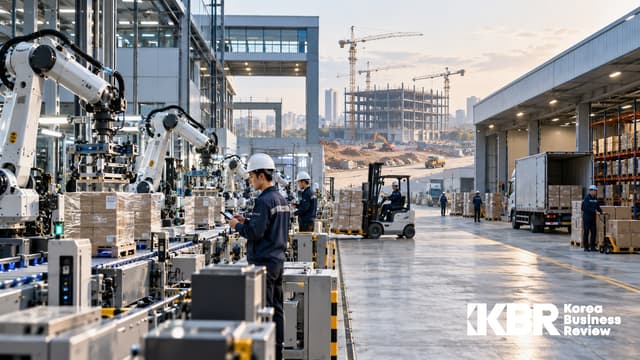
According to the IFR, 54% of global new industrial robot installations (approximately 295,000 units) were concentrated in China in 2024, and production in the first half of 2025 increased by 35.6% year-on-year, sustaining the growth trend. Humanoids remain in the early commercialization stage; UBTech's contract with Airbus is a single-robot proof-of-concept, and its breakthrough past "1,000 units produced" actually translates to about 500 units delivered. UBTech itself stated that the work efficiency of the Walker S2 reaches at most half that of a human, and over 70% of Unitree's revenue comes from research and education rather than industrial applications. The IFR recalculated China's robot density from 470 down to 166, not because the number of robots decreased, but as a result of updated manufacturing employment statistics. KBR analyzes that South Korea must respond to China not through a robot "headcount" competition, but through the speed of ecosystem design encompassing data, standards, and supply chains.
강지혜 선임기자 · 08/10/2026

The 'NATO Wall' That Swallowed 60 Trillion Won: Why Canada Chose Germany Over Hanwha Ocean
On July 6, Canada selected Germany's TKMS as the preferred bidder for its 60 trillion won Canadian Patrol Submarine Project (CPSP), leaving Hanwha Ocean as the reserve negotiator. The core of the decision was Canada's strategic judgment regarding NATO interoperability, Arctic operation optimization, and strengthened European security cooperation, rather than performance alone. While Hanwha Ocean's KSS-III led in battle-tested deployment and fast delivery, TKMS won with a CAD 167 billion economic package and a joint Germany-Norway fleet configuration. Immediately after the announcement, Hanwha Ocean's stock plummeted over 20%, but securities firms maintained a 'buy' rating, evaluating it as a supply-and-demand issue rather than a fundamental flaw. Key checkpoints ahead include the Canada-TKMS main contract negotiations (6-18 months), follow-up projects in Poland and the Middle East, and the materialization of North American MRO and MASGA initiatives.
최수진 기자 · 07/12/2026

China's Quiet Weapon: Rare Earths and Battery Supply Chains as the Biggest Bottlenecks for Global Industry in 2026
In October 2025, China expanded its rare earth export controls to 12 categories and introduced a 0.1% extraterritorial application, with many of the related measures suspended until November 10, 2026. Japan experienced actual, un-suspended controls, leading to sharp 88% and 82% declines in its rare earth imports from China in March and April respectively, with dysprosium and terbium imports dropping to virtually zero since January. Rare earth prices have surged since the beginning of the year, forming a "dual-market" structure where supplies sourced outside China command a 4 to 6 times premium over domestic Chinese prices. While MP Materials and Lynas have established initial milestones for a non-China supply chain, they are still far from sufficient to replace China's refining market share (approximately 91%). The South Korean battery industry must build the framework for alternative supply chains within this year, caught between a double deadline: the expiration of China's suspension on November 10 and the expiration of the US FEOC graphite suspension at the end of the year.
이지영 기자 · 07/10/2026

Rate Cuts Are Over, Hikes Are Next: How the Warsh Fed Reversed the Course of Interest Rates
At its first FOMC meeting under the Warsh regime, the Federal Reserve kept its benchmark interest rate frozen at 3.50–3.75% for the fourth consecutive time. However, the dot plot signaled the possibility of a rate hike within the year, effectively declaring the end of the easing cycle. International oil prices have surged due to military conflicts between the U.S. and Iran in the Middle East, and May inflation indicators rose to the low-4% range, signaling a re-acceleration of inflation. U.S. employment indicators remained robust in May with 150,000 to 200,000 job additions and an unemployment rate in the low-to-mid 4% range, weakening the justification for rate cuts with this 'high inflation and solid employment' combination. In South Korea, amid an environment of a 2.50% base rate, a won-dollar exchange rate of 1,530–1,560 won, and 3.2% consumer inflation, the Bank of Korea's monetary policy dilemma is deepening as it must simultaneously account for the exchange rate, inflation, and household debt. U.S. interest rates are entering a phase shifting from 'higher for longer' to simply 'higher,' making it time for businesses and investors to redesign their foreign exchange hedging, financing, and portfolio strategies based on scenario-driven response systems rather than relying on 'rate cuts within the year.'
강지혜 선임기자 · 07/04/2026

India, the 'Paradox of the 6th Rank'… The World's Fastest-Growing Economy is Redrawing the Global Map
Due to IMF statistical revisions and the depreciation of the rupee, India's nominal GDP ranking has slipped to 6th, but its actual growth, consumption, and investment trends remain robust, continuously expanding its national scale. Amid US-China tensions, India has simultaneously advanced trade frameworks with the US and the EU, emerging as a core negotiation axis surrounding energy, tariffs, and digital norms. Manufacturing hub status is accelerating, with approximately one out of four Apple iPhones assembled in India, attempting to expand its electronics and semiconductor ecosystem based on PLI policies. Although the Indian stock market experiences high volatility due to foreign selling, rupee depreciation, and valuation burdens, its structure has become more robust than in the past due to domestic capital and the inclusion of government bonds in global indices. From South Korea's perspective, India's importance is growing beyond an export market into a production base and supply chain hub, while also being portrayed as a market where exchange rates, component ecosystems, and policy consistency risks must be managed together.
김민경 책임기자 · 07/02/2026