Korea Business Review · Section
MANAGEMENT & STRATEGY
Standard
MANAGEMENT & STRATEGY
Nike's Direct Sales Shrink While Wholesale Grows: Why Owning Customer Touchpoints and Acquiring Customers Are Different
Starting from Nike's fiscal 2026 fourth-quarter wholesale revenue increase and direct sales decrease, this article analyzes why the function of completing customer discovery, comparison, and purchase matters more than merely owning a channel.
KBR경영연구소 · 09/25/2026
Read more →
MANAGEMENT & STRATEGY
Membership Fees Equal Just 2% of Sales: Where Does Costco’s Price Competitiveness Come From?
이우리 Editor · 09/17/2026

MANAGEMENT & STRATEGY
Volkswagen's 100,000 Job Cuts: The Negotiation Structure That Moved the Supervisory Board and Unions
박소유 책임기자 · 09/09/2026

MANAGEMENT & STRATEGY
Startup Early Buildup Strategies Are Changing: The Era of 'Hiring People First' Is Over
강지혜 선임기자 · 09/08/2026

MANAGEMENT & STRATEGY
Why Four US Companies Invested $2 Billion in South Korea: The Strategy Behind Choosing Pyeongtaek, Asan, and Jindo
류현진 선임기자 · 09/05/2026
MANAGEMENT & STRATEGY
In an Era Overflowing with One-Person Startups, What Are the Conditions Needed to Survive?
According to a survey by the Ministry of SMEs and Startups, domestic solo creative businesses surged by 15.4% year-on-year to exceed 1.16 million, while globally, solo startups are estimated to account for about 36% of new ventures. Success stories of ultra-small organizations, such as Gumroad (generating $23.8 million in revenue after dissolving its staff) and Base44 (sold for $80 million with 8 employees), have proven the viability of 'AI-driven one-person enterprises.' The first condition for survival is not AI technology itself, but 'problem definition capability,' with practical career-experienced founders equipped with industrial expertise (domain knowledge) emerging as the new mainstream. The second condition is orchestration capability, operating AI not as individual tools but as a 'virtual organization,' where context engineering serves as a substitute for organizational strength. The third condition is niche focus and capital efficiency, with the power to endure the average 29.8-month 'death valley' until reaching the breakeven point stemming from low fixed costs and reliable revenue sources.
류현진 선임기자 · 07/04/2026

MANAGEMENT & STRATEGY
How Booyoung Group Became a 'Respected Company'
In 2024, Booyoung Group became the first in South Korea to introduce a childbirth incentive of 100 million won per child, distributing a cumulative 13.4 billion won through 2026, while the number of newborns within the company increased from an annual average of 23 to 28. The condition-free design—which provides funds even to those who give birth on their first day of work and imposes no obligation to return the money upon resignation—proved the sincerity of the system, and that trust returned as a recruitment competitiveness of up to 180 to 1 in open recruitment. A company's internal welfare led to the legislation of '100% tax exemption for childbirth support funds' and spread across peer industries such as Krafton and KAI, moving beyond a one-off event to influence national policy and the broader industrial sector. The childbirth incentive is a branch of consistent social contribution functioning as a foundation where people grow and stay, following rental housing and educational donations, serving as an example where the core business and social responsibility point in the same direction. However, the absolute sole-proprietorship governance that made all these decisions possible is also the two-sided risk of a lack of checks and balances, and sustainable respect is completed not through the buzz of good deeds, but through transparent governance and core business competitiveness.
김민경 책임기자 · 06/22/2026

MANAGEMENT & STRATEGY
Management Strategy in the Era of Low Growth: What Should Companies Cut and What Should They Keep?
As South Korea's potential growth rate drops into the 1% range (approx. 1.8%) and is projected to fall toward 0% around the 2040s, the market has entered a structural low-growth era where expansion-driven growth models no longer work. Companies with an interest coverage ratio of less than 100% have reached an all-time high of 42.8%, and the proportion of zombie firms has also hit historic peaks, deepening the polarization of corporate resilience while the resource occupation by distressed firms creates a congestion effect that drags down the growth of healthy companies. What must be reduced are business portfolios unrelated to core competencies, fixed costs accumulated from growth inertia, and top-line operations with weak margins and cash flow, with 'selection' based on priorities rather than indiscriminate cuts being the key. What must be retained until the end includes core talent and organizational capabilities, selective investments in future growth engines such as digital and AI, and financial soundness and cash reserves to withstand external shocks. The question for executives in the low-growth era has shifted from 'How can we grow faster?' to 'What should we cut and keep to build the resilience to endure the next cycle?', proving that strategy ultimately begins with knowing what to give up.
이우리 선임기자 · 06/16/2026

MANAGEMENT & STRATEGY
What Really Destroys Startups in Their Early Stages – Five Solutions to Cross the Death Valley
With a 5-year survival rate in the 30% range—meaning more than six out of ten businesses disappear—what is the real crisis that early-stage startups face first? Data points not to 'funds,' but to 'failure of market validation.' Based on verified official data, we examine what the surviving minority did differently.
최수진 기자 · 06/08/2026

MANAGEMENT & STRATEGY
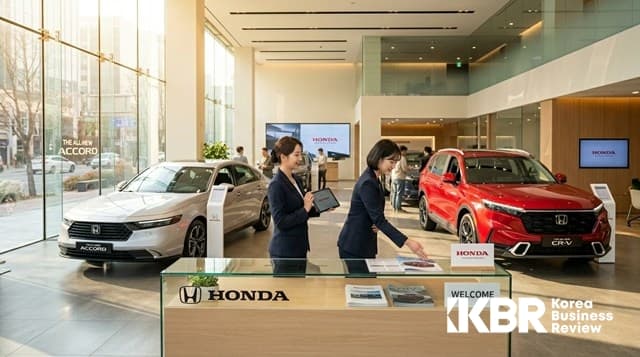
Honda Exits the South Korean Automotive Market: Strategic Lessons from a 23-Year Journey
Once a leader in the imported car market with the Accord and CR-V, Honda is ending its automotive sales business at the end of 2026 to refocus around motorcycles. On April 23, 2026, Honda Korea held an emergency press conference at COEX in Gangnam-gu, Seoul, and officially announced the termination of its domestic automotive sales operations by the end of 2026.
강지혜 기자 · 05/04/2026