

MANAGEMENT & STRATEGY
Honda Exits the South Korean Automotive Market: Strategic Lessons from a 23-Year Journey
Once a leader in the imported car market with the Accord and CR-V, Honda is ending its automotive sales business at the end of 2026 to refocus around motorcycles. On April 23, 2026, Honda Korea held an emergency press conference at COEX in Gangnam-gu, Seoul, and officially announced the termination of its domestic automotive sales operations by the end of 2026.
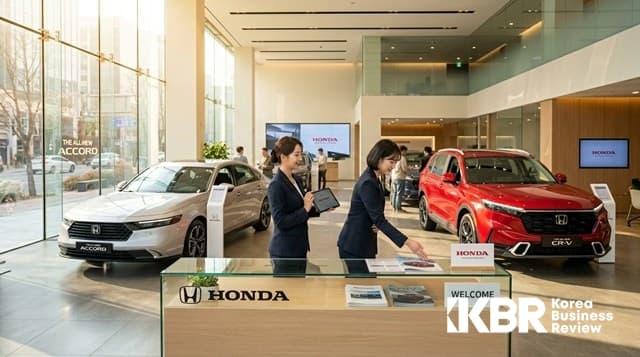
Once a leader in the imported car market with the Accord and CR-V, Honda is ending its automotive sales business at the end of 2026 to refocus around motorcycles.…
KBR Access
Insight 4.0 is for KBR Members
KBR Member: ₩9,900/month (or a ₩12,900 one-month pass) for every section except KBR Analysis, up to 30 articles a month. Free members can read one paid article free every month.
Free account · No card required
Create a free KBR account
Creating a KBR account is free and takes about a minute — no card required. You'll come straight back to this page once you're done.
KBR NEWSLETTER
Sign up for free and get the KBR Newsletter!
Sign up and opt in to the newsletter to receive KBR's curated business and economic insights by email.
LATEST IN TOPIC
Latest in this topic



RELATED CONTENT
Related Content
Companies That Adopt AI vs. Companies That Operate AI: The Difference Now Shows in Performance
MemberInflation Has Slowed to 2.9%, But Why Are Customers' Shopping Carts Behaving Differently?
MemberTo Assess Organization Culture Fit in Hiring, the Company Must Also Be Evaluated
MemberReporting Workplace Bullying: What Organizations Must Do While Awaiting Investigation Results