Korea Business Review · Section
LEADERSHIP
Standard
LEADERSHIP
Why Those Who Want to Be Leaders Differ from Those Who Lead Teams Well
The intention to become a manager and the ability to change a team's outcomes are two different pieces of information. Using a manager selection experiment as a starting point, this article analyzes individual performance, attention allocation, and the criteria for delegation and observation.
KBR경영연구소 · 09/24/2026
Read more →
LEADERSHIP
How Admiral Yi Sun-sin Moved the Hearts of His Subordinates: Trust and Accountability Leadership Read Through Myeongnyang
강지혜 Editor · 09/16/2026

LEADERSHIP
A Meeting Without Objections Is Not Necessarily a Good Meeting: The Crucial Signals Leaders Miss
KBR경영연구소 · 09/15/2026

LEADERSHIP
The First 90 Days of a New Leader: What Needs to Change — Establishing Standards for Learning, Expectation Alignment, and Delegation Before Rushing into Results
KBR경영연구소 · 09/15/2026

LEADERSHIP
A Leader Who Saw 'What Exists' Instead of 'What Was Missing': How Anne Sullivan Changed Helen Keller
이지영 기자 · 09/13/2026
LEADERSHIP
How Does Leadership Feedback Affect Organizational Performance?
A 1996 meta-analysis revealed that over 38% of feedback interventions had a negative effect size, driven by attention shifting from the task to the 'self.' While Zenger Folkman found that 72% of employees want corrective feedback, managers tend to avoid it, and Harvard Business School research demonstrated across five experiments that people systematically underestimate others' desire for feedback. Gallup data linked weekly meaningful feedback experiences strongly to high engagement regardless of work location, prompting Deloitte to transition from an annual evaluation consuming 2 million hours to ongoing check-ins. On methods and skills, the core lies in trainable competencies such as separating observation from interpretation, connecting outcomes, and agreeing on next actions, while strength-based theories should be read not as a denial of corrective feedback but as a call for 'behavior-based' demands. On the process side, institutionalizing frequency, psychological safety, and separating developmental conversations from compensation decisions transform individual goodwill into an organizational system.
김민경 책임기자 · 09/08/2026

LEADERSHIP
The Era of 20% Engagement: Five Areas Leaders Must Review Every Week
According to Gallup's 2026 report, global employee engagement has plummeted to 20% and manager engagement to 22%, with the leadership tier driving the decline. DDI data shows that 71% of leaders report increased stress, and trust in direct supervisors has sharply dropped from 46% in 2022 to 29% in 2024, making trust a new management target. McKinsey findings indicate middle managers spend less than 25% of their time on people management, pointing to bureaucracy as a structural cause consuming leaders' time. In AI transformation, the target for leaders to manage is not the technology itself, but the adoption environment, with active manager support emerging as a top variable determining implementation success. A leader's review areas consist of five categories: oneself, people, trust, work structure, and AI, with the essence of management being not control, but the repetition of regular reviews.
박소유 책임기자 · 08/12/2026
LEADERSHIP
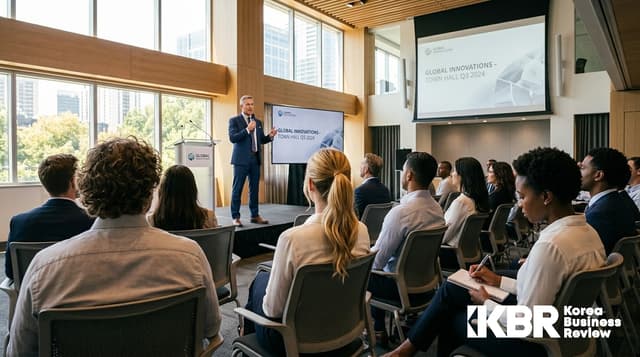
What Problems Arise in an Organization Led by a Leader Without Principles?
A leader without principles refers to someone whose judgments in decision-making, evaluation, and resource allocation vary depending on situations and relationships without consistent criteria, continuously generating a cost called 'unpredictability' for the organization. According to DDI's 'Global Leadership Forecast 2025,' direct manager trust plummeted from 46% in 2022 to 29% in 2024, and Gallup surveys show global employee engagement dropping to 21%, numerically confirming the collapse of trust in leadership. The absence of principles destroys 'consistency,' which is the core of procedural fairness, spreading quiet quitting and office politics, while making leader reactions unpredictable, causing psychological safety and organizational execution to plummet simultaneously. An adverse selection structure is formed where key talent with many external options leaves first while constituents skilled in political survival techniques remain, leading the leader to prolong unprincipled leadership without recognizing the problem. The solution lies in codifying decision-making criteria, transparently explaining exceptions, disciplining reversal costs, and regularly reviewing principles, backed by organizational-level devices that reflect consistency indicators in multi-rater evaluations and promotion reviews.
박찬호 선임기자 · 07/07/2026