Korea Business Review · Section
INDUSTRY & ECONOMIC POLICY
Standard
INDUSTRY & ECONOMIC POLICY
EU Digital Product Passport: Exporters' Preparation Begins with Product Data
If information is not connected to explain which version of a product it refers to, even a well-designed interface can result in discrepancies between the actual product and its records. Linking version values, application scopes, and approval records allows companies to verify which descriptions were used for which products. By distinguishing application periods and versions without overwriting older model records with new model information, companies can retrieve historical data for previously supplied products when inquiries arise.
KBR 편집부 · 09/15/2026
Read more →
INDUSTRY & ECONOMIC POLICY
Are Jeonse Loans Being Blocked for Single-Home Owners Too? Conditions Changing Next Year
박찬호 선임기자 · 09/14/2026
INDUSTRY & ECONOMIC POLICY
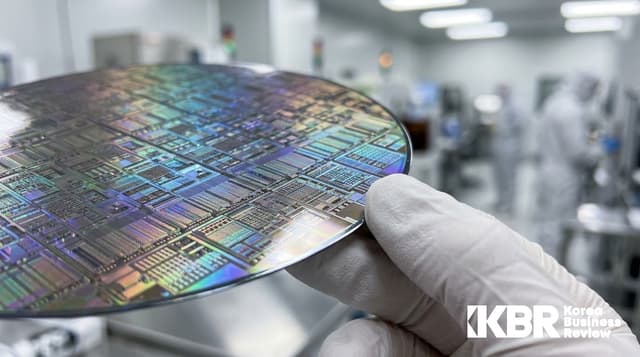
Semiconductor Special Act Enforcement Decree Takes Effect August 11: Priority Designation for Non-Capital Region Clusters and Special Account to Run Until 2036
류현진 선임기자 · 08/12/2026

INDUSTRY & ECONOMIC POLICY
Employment Bounces Back After a Month, But Youth Employment Rate Falls for 26th Consecutive Month; Government Announces 'Youth Job Recovery Plan' for Q3
박소유 책임기자 · 07/18/2026
INDUSTRY & ECONOMIC POLICY
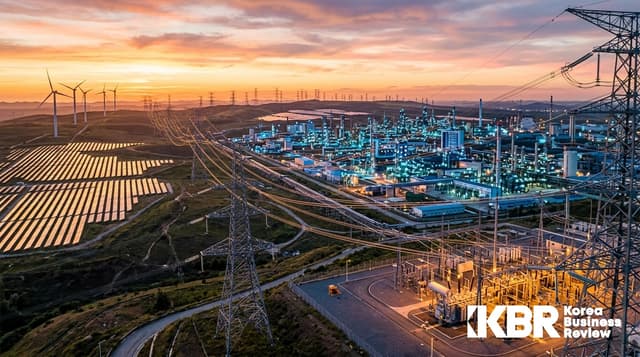
Samsung's 2,655 Trillion Won and SK's 2,100 Trillion Won: The Launch of South Korea's AI Great Transformation with All-In Bets on Semiconductors, Physical AI, and Data Centers
강지혜 선임기자 · 06/30/2026
INDUSTRY & ECONOMIC POLICY
May Export Prices Hit 28-Year High While Import Prices Fall for Two Consecutive Months: The Decoupling of Korea's Export-Import Index
According to the May Export and Import Price Index released by the Bank of Korea on the 16th, the export price index rose 0.3% from the previous month to 188.58, marking the highest level in about 28 years since March 1998, and surging 46.9% year-on-year. This upward trend was led by semiconductors, with computer, electronic, and optical product export prices rising 5.4% month-on-month and 104% year-on-year, driven by strong AI data center demand for DRAM (+7.6%) and flash memory (+19.5%). Conversely, import prices fell 0.3% month-on-month due to a decline in Dubai crude (from $105.7 to $103.15), declining for the second consecutive month. Even on a contract-currency basis excluding exchange rate effects, import prices dropped 0.5%, confirming a trend grounded in actual raw material price drops. As export prices rose and import prices fell, the net terms of trade index—a core indicator of profitability—improved by double digits for four consecutive months, signaling a boost in the real purchasing power and margins of exporting companies. However, while upward pressure on oil prices is expected to ease following the US-Iran ceasefire agreement on June 15, the pace of normalization of Middle Eastern oil facilities, high exchange rates in the 1,490-won range, and monthly volatility in memory unit prices remain variables that will determine the outlook for the second half of the year.
박소유 책임기자 · 06/16/2026

INDUSTRY & ECONOMIC POLICY
Won-Dollar Exchange Rate Hits 17-Year High—The Paradox of 'A Weak Won Amid Export Boom'
Despite May exports reaching a record $87.7 billion and a trade surplus of $26.9 billion, the exchange rate breached the 1,550-won mark; dollar strength, foreign selling, and geopolitical risks overpower the trade surplus.
박소유 책임기자 · 06/08/2026
INDUSTRY & ECONOMIC POLICY
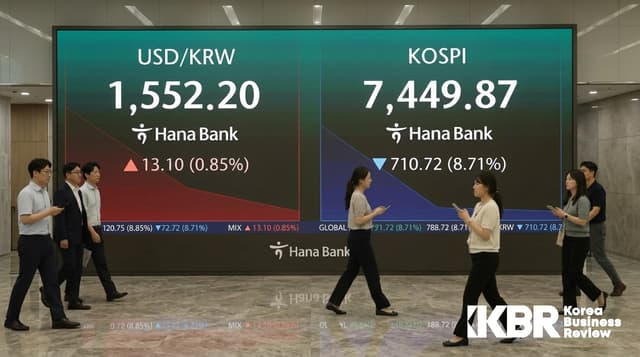
Official Projection of Growth Exceeding 2% — The Day Semiconductor Exports Hit $8.5 Billion and KOSPI Surpassed 7,800
Numbers spoke first on May 11, 2026, as two figures simultaneously shifted the atmosphere of the South Korean economy. Immediately after the morning market opening, the KOSPI index broke the 7,800 threshold for the first time in history. Samsung Electronics and SK Hynix jointly renewed record highs to drive the index upward, and the KOSPI closed at 7,822.24, surging 4.32% from the previous day.
KBR 편집부 · 05/12/2026
INDUSTRY & ECONOMIC POLICY
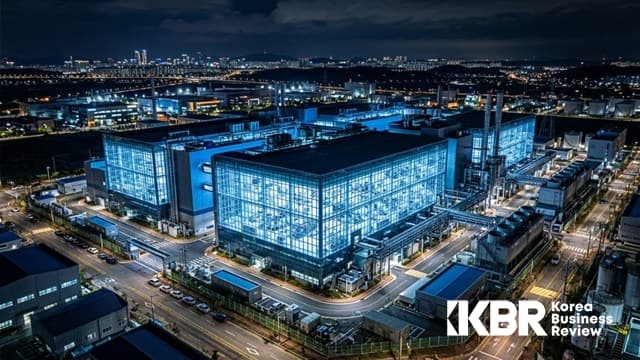
Complete Overhaul of Regulations in 28 Years: Reshaping Korea's Industrial Landscape Through 'Mega-Special Zones'
A future where robots, wind power, and drones coexist in a single city. The government has set out to make this a reality through four mega-special zones. [Image = AI-generated image] Comprehensive overhaul of the regulatory framework for the first time in 28 years marks the largest-scale restructuring of South Korea's regulatory governance system in over a quarter-century.
강지혜 기자 · 04/17/2026

INDUSTRY & ECONOMIC POLICY
Major Electricity Tariff Overhaul After 49 Years: 'Time-of-Use' Pricing System to Reshape Korea's Industrial Landscape
Inside a domestic manufacturing plant office piled with electricity bills and energy cost analysis data. [Photo = Korea Business Review DB] Ahead of the full implementation of the time-of-use pricing system, companies are redesigning production schedules and reviewing cost structures. Background of the policy shift: Why now? The Ministry of Climate, Energy and Environment and the Korea Electric Power Corporation officially announced on the 14th that the 'seasonal and time-of-use electricity tariff reform plan' will take full effect starting on the 16th.
류현진 기자 · 04/15/2026