Korea Business Review

industry-economic-policy

Complete Overhaul of Regulations in 28 Years: Reshaping Korea's Industrial Landscape Through 'Mega-Special Zones'

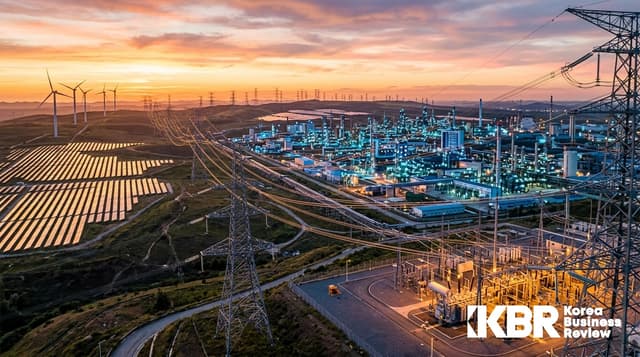
A future where robots, wind power, and drones coexist in a single city. The government has set out to make this a reality through four mega-special zones. [Image = AI-generated image] Comprehensive overhaul of the regulatory framework for the first time in 28 years marks the largest-scale restructuring of South Korea's regulatory governance system in over a quarter-century.

강지혜 기자Published 2026년 4월 17일Updated 2026년 8월 26일
Share
Complete Overhaul of Regulations in 28 Years: Reshaping Korea's Industrial Landscape Through 'Mega-Special Zones'

A future where robots, wind power, and drones coexist in a single city. The government has set out to make this a reality through four mega-special zones. [Image = AI-generated image] Comprehensive overhaul of the regulatory framework for the first time in 28 years marks the largest-scale restructuring of South Korea's regulatory governance system in over a quarter-century.

A future where robots, wind power, and drones coexist in a single city. The government has set out to make this a reality through four mega-special zones. [Image = AI-generated image]


Comprehensive Overhaul of Regulatory Framework in 28 Years


South Korea's regulatory governance system is undergoing its largest-scale restructuring in over a quarter-century.

On April 15, the government held the 1st Regulatory Rationalization Committee directly presided over by the President and announced a new blueprint to drive economic growth and regional development by innovating outdated regulations. 

The core of this restructuring is the complete elevation of the committee's status. Following the promulgation of the partial amendment to the Framework Act on Administrative Regulations on February 19, 2026, the existing Regulatory Reform Committee, formerly under the Prime Minister, was renamed the Regulatory Rationalization Committee, structured so that the President directly chairs it.

President Lee Jae-myung presided over the first plenary meeting of the Regulatory Rationalization Committee at the main building of the Blue House on the 15th. The meeting was attended by around 60 officials from the private sector, government, and ruling party, where regulatory special exception plans and mega-special zone promotion plans in four key areas—robots, renewable energy, biotechnology, and AI autonomous vehicles—were discussed as main agenda items. 

The direction emphasized most heavily by President Lee in this meeting is the paradigm shift of regulations itself. Based on the recognition that "it is important to secure international competitiveness amidst the grand current of a trading nation," President Lee expressed his stance that it is necessary to transition the regulatory system to a negative-regulation approach, centering on high-tech industrial sectors. 

Negative regulation is a method where only prohibited items are specified and all other activities are permitted in principle. It is the exact opposite philosophy of the current positive regulation—a method that enumerates permitted items—and is an approach that fundamentally expands autonomy in industrial fields.

The core objective of this restructuring is "Smart Regulations, A More Advanced South Korea," driving five major structural regulatory reforms, including the introduction of an AI-based regulatory navigator to provide customized regulatory information and the transition to negative regulations aligned with global standards.


Design of 'Mega-Special Zones': Integrating Approximately 3,000 Small-Scale Special Zones into Wide-Area Hubs


The core agenda of this meeting was the promotion plan for 'Mega-Special Zones.' The Lee Jae-myung administration directly pointed out the structural limitations of the existing special zone system.

Currently, about 3,000 small-scale special zones are designated sporadically, but due to constraints such as limited regulatory exceptions and government-led design, there were clear limitations in fostering regional core industries. Mega-special zones on a wide-area or ultra-wide-area scale were presented as an alternative to this. The vision is to break through existing limitations by having companies and local governments participate directly in special zone design and providing a bundled package that combines financial and tax support.

Mega-special zones are linked with the government's balanced regional growth strategy, known as the '5-Pole, 3-Special' framework. The five poles are the Seoul Metropolitan Area, Southeastern region, Daegu-Gyeongbuk region, Chungcheong region, and Honam region, while the three special entities are the Special Self-Governing Provinces of Jeju, Gangwon, and Jeonbuk.

The Lee Jae-myung administration aims to promote balanced national growth centered on this '5-Pole, 3-Special' structure. At the meeting, Minister of Government Policy Coordination Yoon Chang-ryul contrasted it with the MAGA (Make America Great Again) policy of the U.S. Trump administration, summarizing the policy direction with the expression, "If America has MAGA, we must choose MEGA."

Regulatory deregulation applied to companies within mega-special zones is designed in three ways.

The first, 'Menu-Style Regulatory Exceptions,' provides pre-prepared items for regulatory relief needed by companies and local governments so they can easily and quickly select regulatory exceptions. 

The second, 'Demand-Responsive Regulatory Deferral,' allows companies or local governments to directly request regulatory improvements not found on the menu, through which regulations are rationally excluded or relaxed after review. The third is an upgraded version of the existing regulatory sandbox, structuring a broader space for the demonstration of new technologies and new services.

Financial support was also designed comprehensively. When large-scale investments are made in mega-special zones, a 'Growth Engine Special Subsidy' will be provided, along with preferential policy loan interest rates and various tax benefits. 

Tax benefits utilize opportunity development zones, integrated investment, employment, and R&D tax credits. Specific plans were also presented regarding talent cultivation. Minister of Trade, Industry and Energy Kim Jung-kwan stated his policy to intensively foster nine regional strategic industry colleges and convergence research institutes centered around base national universities, cultivating over 1,500 customized field talents annually. 

The designation procedure for mega-special zones is structured in a bottom-up rather than top-down manner. Local governments or companies establish plans and apply directly, and the Minister of Trade, Industry and Energy designates them following deliberation and resolution by the Regulatory Rationalization Committee and other bodies. To back this up, the government plans to pursue legislation in agreement with the National Assembly to enact a tentative 'Mega-Special Zone Special Act' within this year. 


Details of the Four Mega-Special Zones: Blueprints for Regulatory Exceptions by Sector


Robot Mega-Special Zone: Unmanned Firefighting Trucks Running on Roads, Mobile Robots Operating in Parks

The Ministry of Trade, Industry and Energy presented a policy to permit various robots in the robot mega-special zone to utilize raw data, allow unmanned firefighting robots to travel on roads, and enable outdoor mobile robots to engage in outdoor advertising and business activities within parks. These activities are prohibited under current laws or bound by complicated licensing procedures. This means that unmanned firefighting robots will be able to move freely on regular roads, and delivery and service mobile robots will be able to advertise and conduct business in parks.

At the meeting, Minister of Trade, Industry and Energy Kim Jung-kwan drew attention by declaring himself the 'Robot Mega-Special Zone Czar.' When the idea of introducing a 'regulatory czar' with full authority over regulations within the mega-special zone was raised, President Lee expressed empathy for the system while mentioning the condition that it must be equipped with democratic control and transparency, and Minister Kim strongly expressed his drive to personally take on that role exclusively for the robot mega-special zone. 

Renewable Energy Mega-Special Zone: Full Permission for Direct Power Trading

In the renewable energy mega-special zone, direct trading of renewable energy is expected to be fully permitted, and the liberalization of captive renewable energy trading will also be achieved. 

Under the current power system, companies are practically bound to a structure where they purchase electricity through KEPCO. If this wall is opened within the special zone, a pathway will be created for renewable energy producers and consumers to directly enter into transaction contracts. The Ministry of Climate, Energy and Environment (Climate Ministry) also plans to expand the grid fee support period for direct transactions.

The Ministry of Climate, Energy and Environment is an official department launched on October 1, 2025, by integrating the energy policy functions of the Ministry of Trade, Industry and Energy into the existing Ministry of Environment in accordance with the Government Organization Act. This measure is evaluated as a change that opens the door to new business models for both companies operating renewable energy facilities such as solar and wind power and energy service companies.

Bio Mega-Special Zone: KRW 1 Trillion Mega-Fund and Conditional Medical Device Approval

A KRW 1 trillion 'mega-fund' will be created in the bio mega-special zone. On the regulatory front, approval procedures for medical devices will be significantly streamlined. The Ministry of Health and Welfare stated that it plans to grant conditional approvals for low-risk medical devices so they can be used first, and to recognize actual usage data as clinical trial data upon official approval. 

Moving away from the existing method where all clinical trial data had to be prepared in advance to receive approval, this is a transition to a method of meeting approval requirements using post-market field data. This is accepted as a practical change that accelerates the commercialization speed of bio startups and medical device companies.

AI Autonomous Vehicle Mega-Special Zone: Temporary Operation Permit Authority Transferred to Mayors and Provincial Governors

In the AI autonomous vehicle mega-special zone, authority to grant temporary operation permits for autonomous vehicles will be granted to city mayors and provincial governors, which is expected to drastically reduce the burden of corporate permit application procedures.

 Currently, road demonstrations for autonomous vehicles require approval from central government ministries such as the Ministry of Land, Infrastructure and Transport. The intent is to shorten procedures and accelerate demonstration speeds by delegating this to local government heads. Along with this, the government plans to jointly promote the provision of vehicle maintenance and charging spaces, as well as large-scale driving data and GPU support necessary for autonomous driving AI learning.


Trade Commission Proposes Provisional Anti-Dumping Duties on Chinese Zinc Cold-Rolled Steel Sheets… Steel Supply Chain Defense Front


If the presidential-led Regulatory Rationalization Committee takes the character of an 'offensive strategy,' the decision made a day later by the Trade Commission of the Ministry of Trade, Industry and Energy corresponds to a 'defensive strategy.'

The Trade Commission of the Ministry of Trade, Industry and Energy held its 472nd plenary meeting on the 16th and made a preliminary determination that there is domestic industrial damage regarding the dumping case of Chinese zinc and zinc-alloy surface-treated cold-rolled products. Accordingly, it decided to propose the imposition of provisional anti-Dumping duties ranging from 22.34% to 33.67% by Chinese supplier to the Minister of Economy and Finance. Provisional duties begin to be actually levied after being finalized through a notice by the Ministry of Economy and Finance, and this stage is a preemptive measure to prevent domestic industrial damage during the main investigation period. 

The starting point of this investigation was the second half of last year. Domestic companies such as Dongkuk CM, KG Steel, and SeAH CM applied for an investigation to the Trade Commission in November last year, claiming that the products in question were imported at prices significantly lower than normal prices, causing damage to the domestic industry. After an investigation lasting about five months, the Trade Commission made a preliminary ruling that domestic industry damage exists and resolved to propose the imposition of provisional duties. 

The scope of items subject to this provisional duty imposition proposal is quite broad. It covers cold-rolled products under 4.75mm in thickness surface-treated with zinc or zinc alloys, which are materials widely used across industries such as construction materials, automobile parts, furniture, metal products, piping, and steel pipes. Tariff rates are applied differently according to Chinese suppliers.

The Trade Commission also received a report on the initiation of additional investigations on this day. The Trade Investigation Office reported review results concluding that the initiation of dumping investigations on solid sodium hydroxide from China and Taiwan was justified. 

Public hearings on domestic industry damage investigations for seamless copper tubes from Thailand and butyl acrylate from China were also held on the same day, with final rulings for the two cases scheduled for June and July, respectively. 


Intersection of the Two Policies: Offense and Defense in Industrial Strategy


The policy announcements made consecutively over the two days of April 15–16 clearly reveal the two axes of the Lee Jae-myung administration's industrial policy.

The mega-special zone strategy through the Regulatory Rationalization Committee is an offensive approach that preemptively dismantles regulations to foster future high-tech industries, while the Trade Commission's proposal for provisional anti-dumping duties is a defensive measure to protect the revenue foundation of domestic core industries from low-priced Chinese products.

The mega-special zone strategy starts from the government's self-diagnosis regarding the 'practical performance' that the approximately 3,000 small-scale special zones scattered nationwide have failed to produce. Existing special zones held structural limitations in that regulatory exceptions were too narrow, support was fragmented, and the government rather than companies led the design. 

These mega-special zones are structured so that companies and local governments design the special zone contents directly, select necessary regulatory exceptions from a menu, and receive bundled support covering finance, taxation, talent, and infrastructure all at once.

Anti-dumping tariff measures must be read in a different context. In a situation where the flow of Chinese products—having lost export destinations due to U.S. high-tariff policies against China—being diverted and concentrated into the South Korean market is intensifying, this is a preemptive response to protect the price competitiveness and survival space of domestic steel and material companies. 

Since zinc surface-treated cold-rolled steel sheets are materials supplied across downstream industries such as auto parts and construction materials, the background of this measure is the judgment that if the price structure of this product group collapses, cascading industrial damage could occur.


KBR INSIGHT: Three Practical Changes Companies Must Pay Attention To


First, you must preemptively monitor the legislative schedule of the Mega-Special Zone Special Act.

The government expressed its direction to enact a tentative Mega-Special Zone Special Act in agreement with the National Assembly within 2026. If this bill actually passes, new location strategies and tax structures will open up for companies establishing large-scale investment plans at the regional level. Companies conducting businesses related to robotics, biotechnology, energy, and autonomous driving, or those reviewing mid-to-long-term investments, would benefit from establishing preliminary cooperative relations with local governments starting now in preparation for special zone applications.

Second, the liberalization of direct renewable energy trading should be interpreted as a signal for the restructuring of energy cost structures.

If direct trading and the liberalization of captive renewable energy trading are permitted within the renewable energy mega-special zone, new pathways will open for large energy-consuming companies to procure power outside the KEPCO grid. For companies operating facilities with concentrated power consumption, such as data centers, semiconductor plants, and heavy industry workplaces, this can lead to direct cost-saving opportunities.

Third, steel and material supply chain strategies must be re-examined.

This proposal for provisional tariffs on zinc cold-rolled sheets is not a one-off measure. On the same day, the Trade Commission received reports on initiating dumping investigations into sodium hydroxide from China and Taiwan, and proposals for additional tariff impositions are likely to follow within the next few months. Manufacturing companies relying on imported Chinese materials need to hasten the diversification of procurement sources and the review of inventory strategies.


KBR Access

정책인사이트 콘텐츠는 Standard 이상 열람할 수 있습니다

이 콘텐츠는 Standard 이상 회원에게 제공됩니다. Standard는 인사이트 4.0, 정책인사이트, Global Radar 등 일반 멤버십 콘텐츠를 이용할 수 있습니다.

이번 달 열람 현황: 0 / 0건 사용