Korea Business Review · Section
POLICY INSIGHT
Standard
REGULATION & LEGISLATION
EU Cloud Switching Fee Abolition: Eliminating Costs Does Not Make Data Migration Easy
The EU Data Act prohibits switching fees for applicable services starting January 12, 2027. Aside from scopes and exceptions, this article examines the remaining development and validation costs, as well as corporate migration readiness.
류현진 Editor · 09/25/2026
Read more →
INDUSTRY & ECONOMIC POLICY
EU Digital Product Passport: Exporters' Preparation Begins with Product Data
KBR 편집부 · 09/15/2026

INDUSTRY & ECONOMIC POLICY
Are Jeonse Loans Being Blocked for Single-Home Owners Too? Conditions Changing Next Year
박찬호 선임기자 · 09/14/2026

FUNDING & SUPPORT
6 Things Companies Should Check Before the August 24 Deadline for the Second Public Institution Verification Support Program
이우리 선임기자 · 08/21/2026

FUNDING & SUPPORT
Government to Select 8,000 Aspiring Founders: Receive 2 Million Won to Start, Up to 1 Billion Won Upon Passing Auditions
이우리 선임기자 · 08/13/2026
INDUSTRY & ECONOMIC POLICY
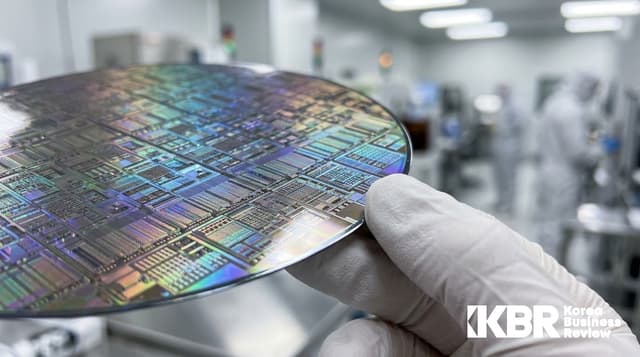
Semiconductor Special Act Enforcement Decree Takes Effect August 11: Priority Designation for Non-Capital Region Clusters and Special Account to Run Until 2036
The Semiconductor Special Act and its enforcement decree took full effect on August 11, formally activating the national support system approximately six months after the law's enactment on February 10. A new Presidential Committee on Strengthening Semiconductor Industry Competitiveness has been established as the overarching control tower to oversee cluster designations and review master plans. Infrastructure costs for clusters will be subsidized by the central and local governments at 50% to 100% of total project expenses, with complete funding for redundancy and supply chain stability facilities, and a non-capital region priority principle explicitly codified. A dedicated special account operational until 2036 secures a mid-to-long-term financial channel, complemented by the designation of training institutions to connect regional professionals with employment and retraining. However, the 52-hour workweek exemption clause was ultimately excluded due to strong opposition from labor unions. With the implementation coinciding with a boom period—July semiconductor exports reaching $41.0 billion, accounting to 40.3% of total exports—the speed of execution and securing financial resources remain key focal points.
류현진 선임기자 · 08/12/2026
INDUSTRY & ECONOMIC POLICY
Employment Bounces Back After a Month, But Youth Employment Rate Falls for 26th Consecutive Month; Government Announces 'Youth Job Recovery Plan' for Q3
The number of employed persons in June increased by 63,000 compared to the same month last year, rebounding after a single month of decline in May. However, the employment rate edged down to 63.4%, and the youth (ages 15–29) employment rate fell to 43.9%, marking a decline for the 26th consecutive month. While manufacturing and construction continued their employment declines for 24 and 26 consecutive months respectively, health and social welfare services drove overall growth. At the July 16 Job Task Force meeting, the government reviewed complementary tasks for the youth job recovery plan, targeting over 200,000 trained professionals and over 200,000 created jobs. Specific measures will be announced in the third quarter following consultations among relevant ministries, with the resolution of labor market dual structures and mismatches pointed out as keys to policy effectiveness.
박소유 책임기자 · 07/18/2026

INDUSTRY & ECONOMIC POLICY
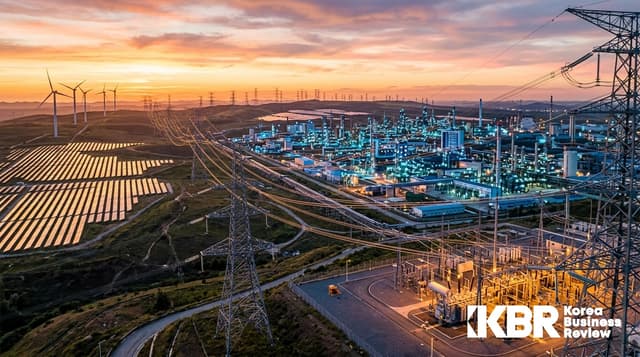
Samsung's 2,655 Trillion Won and SK's 2,100 Trillion Won: The Launch of South Korea's AI Great Transformation with All-In Bets on Semiconductors, Physical AI, and Data Centers
On June 29, 2026, the South Korean government held the National Report on the Three Mega-Projects, announcing a national industrial strategy and massive investment plan centered around semiconductors, physical AI, and AI data centers. In the semiconductor sector, under the 3S+1F strategy, the government aims to solidify memory dominance and build nationwide decentralized hubs (a southwestern fab, a Chungcheong packaging hub, and eastern/Daegyeong supply chain hubs), with Samsung and SK pledging thousands of trillions of won in domestic investments. In the physical AI sector, the goal is to become a global leader in robot manufacturing through manufacturing AI transformation, mass production of robots, localization of vulnerable components, and the establishment of robot clusters in Saemangeum and the Daegyeong region. For AI data centers, the plan is to create an AI infrastructure hub linked to semiconductors and physical AI through 18.4 GW of infrastructure, dedicated pricing plans, and the cultivation of NPU and cloud ecosystems. Experts diagnose that the success or failure of these projects hinges on securing power, water, and urban infrastructure, balanced regional development, residential conditions, and the detail and execution of follow-up policies.
강지혜 선임기자 · 06/30/2026
REGULATION & LEGISLATION
Medical Data as a 'Strategic Asset of the AI Era'… Public Hearing for 'Digital Healthcare Act' Begins in Earnest
On June 22, 2026, the National Assembly, in collaboration with the Ministry of Health and Welfare and Democratic Party lawmaker Seo Young-seok's office, held a public hearing on the enactment of the 'Act on Supporting the Use of Digital Healthcare and Health and Medical Information' (initially proposed by Lawmaker Seo on November 24, 2025) to gather opinions from various sectors. The bill is designed as a foundational law containing both 'utilization foundations'—such as definitions, national responsibilities, basic plans, the right to demand transmission (medical MyData), the legalization of pseudonymization review procedures, and regulatory sandboxes/pilot projects—and 'protective safeguards.' The core controversy lies between 'utilization versus protection,' with the industry prioritizing predictability in data use, while the medical community and civil society emphasize re-identification risks, patient consent, and guaranteed control. Presenter Professor Kim Jae-sun pointed out the slow legislative pace in South Korea, noting that major countries like Japan, Finland, Germany, and the EU have already established relevant special laws while South Korea remains at the bill submission stage. However, as this bill is still in the early legislative stage following its proposal and public hearing, further reviews by standing committees, the Legislation and Judiciary Committee, and the plenary session remain ahead, with the coordination of similar bills, such as one proposed by Lawmaker Ahn Sang-hoon, acting as a variable.
이지영 기자 · 06/23/2026

INDUSTRY & ECONOMIC POLICY
May Export Prices Hit 28-Year High While Import Prices Fall for Two Consecutive Months: The Decoupling of Korea's Export-Import Index
According to the May Export and Import Price Index released by the Bank of Korea on the 16th, the export price index rose 0.3% from the previous month to 188.58, marking the highest level in about 28 years since March 1998, and surging 46.9% year-on-year. This upward trend was led by semiconductors, with computer, electronic, and optical product export prices rising 5.4% month-on-month and 104% year-on-year, driven by strong AI data center demand for DRAM (+7.6%) and flash memory (+19.5%). Conversely, import prices fell 0.3% month-on-month due to a decline in Dubai crude (from $105.7 to $103.15), declining for the second consecutive month. Even on a contract-currency basis excluding exchange rate effects, import prices dropped 0.5%, confirming a trend grounded in actual raw material price drops. As export prices rose and import prices fell, the net terms of trade index—a core indicator of profitability—improved by double digits for four consecutive months, signaling a boost in the real purchasing power and margins of exporting companies. However, while upward pressure on oil prices is expected to ease following the US-Iran ceasefire agreement on June 15, the pace of normalization of Middle Eastern oil facilities, high exchange rates in the 1,490-won range, and monthly volatility in memory unit prices remain variables that will determine the outlook for the second half of the year.
박소유 책임기자 · 06/16/2026