Korea Business Review · Section
BUSINESS / INVESTMENT
Standard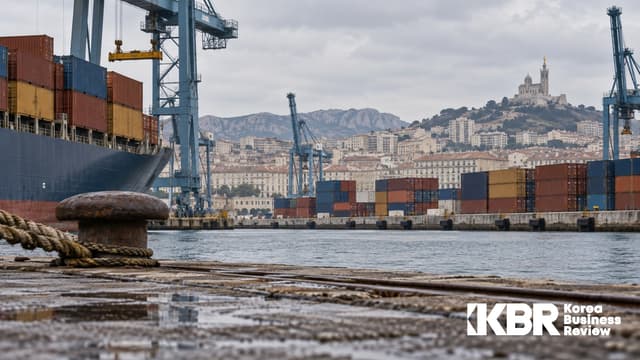
Biz / Investment
Why CMA CGM Wants FedEx's Logistics Business: A Supply Chain Deal Where Expansion Meets Focus
CMA CGM's agreement to acquire FedEx Supply Chain represents a transaction where the strategies of network expansion and business focus intersect. The conditions of supply chain integration are analyzed by dividing them into ownership transfer and non-exclusive cooperation.
이지영 Editor · 09/24/2026
Read more →
Biz / Investment
Why Shipping Giant Maersk Teamed Up with a Delivery Platform: The Connection Strategy for North American E-Commerce Logistics
박소유 Editor · 09/17/2026

Biz / Investment
The Opportunities Revealed by IKEA's Expanded Used Furniture Take-Back: Where Profitability is Decided in the Resale Business
KBR경영연구소 · 09/16/2026

Biz / Investment
From 44% to 70%: How a Single Remark from NVIDIA Upended the AI Infrastructure Landscape
류현진 선임기자 · 08/29/2026

Biz / Investment
The 'NATO Wall' That Swallowed 60 Trillion Won: Why Canada Chose Germany Over Hanwha Ocean
최수진 기자 · 07/12/2026
Biz / Investment
India, the 'Paradox of the 6th Rank'… The World's Fastest-Growing Economy is Redrawing the Global Map
Due to IMF statistical revisions and the depreciation of the rupee, India's nominal GDP ranking has slipped to 6th, but its actual growth, consumption, and investment trends remain robust, continuously expanding its national scale. Amid US-China tensions, India has simultaneously advanced trade frameworks with the US and the EU, emerging as a core negotiation axis surrounding energy, tariffs, and digital norms. Manufacturing hub status is accelerating, with approximately one out of four Apple iPhones assembled in India, attempting to expand its electronics and semiconductor ecosystem based on PLI policies. Although the Indian stock market experiences high volatility due to foreign selling, rupee depreciation, and valuation burdens, its structure has become more robust than in the past due to domestic capital and the inclusion of government bonds in global indices. From South Korea's perspective, India's importance is growing beyond an export market into a production base and supply chain hub, while also being portrayed as a market where exchange rates, component ecosystems, and policy consistency risks must be managed together.
김민경 책임기자 · 07/02/2026

Biz / Investment
The Two Faces of the AI IPO Boom: China Surges Fivefold While OpenAI Delays Listing
In late June 2026, the global AI capital market flashed contradictory signals: a surge in AI and semiconductor IPOs in China alongside a plunge in semiconductor stocks triggered by reports of OpenAI delaying its public offering. In China, policy support and a strategy for technological self-reliance drove a boom in domestic listings for AI and semiconductor firms, accelerating industrial restructuring. Conversely, the possibility of OpenAI's delayed IPO and the sharp drops in Kioxia and SoftBank indicate that investors are beginning to rigorously scrutinize the profitability and listing timing of AI companies. While it remains difficult to definitively label the AI investment wave as either a bubble or an industrial restructuring, the market is shifting away from viewing AI as a monolith and is instead selecting companies backed by demonstrated real-world demand, cash flow, and contract quality. For South Korean memory manufacturers, this turning point offers opportunities through expanding High Bandwidth Memory (HBM) demand, but also amplifies volatility risks stemming from doubts over AI profitability, customer concentration, and rising energy costs.
류현진 선임기자 · 06/27/2026
Biz / Investment
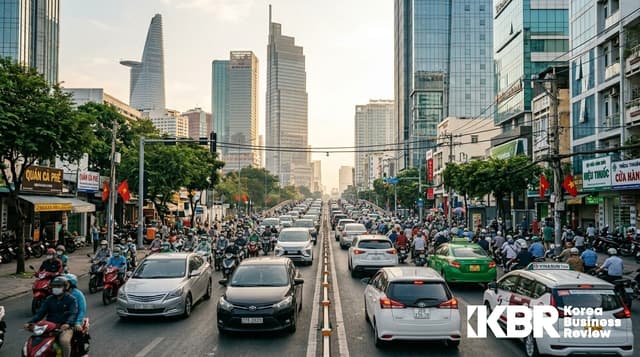
Can Vietnam Become the 'Second China'? The Race Toward an Asian Hub and Three Gateways
Vietnam surpassed $500 billion in GDP (approx. $514 billion) in 2025 with an 8% growth rate, entering upper-middle-income status with a per capita GDP of $5,026, and maintained momentum with 7.83% growth in the first quarter of 2026. While 2026 growth forecasts range from 6.3% (World Bank) to 7.6% (AMRO), the Vietnamese government has set an aggressive target of 10%, making the gap between ambition and reality a key watchpoint for the second half of the year. Korean investments—such as Samsung Electro-Mechanics' 1.8 trillion won FC-BGA investment, LG Innotek's Hai Phong expansion, and 74 MOUs signed at the April Korea-Vietnam Business Forum, totaling approximately $90 billion cumulatively—are elevating Vietnam from a 'low-wage assembly plant' to an 'AI substrate and R&D hub.' The U.S. 20% reciprocal tariff actually highlights Vietnam's price competitiveness compared to China (55%), but a 40% transshipment tariff pressures the simple assembly model, making the enhancement of local content a core task for Korean companies. Although the effective date of FTSE Emerging Market inclusion on September 21, 2026, opens capital market opportunities, the conclusion remains that Vietnam can only become an independent Asian hub—rather than a second China—if it clears three gateways: power infrastructure, competition with India, and policy consistency.
이태민 책임기자 · 06/11/2026
Biz / Investment
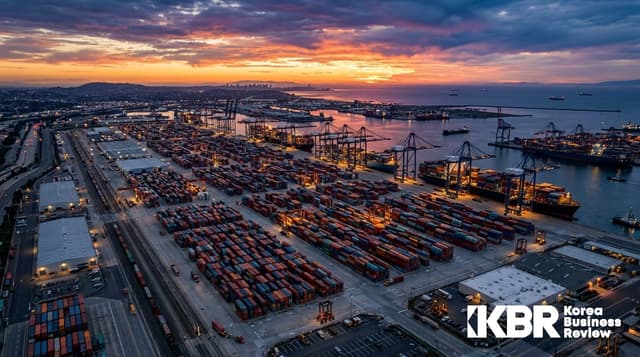
From Efficiency to Resilience: How Small and Medium-Sized Enterprises Can Survive the Tide of Global Supply Chain Restructuring
Driven by the compound shocks of geopolitical tensions, the COVID-19 pandemic, and climate change, global supply chains are undergoing a structural transition from an "efficiency-first" to a "resilience-first" model, with reshoring, nearshoring, friend-shoring, and diversification emerging as core trends. The U.S. government is strengthening policy support through executive orders, the establishment of supply chain councils, and risk assessment tools, while the EU is institutionally backing supply chain restructuring via the Critical Raw Materials Act (CRMA) and the Carbon Border Adjustment Mechanism (CBAM). Despite resource constraints, SMEs can leverage their strengths in agility and specialization to respond to supply chain shocks through five core strategies: diversifying suppliers, transitioning to near-sourcing, modifying inventory strategies (from JIT to JIC), adopting digital technologies, and building collaborative partnerships.
류현진 선임기자 · 05/27/2026
Biz / Investment
Tim Cook Steps Down, John Ternus Steps Up: Three Questions Apple's CEO Transition Raises for Investors
On April 20, 2026, Apple Inc. officially announced that CEO Tim Cook (65) will step down from his position effective September 1 and transition to the role of Executive Chairman.
KBR 편집부 · 04/27/2026