May Export Prices Hit 28-Year High, Import Prices Fall for Two Consecutive Months… Terms of Trade Improve for Four Consecutive Months
Export prices driven up by semiconductors, import costs held down by oil prices… The Bank of Korea's 'May 2026 Export and Import Price Index (Preliminary)' reveals the asymmetry of trade structure
The May 2026 Export and Import Price Index (Preliminary) released by the Bank of Korea on the 16th encapsulates a key facet of South Korea's trade structure. On one side, export prices surged to their highest level in about 28 years, while on the other side, import prices continued their downward trend for two consecutive months. This asymmetry, where two indicators announced in the same month point in completely opposite directions, is not a mere statistical coincidence, but the result of export unit prices being driven up by semiconductors and import costs being suppressed by falling international oil prices. At the intersection of these two trends, the terms of trade—the core indicator determining the profitability of South Korean export companies—recorded a double-digit improvement for the fourth consecutive month. For companies that survive on exports, this announcement is less about simple price statistics and more like a compass reading the direction of profitability.
Export and Import Price Index: A Mirror Reflecting Trade Profitability
To understand the weight of this announcement, we must first examine what the export and import price index actually measures. The index is a statistical measure showing how much the prices of goods exported and imported by South Korea have changed over a month and compared to a year ago. Rather than simply indicating price fluctuations, it allows us to gauge the direction of South Korea's trade profitability by showing whether export unit prices are rising faster or slower than import unit prices. In particular, the terms of trade index derived from this data serves as a core benchmark showing whether the actual earnings of export companies are improving or worsening, making it one of the macroeconomic statistics most closely tied to the corporate frontline. Based on this benchmark, the May index suggests that South Korea's exports have entered a remarkably favorable phase in terms of pricing.
Export Prices Hit Highest Level in About 28 Years… Up 46.9% Year-on-Year
The export price index in won terms was tallied at 188.58, up 0.3% from 188.02 in the previous month. While the monthly fluctuation of the figure itself may not appear large, the significance of its absolute level is considerable. According to the Bank of Korea, this is the highest level since March 1998, marking a record high since the period immediately following the foreign exchange crisis when export prices soared due to a sharp rise in the exchange rate. For the second consecutive month, the record for the highest level in about 28 years has been broken. Even more noteworthy is the year-on-year growth rate. May export prices rose 46.9% compared to a year ago, surpassing the previous month's increase of 41.3%. This is among the sharpest surges ever recorded, trailing only the historic maximum increase of 57.1% in March 1998 compiled by the Bank of Korea. The duration of the trend, rising for 11 consecutive months since last July, is also exceptional.
Semiconductor-Led Unit Price Strength, Supported by AI Demand
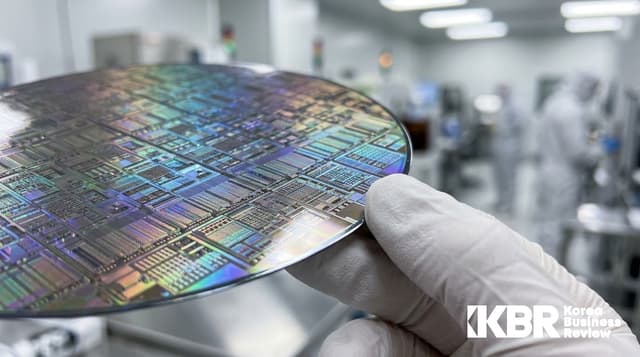
Driving this upward trend are semiconductors, South Korea's flagship export product. The export price index for computer, electronic, and optical products, which includes semiconductors, recorded 208.98, up 5.4% from a month earlier. The Bank of Korea explained this as the highest level in 15 years and 10 months since July 2010. Compared to the same period last year, it is an explosive figure of a 104% surge, more than doubling. Looking into detailed items, the strength of memory semiconductors stands out. DRAM export prices rose 7.6% month-on-month, while flash memory jumped 19.5%. The Price Statistics Team at the Bank of Korea diagnosed that demand for computer, electronic, and optical products centered on semiconductors continues to increase. However, they added the caveat that monthly price fluctuation rates remain volatile depending on supply and demand conditions and contract progress, guarding against interpretations that assign excessive meaning to short-term fluctuations.
Behind this surge in memory semiconductor unit prices lies a structural factor: the explosive demand for high-performance memory driven by the proliferation of artificial intelligence data centers. As generative AI services spread, demand for high-bandwidth memory, high-capacity DRAM, and server storage devices entering data centers has rapidly increased, acting as the driving force pulling up memory unit prices. The Bank of Korea's caveat regarding monthly volatility is interpreted as accounting for the characteristic of the memory market where contract unit prices are renewed on a quarterly basis, meaning a surge in a specific month may not necessarily carry over to the next. Nonetheless, a year-on-year increase of more than double serves as evidence supporting a trend of strength that transcends short-term fluctuations.
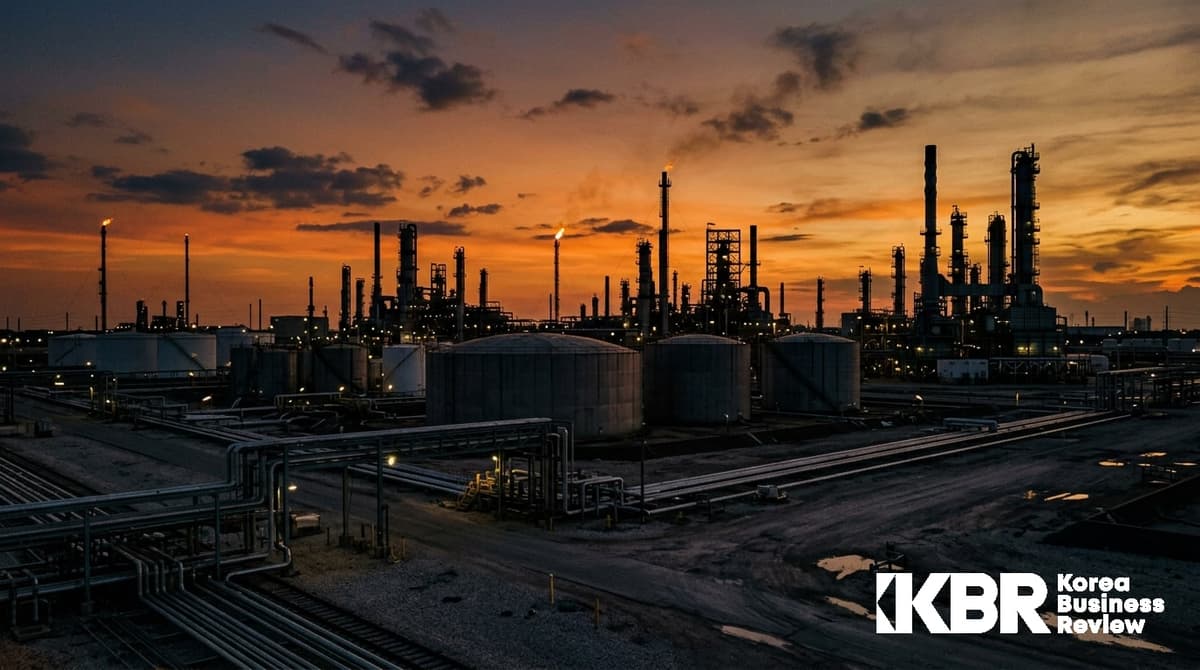
Aside from semiconductors, the strength of primary metal products is notable. Export prices for refined copper and aluminum plates rose 5.0% and 3.5% month-on-month, respectively. Compared to the same period last year, silver bullion surged 149.4% and aluminum plates rose 53.8%, fully reflecting the impact of strong raw material prices. Export prices for agricultural, forestry, and marine products also rose 1.8% over the month and 32.4% year-on-year, expanding their growth rate from the previous month's 28.7%. Notably, export prices for frozen marine products such as tuna rose 2.7% month-on-month and 54.8% compared to a year ago. Conversely, within the same export product group, coal and petroleum products showed diverging trends. Diesel and jet fuel export prices more than doubled year-on-year, but fell 18.9% and 12.7% respectively compared to the previous month, entering the sphere of influence of falling international oil prices. This is because, due to the characteristic of petroleum products being directly tied to crude oil prices, when oil prices drop, export unit prices quickly follow suit. The contrasting movement of semiconductors and petroleum products within the same export statistics shows that this export price strength is not a simultaneous rise across all items, but a selective strength driven by specific high-value-added items including semiconductors. Consequently, the temperature difference in unit price improvements perceived by exporting companies inevitably varies significantly depending on which product group they belong to.
A 'Real Strength' Distinct from the Foreign Exchange Crisis Era
One point to note is that this record-high export price record differs in nature from the situation immediately following the foreign exchange crisis. The surge in export prices in March 1998 was a rise led by the so-called exchange rate effect, where the won plummeted due to the currency crisis, causing dollar-denominated prices to inflate significantly when converted into won. In contrast, this May's increase, while partly influenced by exchange rates, is more largely attributable to increases in the unit prices of flagship export goods themselves, including semiconductors. This means that even at the same all-time high level, statistical illusions stemming from crises and real strength driven by booming demand must be qualitatively distinguished. The fact that computer, electronic, and optical products rose 104% year-on-year, driving the overall export price increase, supports this point.
Import Prices Fall for Two Consecutive Months… Decoupling Created by Oil Prices
While export prices took another step up from all-time highs, import prices moved in the exact opposite direction. The May import price index fell 0.3% month-on-month in won terms. This marks a downward trend for two consecutive months following April. However, compared to the same month last year, it remains 24.8% higher, meaning absolute price burdens have not completely disappeared. The core driving force pulling down import prices is international oil prices. The Bank of Korea's Price Statistics Team explained that import prices fell as mining products, coal, and petroleum products declined under the influence of falling international oil prices. In fact, last month's average monthly Dubai crude price stood at $103.15 per barrel, dropping 2.4% in a single month from $105.7 in the previous month.
Looking by use case, the downward structure of import prices becomes clearer. Raw materials fell 1.0% month-on-month, centered on mining products such as crude oil. Intermediate goods maintained a level similar to the previous month as coal and petroleum products fell while primary metal products rose. Specifically, naphtha fell 7.5% and diesel fell 19.2%, while primary metal products such as refined copper rose by around 5%, creating an offsetting effect. Import prices for capital goods and consumer goods rose 0.3% month-on-month. Import prices on a contract currency basis, excluding exchange rate effects, also fell 0.5% month-on-month, demonstrating that underlying import unit prices themselves declined despite the weak won. In other words, this drop in import prices is a trend based on the reality of falling raw material prices rather than an exchange rate illusion. This distinction is practically important. If the drop in import prices were purely due to exchange rate fluctuations, the burden would revive the moment the exchange rate rebounds, but if raw material prices themselves have fallen, that effect is likely to persist relatively longer. However, the fact that contract-currency import prices fell by a larger margin even as the won/dollar exchange rate rose slightly in May shows that although won weakness acted as an upward pressure on import costs, the drop in raw material prices more than offset it. Between the two competing forces of exchange rates and raw materials, the latter had the upper hand that month.
Terms of Trade Improve for Double Digits for Four Consecutive Months… Green Light for Profitability
The most important outcome produced by this asymmetry—rising export prices and falling import prices—is the improvement in the terms of trade. The net terms of trade index continued its double-digit growth rate for four consecutive months, as export prices rose 36.8% while import prices rose a modest 15.3%. Looking at the preceding trend, double-digit improvements were maintained following 13.0% in February, 22.8% in March, and 14.3% in April, reaching May as well. The net terms of trade index shows how many units of imports can be purchased by selling a single unit of exports; an increase in this figure means that more imports can be secured for the same export volume. For companies, this increases the real purchasing power earned per unit of export, serving as a welcome signal directly tied to profitability.
With export volumes also providing support, the improvement on the income side was even greater. The income terms of trade index rose 36.1%, driven by simultaneous increases in the net terms of trade index (18.7%) and the export volume index (14.7%). The income terms of trade index represents changes in total purchasing power earned through exports, and favorable unit prices and volumes together mean that South Korea's exports are receiving simultaneous momentum from both price and volume. Rather than an imbalance of rising prices with falling volumes or expanding volumes with lower unit prices, a structure where both axes improve simultaneously is a positive evaluation point for the qualitative side of export-led recovery.
The meaning that four consecutive months of improved terms of trade holds for the corporate frontline carries weight beyond abstract statistics. Better terms of trade mean that more raw materials and parts can be purchased for the same export volume, which directly translates to thicker margins calculated by subtracting import costs from export unit prices. Especially in South Korea's industrial structure, where processing trade—importing raw materials and parts to process and re-export—holds a large share, improvements in the terms of trade widely permeate the profitability of manufacturing as a whole. Companies importing semiconductor materials and parts to export finished goods, as well as those bringing in metal raw materials for processing, can all enter the beneficiary zone of this trend. However, because the degree of export unit price strength and the scale of import cost savings differ by industry, the actual perceived improvement in profitability inevitably varies depending on which product group a company handles.
US-Iran Ceasefire Variable… A Crossroads for the Second Half Outlook
However, considerable uncertainty remains as to whether this favorable structure will persist. The biggest variable is the US-Iran ceasefire agreement reached on June 15, the day before the announcement. The Bank of Korea's Price Statistics Team projected that the ceasefire agreement would ease upward pressure on import prices. This is because the easing of geopolitical tensions in the Middle East reduces the risk of further increases in international oil prices. In fact, looking at the trend up to June 12, just before the ceasefire agreement, Dubai crude had fallen 11.8% from the previous month. This reflects expectations that the oil price burden could lighten further.
Nevertheless, the Bank of Korea also issued a cautious stance that it is premature to be optimistic. The Price Statistics Team pointed out that uncertainties remain regarding the trajectory of oil prices, raw material prices, and the won/dollar exchange rate, depending on how quickly Middle Eastern oil facilities can normalize following the ceasefire agreement and to what extent passage through the Strait of Hormuz is restored. In particular, the won/dollar exchange rate had risen 2.3% month-on-month just before the ceasefire agreement, and the May monthly average exchange rate also rose 0.2% from 1,487.4 won in April to 1,490.1 won. If the exchange rate maintains a high level, it could act as upward pressure once again on won-denominated import prices. Ultimately, the future direction of export and import prices is expected to be a function of two variables: the speed of oil price stabilization and exchange rate movements.
Signals and Risks for Export Companies to Read
The implications this index delivers to South Korean export companies are clear. While semiconductor-centered export unit price strength is likely to continue for the time being, the fact that falling oil prices are easing the burden of import costs and maintaining favorable terms of trade is positive in terms of profitability. In particular, the steep rise in memory semiconductor unit prices is a factor directly contributing to both the sales and margins of related exporting companies. However, risks that companies must monitor together include the volatility of monthly unit price fluctuations, the actual pace of normalization in the Middle East post-ceasefire, and the persistence of high exchange rates.
Summarizing this announcement, South Korea's trade is currently in a relatively rare phase where export unit price strength and import cost stabilization are operating simultaneously. While semiconductor unit prices are trending upward on the back of artificial intelligence demand and falling oil prices are easing import burdens, the core profitability indicator—the terms of trade—has improved by double digits for four months. Unlike the exchange rate-induced illusion during the foreign exchange crisis, this uptrend is meaningful qualitatively because it is backed by real unit price rises in flagship items. However, a three-way uncertainty remains: the speed of normalization of Middle Eastern oil facilities and the Strait of Hormuz following the ceasefire agreement, the trajectory of the won/dollar exchange rate which has risen to the 1,490-won range, and the monthly volatility of memory unit prices. For export companies, while treating current favorable terms of trade as an opportunity to secure profitability, it is necessary to review raw material procurement and exchange risk management strategies under the premise that oil prices and exchange rates can change direction at any time. The June export and import price index to be announced by the Bank of Korea next month is expected to be the first test bed to confirm how the effects of the ceasefire agreement are reflected in actual figures.