Korea Business Review

industry-economic-policy

Major Electricity Tariff Overhaul After 49 Years: 'Time-of-Use' Pricing System to Reshape Korea's Industrial Landscape

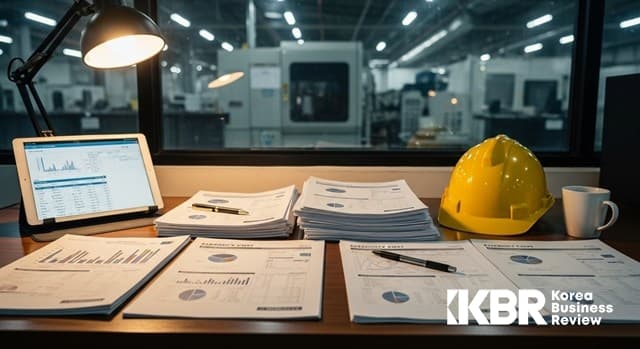
Inside a domestic manufacturing plant office piled with electricity bills and energy cost analysis data. [Photo = Korea Business Review DB] Ahead of the full implementation of the time-of-use pricing system, companies are redesigning production schedules and reviewing cost structures. Background of the policy shift: Why now? The Ministry of Climate, Energy and Environment and the Korea Electric Power Corporation officially announced on the 14th that the 'seasonal and time-of-use electricity tariff reform plan' will take full effect starting on the 16th.
류현진 기자Published 2026년 4월 15일Updated 2026년 8월 12일
Share
Major Electricity Tariff Overhaul After 49 Years: 'Time-of-Use' Pricing System to Reshape Korea's Industrial Landscape

Inside a domestic manufacturing plant office piled with electricity bills and energy cost analysis data. [Photo = Korea Business Review DB] Ahead of the full implementation of the time-of-use pricing system, companies are redesigning production schedules and reviewing cost structures. Background of the policy shift: Why now? The Ministry of Climate, Energy and Environment and the Korea Electric Power Corporation officially announced on the 14th that the 'seasonal and time-of-use electricity tariff reform plan' will take full effect starting on the 16th.

Inside a domestic manufacturing plant office piled with electricity bills and energy cost analysis data. [Photo = Korea Business Review DB]

Ahead of the full implementation of the time-of-use pricing system, companies are redesigning production schedules and reviewing cost structures.

Background of the Policy Shift: Why Now?


The Ministry of Climate, Energy and Environment and the Korea Electric Power Corporation officially announced on the 14th that the 'seasonal and time-of-use electricity tariff reform plan' will take full effect starting on the 16th.

While it may appear to be a simple adjustment of tariff brackets at first glance, the practical significance of this measure is much greater. This is the first major overhaul in 49 years since the time-of-use pricing system was introduced in 1977, and it serves as a signal that will fundamentally reorganize energy use patterns and cost structures across South Korea's industrial sector.

The existing electricity tariff system reflected the industrial realities of half a century ago. Because factory operation rates were high during the day, concentrating power demand, high tariffs were imposed, while cheaper rates were applied during the late-night hours when demand decreased to disperse demand. However, with the rapid expansion of renewable energy sources such as solar and wind power, this formula began to backfire. A distortion became structuralized in which solar power generation during daytime hours increased explosively, leaving surplus electricity, while excessive reliance was placed on high-cost LNG (liquefied natural gas) power generation during the demand peak period after sunset.

The government expects to actively utilize daytime solar power generation and reduce reliance on LNG power generation during the evening hours, thereby cutting energy costs and securing supply stability.

In addition, an exogenous variable—geopolitical risks originating from the Middle East—has been added. The government particularly expects this measure to help respond to energy supply and demand instabilities caused by the prolonged war in the Middle East. This is because maximum use can be made of surplus renewable energy power during the day to lower reliance on LNG imports.

Core Structure of the Overhaul: What Changes and How?


The framework of this overhaul can be summarized into three points.

First, weekday daytime tariffs are lowered.

The highest tariff (maximum load), which was previously applied from 11 a.m. to 3 p.m. on weekdays, is lowered by one tier to the intermediate tariff. The plan includes lowering the maximum load time zone tariff by an average of 15.4 won per kWh. During the daytime hours when the highest discount rate is applied, a tariff reduction of about 10% is expected based on the maximum load bracket. 

Second, evening peak tariffs are raised.

Instead, the 6 p.m. to 9 p.m. bracket is upgraded to the highest tariff. This is intended to induce demand suppression through price signals during times when reliance on LNG power generation increases after sunset.

Third, half-price benefits are provided during daytime hours on weekends and holidays.

The plan includes lowering electricity consumption rates by 50% during weekend daytime in spring and autumn.  During spring and autumn, electricity consumption rates are at the level of 97.2 won for intermediate load and 102.1 won for maximum load, but once the reform plan is implemented, tariffs will be charged at only half price from 11 a.m. to 2 p.m. 

The application targets and scope are also designed in phases. The 'Industrial (B)' sector, where the revised tariffs will be implemented first, consists of large-scale businesses with a contracted capacity of 300 kW or more, accounting for 46% of South Korea's total electricity consumption.  It will apply to all businesses starting on the 16th, excluding 514 workplaces that applied for a deferral (1.3% of the total).  The government plans to expand the time-of-use pricing system to Industrial (A) II, General (A) II and (B), and Educational (B) starting June 1, and is also reviewing the transition of the residential tariff system as a mid-to-long-term task.

The electric vehicle charging sector is also a beneficiary of this overhaul. Starting on the 18th, charging tariffs will be discounted by 50% during weekend daytime hours in spring and autumn, immediately applying to about 94,000 private chargers and about 13,000 public fast chargers, generating a discount effect of up to 40 to 48 won per kWh. 

Industrial Response: Stark Contrasts Across Sectors


While the government maintains that this overhaul will benefit the majority of companies, responses from industrial sites vary greatly depending on sector characteristics.

The government stated that industrial power demand is expected to gradually shift to daytime hours due to this overhaul, and an average tariff reduction effect of about 1.7 won/kWh is expected for the Industrial (B) sector as a overall baseline.

However, reality is much more complex. This is because whether a company benefits depends on whether it consumes more electricity during the day or at night. In the semiconductor industry, assessments suggest that the impact of time adjustments will not be significant due to the nature of 24-hour processes. An official from the semiconductor industry said, "Because the factory structure operates on a constant basis, even if day and night tariffs change somewhat, the actual cost difference will be limited." Large-scale continuous process industries such as steel mills face similar situations.

On the other hand, general manufacturing, food processing, and light industries that mainly operate during the day are highly likely to receive relatively large benefits. Home appliance and IT manufacturing sectors do not have a relatively high proportion of electricity costs, so direct benefits will not be huge, but they are responding positively to the overall direction. 

The electric furnace-based steel industry, which has intensively used electricity at night, cannot hide its concerns. Meanwhile, the heavy steel-making industry with high power usage is expected to respond by partially adjusting from the existing night-centered operation to daytime hours, but it believes this will not make a big difference in terms of overall costs. 

The electric vehicle charging infrastructure industry also worries about partial side effects. Woo Seung-hoon, a professor of automotive engineering at Kookmin University, pointed out, "Electric vehicle charging is mainly done during late-night hours, and if light-load tariffs rise, the cost burden could rather increase."

The status of the 514 deferral applications is also suggestive. By sector, deferral applications were made in the order of 60 food businesses, 55 primary metal businesses, and 49 non-metallic mineral businesses, but this is interpreted as decisions being made based on individual companies' power consumption situations rather than being concentrated in a specific sector. 

Regional Tariff System: The Anticipated Next Variable


If this time-of-use tariff overhaul is the first domino, the second domino is the regional differential tariff system scheduled to be introduced within the year. Along with the time-of-use tariff system, a regional tariff system will also be introduced within this year. Transmission and distribution costs will be reflected in tariffs so that the closer a location is to the electricity production site, the cheaper the tariff becomes. 

The ripple effect is considerable. Kim Sung-hwan, Minister of Climate, stated at a Cabinet meeting in February that if a regional tariff system is introduced, the tariff gap between the metropolitan area and regional provinces could occur by about 10 to 20 won per kWh. In other words, if a metropolitan company relocates to a regional area, it will achieve a tariff reduction effect of about 10%. 

This is not simply a matter of tariff differences, but a structural change that could affect domestic manufacturing location strategies as a whole. Attention must be paid to distributed energy special zones (Busan, Jeonnam, Jeju, Uiwang in Gyeonggi, Pohang in Gyeongbuki, Ulsan, and Seosan in South Chungcheong), and methods of trading electricity directly with power plants without going through KEPCO are also being reviewed together, raising the prospect that energy costs will emerge as a core variable in corporate location decisions over the mid-to-long term.

Emissions Trading Scheme Phase 4: Another Cost Wave


Coupled with the electricity tariff overhaul, the 4th planning period of the Emissions Trading Scheme (2026–2030), which takes effect starting this year, also acts as a factor pressing down on the industrial sector's energy cost structure.

In the 4th planning period, the paid allocation ratio for the power generation sector will be raised in stages, starting at 15% in 2026, followed by 20% in 2027, 30% in 2028, 40% in 2029, and 50% in 2030.  It is analyzed that five public power generation companies must shoulder about 13.99 trillion won solely for purchasing emission allowances from 2026 to 2030. 

Climate and environmental charges included in electricity tariffs have surged by about 70% from 5.3 won per kWh in 2021 to 9.0 won in 2025, and as the paid allocation ratio increases, these costs are likely to rise even more steeply.

This is why concerns are raised that short-term savings effects through the time-of-use tariff system overhaul could be offset by rising carbon costs. The government's position is to prevent soaring emission allowance prices through the introduction of a market stabilization reserve system and the expansion of renewable energy distribution, but uncertainties remain large.


Revision of Enforcement Decree on Unfair Trade Investigations: Trade Response Infrastructure Also Strengthened


On the same day, April 14, the Ministry of Trade, Industry and Energy announced an important legislative measure in the area of trade policy, separate from energy price policies. The Ministry of Government Legislation legislatively announced the 'partial amendment enforcement decree to the Act on Investigation of Unfair Trade Practices and Remedy for Industrial Damage' as of April 14, 2026. 

This measure holds unique significance in the current trade environment. Amid intensifying protectionist trends represented by U.S. reciprocal tariff policies, this is a signal that South Korea is organizing its domestic legal infrastructure to respond to unfair trade damages. The amendment is expected to head in the direction of increasing the operational efficiency of industrial damage relief mechanisms such as anti-dumping and safeguards, and could serve as a practical shield for domestic manufacturing sectors exposed to surging imports or unfair competition.

The Ministry of Trade, Industry and Energy also legislatively announced a 'partial amendment enforcement rule and enforcement decree to the Act on Promotion of Industrial Digital Transformation' on April 10, following the announcement of enactment and amendment drafts for the enforcement decree and enforcement rule of the Special Act on Strengthening Competitiveness and Carbon-Neutral Transition of the Steel Industry on April 1. It is an aspect of simultaneously organizing the legal foundation of energy and industrial policies.


March ICT Exports Surpass $40 Billion for the First Time in History


The background of these policy changes is situated within the context of structural buoyancy in South Korea's exports. With semiconductors spreading their wings, March ICT exports surpassed $40 billion for the first time in history. The South Korean economy in 2026 is forecasted to grow by about 1.9%, higher than the 1.0% of 2025, driven by strong semiconductor exports and consumption recovery. 

However, structural vulnerabilities coexist behind export performance. Exports to the U.S. were sluggish due to the impact of U.S. tariff hikes, but semiconductor exports surged, creating a clear country-by-country discrepancy where exports to countries other than the U.S. expanded.

In an environment where export structure vulnerabilities centering on a single industry called semiconductors, uncertainties over U.S. semiconductor tariffs, and competitive pressure from China act complexly, this energy price policy overhaul also implies an intention to support manufacturing competitiveness from the perspective of energy costs.

KBR INSIGHT: Three Reasons Why Companies Must Move Now


① Time Is Money — The Timing to Redesign Production Schedules

The essence of this overhaul is the 'time pricing of electricity tariffs'. The conversion of the maximum load tariff from 11 a.m. to 4 p.m. into an intermediate tariff virtually has the character of a subsidy for companies' daytime production activities. Sectors that can increase the proportion of daytime production—food, light industries, assembly manufacturing, etc.—can receive immediate benefits. This is why reviewing production schedules and introducing energy management systems (EMS) is urgent.

② Regional Tariff Systems — The Paradigm of Location Strategies Changes

The regional electricity tariff system scheduled for introduction in the second half of the year demands fundamental changes to industrial location strategies that have previously been fixed around the metropolitan area. The energy cost competitiveness of designated distributed energy special zones (Jeonnam, Pohang, Ulsan, Seosan, etc.) will go beyond simple wage and land price comparisons to become a core factor in location decisions. For companies reviewing new factory or data center locations, now is the time for decision-making.

③ Prepare for Realistic Scenarios of Rising Carbon Costs

As the paid allocation ratio of Emissions Trading Scheme Phase 4 expands in stages, carbon costs reflected in power production costs have no choice but to increase structurally. RE100 implementation and the installation of self-consumption solar power must be redefined not as simple ESG image strategies, but as practical energy cost hedging means. Utilizing government building support business subsidies and on-site PPA systems in parallel can significantly reduce initial investment burdens.

South Korea's energy price system has now entered a transitional phase after half a century.

This transition is not a simple tariff table change, but a structural innovation that delivers the cost structure of a power system reorganized around renewable energy to the entire industrial sector through market price signals. The cost gap between companies that respond proactively and those that do not will widen further as time goes on.


KBR Access

정책인사이트 콘텐츠는 Standard 이상 열람할 수 있습니다

이 콘텐츠는 Standard 이상 회원에게 제공됩니다. Standard는 인사이트 4.0, 정책인사이트, Global Radar 등 일반 멤버십 콘텐츠를 이용할 수 있습니다.

이번 달 열람 현황: 0 / 0건 사용