
FUNDING & SUPPORT
Ministry of SMEs and Startups Supplementary Budget of KRW 1.69 Trillion Passes National Assembly… Total Focus on Exports, Small Merchants, Startups, and AI Transformation
During the second week of April (10th–13th), the policy financing landscape for small and medium-sized enterprises (SMEs) and startups was abuzz. The core driver was the passage of the Ministry of SMEs and Startups' 2026 1st supplementary budget through the plenary session of the National Assembly, finalizing a total budget of KRW 1,690.3 billion.

During the second week of April (10th–13th), the policy financing landscape for small and medium-sized enterprises (SMEs) and startups was abuzz.…
KBR Access
Read this Policy Insight article now
Buy this article for ₩3,900 (30 days of access), or get KBR+ 10 — 10 paid articles for ₩9,900 (₩990 each). KBR Members (free sign-up) read one paid article free every month.
✓ No account needed · Checkout is in Korean
Best value
KBR+ 10 · ₩9,900
An insight pass that opens 10 KBR+ articles, one at a time, whenever you like
10 KBR+ articles including KBR Analysis — ₩990 each. Use them within 60 days.
Get KBR+ 10KBR NEWSLETTER
Sign up for free and get the KBR Newsletter!
Sign up and opt in to the newsletter to receive KBR's curated business and economic insights by email.
KBR BUSINESS SOLUTION
Assess your startup’s competitiveness and growth potential.
KBR Startup Evaluation provides a structured review of business viability and growth readiness.
View Startup Evaluation→LATEST IN TOPIC
Latest in this topic
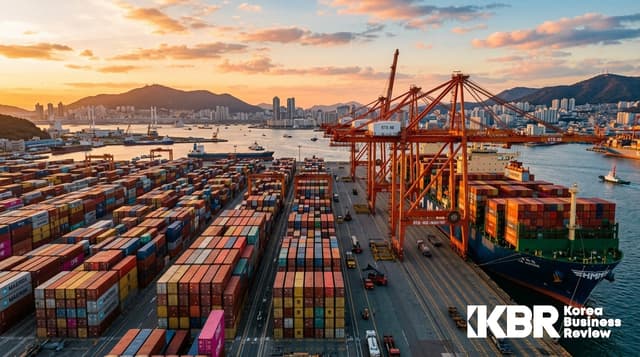 MSS Issues 3 Public Notices in 3 Days: Opens Applications for Bio Challenge and 2nd Round of Logistics Vouchers
 7 Hidden Conditions Companies Must Check Before Applying for Policy Funds
 13 Trillion Won Released in May: A Comprehensive Guide to Policy Funds for SMEs, Small Businesses, and Startups to Apply for Now
Related Content
The Great Regulatory Shift: Real Estate, AI, and Trade Upended Simultaneously in April 2026
KBR+Era of AI Regulatory Collision: The Intersection of the Finalization of EU AI Act Technical Standards and the 100th Day of South Korea's AI Basic Act Enforcement
KBR+Complete Overhaul of Regulations in 28 Years: Reshaping Korea's Industrial Landscape Through 'Mega-Special Zones'
KBR+Official Projection of Growth Exceeding 2% — The Day Semiconductor Exports Hit $8.5 Billion and KOSPI Surpassed 7,800
KBR+Semiconductor 'Supercycle' Opens Era of First-Ever Monthly $80B Exports