ISSUE BRIEFING
The Paradox of the 40 Trillion Won Delivery Era: Why Rider Incomes Are Moving Backward
While the delivery market transaction volume grew 10.9% year-on-year to reach an annual scale of 40 trillion won as of January 2026, riders' perceived incomes have actually decreased, leading to a paradox where protests are even calling for a minimum wage per delivery. Although Baemin announced that the average monthly income of riders increased to 3.93 million won, this is based on total gross income before cost deductions for full-time riders working 40 hours or more per week, creating a wide gap with the actual net income of many riders who must bear fuel and insurance costs. The first cause is the free-delivery competition among platforms that began in earnest in 2024, where cost-cutting pressures were passed on to rider delivery fees, lowering the unit price per delivery and increasing labor intensity through bundled deliveries. The second and third causes are oversupply due to the influx of two-job workers amid a youth employment slump, and a cost-shifting structure featuring opaque algorithmic dispatch and straight-line distance delivery fee calculations. Entering 2026, as discussions on a minimum wage per delivery, the implementation of a presumptive employee status system for platform workers, and legislation on fee transparency gain momentum, the era of 'earning as much as you run' has passed, and the very rules of unit pricing and distribution have been brought to the negotiation table.
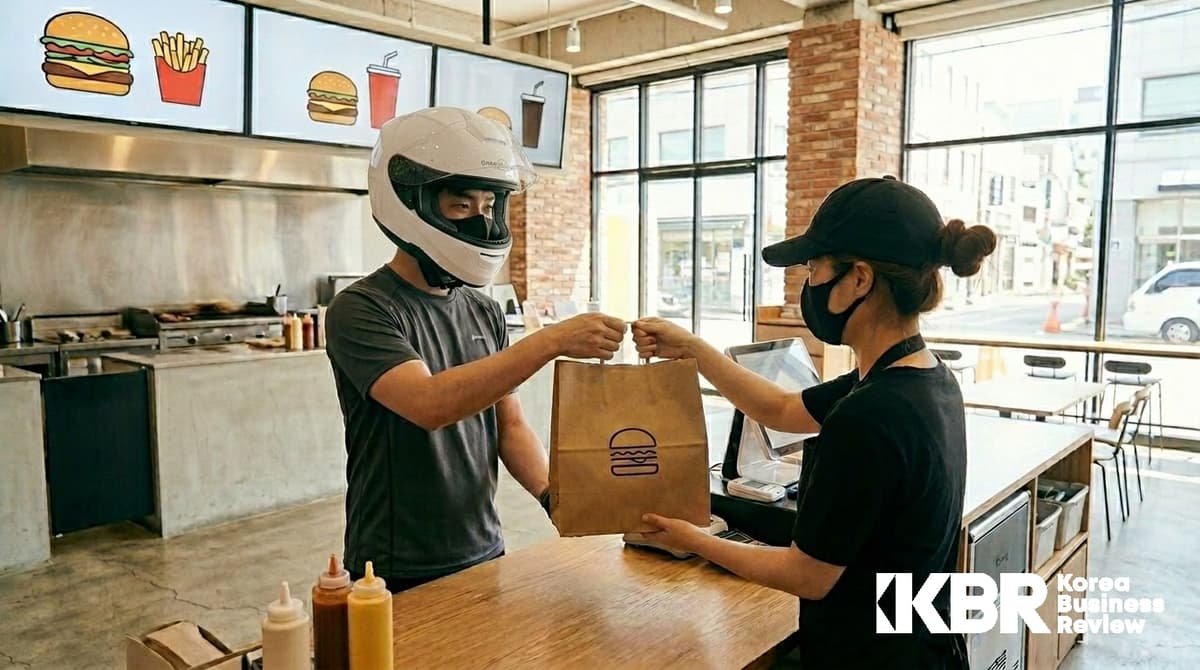
While the delivery market transaction volume grew 10.9% year-on-year to reach an annual scale of 40 trillion won as of January 2026, riders' perceived incomes have actually decreased, leading to a paradox where protests are even calling for a minimum wage per delivery. Although Baemin announced that the average monthly income of riders increased to 3.93 million won, this is based on total gross income before cost deductions for full-time riders working 40 hours or more per week, creating a wide gap with the actual net income of many riders who must bear fuel and insurance costs. The first cause is the free-delivery competition among platforms that began in earnest in 2024, where cost-cutting pressures were passed on to rider delivery fees, lowering the unit price per delivery and increasing labor intensity through bundled deliveries. The second and third causes are oversupply due to the influx of two-job workers amid a youth employment slump, and a cost-shifting structure featuring opaque algorithmic dispatch and straight-line distance delivery fee calculations. Entering 2026, as discussions on a minimum wage per delivery, the implementation of a presumptive employee status system for platform workers, and legislation on fee transparency gain momentum, the era of 'earning as much as you run' has passed, and the very rules of unit pricing and distribution have been brought to the negotiation table.
The Market Is Growing, but Riders' Wallets Are Thinning Looking only at the external indicators of the delivery market, there seems to be no reason for riders' incomes to decrease.…
KBR Access
You've used up this month's KBR News reads
Non-members can read a limited amount of KBR News content. Sign up for free or check the membership guide to keep reading.
This month's reading: 1 / 1 used
KBR NEWSLETTER
Sign up for free and get the KBR Newsletter!
Sign up and opt in to the newsletter to receive KBR's curated business and economic insights by email.
LATEST IN TOPIC
Latest in this topic
 OECD Forecasts 2.9% Global Growth for This Year: Can South Korea's Upward Growth Revision Be Read as Expanding Corporate Demand?
 Children Who Are Good at Math but Struggle with Choices: Why Elementary Economic Education Is Needed
 "If You Can't Do AI, Even the CEO's Seat Is at Risk"... Global Executives Begin to Tense Up
RELATED CONTENT
Related Content
Why Germans Overestimated Chinese Investment by 30x, and Why Trust Doesn't Change Even When the Numbers Are Corrected
FreeVietnam, Once Called the Land of Opportunity: Is It Still?
FreeSeoul Ranks 5th Globally in Innovation Clusters: Conditions for Collaboration and Commercialization that Businesses Must Read from WIPO Rankings
무료 요약 · PDF 별도 구매Doosan Robotics: Moving Beyond Robot Sales to Automation Profits