Korea Business Review · Section
KBR ANALYSIS
Premium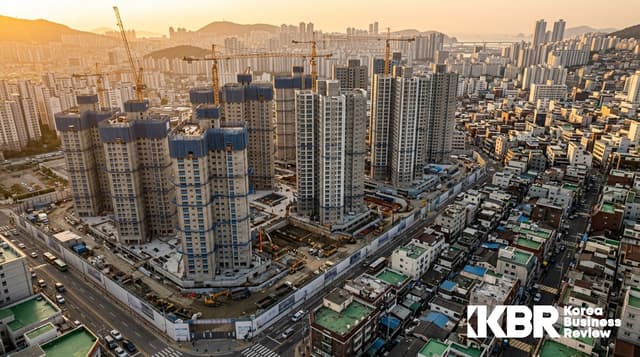
KBR Special Reports
Where is Population Growth Highest? South Korea's 2026 Population Map Led by Gwangmyeong, Hwaseong, and Pyeongtaek
Driven by large-scale redevelopment and reconstruction apartment moves, Gwangmyeong, Gyeonggi Province, saw its population rebound by approximately 8.5%, rising from 277,281 in October 2024 to 300,826 in February 2026, recovering the 300,000 mark after about five years. Hwaseong and Pyeongtaek in southern Gyeonggi Province posted population growth rates of 12.5% and 9.6% respectively over the past five years, backed by massive investments from semiconductor giants like Samsung Electronics and SK hynix, with a notable influx of the 3040 generation. Several other cities and counties in Gyeonggi Province, including Uiwang, showed population growth driven by the creation of new residential districts. Conversely, the administrative capital Sejong experienced three consecutive months of population decline from December 2025 to February 2026, turning into a net outflow due to factors such as the relocation of the Ministry of Oceans and Fisheries. Separately from domestic migration, the number of foreign nationals residing in South Korea surpassed 2.8 million for the first time in October 2025, setting a new all-time high.
이태민 책임기자 · 07/18/2026
Read more →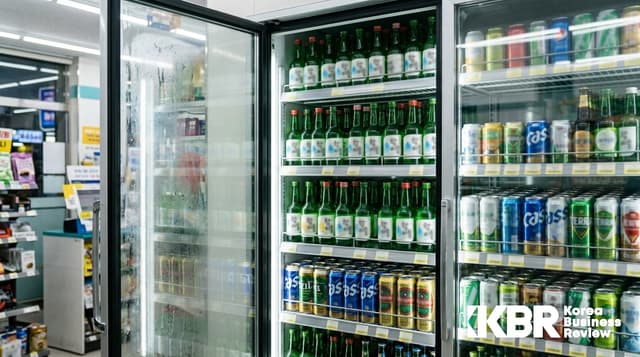
KBR Research Notes
Is Soju Sales Still Tied to the Economy? The 'Inverted Correlation' Revealed by Data
이태민 책임기자 · 07/10/2026

KBR Research Notes
June 2026 CEO and Board Appointment Analysis: A Closed H1 Appointment Cycle and What Boards Chose
이태민 책임기자 · 07/04/2026

KBR Research Notes
Korean Factories Are Now Heading to the U.S.: Direct Investment Hits $10.1 Billion, Highest in 4 Years
이지영 기자 · 07/02/2026
KBR Research Notes
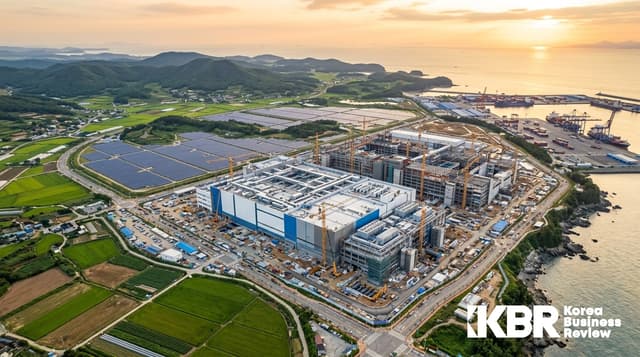
Samsung-SK's 800 Trillion Won Honam Bet Redraws South Korea's Industrial Map
이태민 책임기자 · 06/30/2026
KBR Research Notes
Are Salary Hikes Keeping Up with Inflation… The Widening Gap of 'Perceived Wages' in 2026
In the first quarter of 2026, the monthly average nominal wage for regular workers in South Korea rose 3.4% year-on-year to KRW 4.555 million, but inflation-adjusted real wages increased by only 1.3% to KRW 3.847 million, meaning a significant portion of salary increases was absorbed by inflation. With consumer inflation rebounding to 3.1% in May 2026—up from a stable 2.1% in 2025—and the Bank of Korea raising its annual inflation forecast to 2.7%, the possibility of real wages turning negative in the second half of the year cannot be ruled out. Wage recovery speeds varied significantly by company size; in the first half of 2025, large enterprises (300 or more employees) saw a 5.7% increase compared to 2.7% for small and medium-sized enterprises (under 300 employees), with the core of this gap stemming from special allowances such as performance bonuses. Disparities widened not only by scale but also by industry and employment type, with wages in finance and insurance versus accommodation and food services differing by more than three times, while wages for temporary and daily workers actually declined. According to OECD comparisons, South Korea's real wages grew by over 2.9 cumulatively compared to early 2021, surpassing the median value, but the recovery margin itself is modest. Ultimately, the answer to whether 'salaries are keeping up with inflation' depends entirely on which company, industry, and employment type one belongs to.
류현진 선임기자 · 06/22/2026

KBR Research Notes
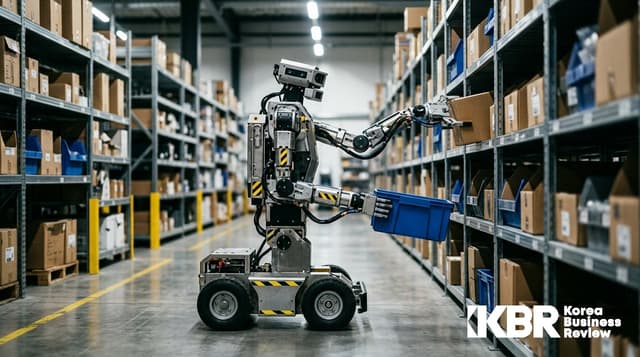
Where Does South Korea's Humanoid Robot Technology Stand?
In the first half of 2026, South Korea's humanoid robot industry moved beyond exhibition demos into actual industrial site validation stages. Hyundai Motor Group showcased its fully electric Atlas at CES 2026 and presented a mass production roadmap aiming for phased deployment in U.S. plants starting in 2028. Multiple media outlets reported that Rainbow Robotics' mobile dual-arm robot RB-Y1, for which Samsung Electronics is the largest shareholder, has been deployed to Coupang logistics centers for pilot testing. Meanwhile, the government aims to invest over 1 trillion won through the K-Humanoid Alliance by 2030, targeting the development of a robot AI foundation model by 2028 and mass production of over 1,000 units annually by 2029. Strategies among major conglomerates also clearly diverge, with LG Electronics targeting a separate front in home-use humanoids. However, while hardware competitiveness is approaching global levels, AI software (physical AI) remains in a chasing phase behind the U.S. and China, leaving South Korea with the challenge of combining verified hardware with smarter brains and turning field tests into actual revenue.
최수진 기자 · 06/19/2026
KBR Special Reports
Winners and Losers in the AI Transition: How Prepared Are South Korean Enterprises?
According to a Microsoft report (January 2026), South Korea has risen to 18th globally with an AI population adoption rate of 30.7%, entering the clear 'winner' group at the national level. However, a Korea Chamber of Commerce and Industry (KCCI) survey revealed that actual corporate AI utilization hovers in the 30% range, exposing a wide gap of about 48 percentage points compared to the 78.4% who acknowledge its necessity. While the utilization gap between large corporations and SMEs stood at 13.8 percentage points, controlling for environmental variables such as education, guidelines, and acceptance attitudes narrowed the pure scale gap to 4 percentage points, confirming that 'environment' rather than 'scale' is the real variable. The AI workforce has grown to approximately 57,000—still falling far short of the U.S. (780,000)—and the wage premium remains at just 6%, leaving a vulnerable link of talent outflow. Ultimately, the success or failure of the AI transition depends not on whether technology was adopted, but on whether the organization has established the environment to convert that adopted technology into organizational growth, presenting an opportunity to narrow the gap.
이태민 책임기자 · 06/16/2026

KBR Research Notes
How Much Do We Spend on AI Subscriptions a Month? "One in Four Users Are Paid Subscribers"
One in four domestic generative AI users (24.3%) are paying for subscriptions, with those in their 20s recording the highest payment rate at 30.1% (Korea Consumer Agency's '2025 Consumption Life Index'). Based on KB Kookmin Card payment data, generative AI subscription customers surged by 413% and spending jumped by 516% over two years, driven primarily by text-based AI. In the U.S., the median monthly expenditure for paying households stands at $20, effectively becoming the 'base rate,' but spending is shifting upward as users in the upper $21–$40 bracket increased by 50% compared to 2024 (BofA). 'Multiple subscriptions' are on the rise, with users averaging 4 tools and spending $66 a month, and a clear 'lock-in' phenomenon is evident as the average retention period reaches 7 months. Across the broader subscription market, AI subscriptions increased by 8.4 percentage points year-on-year, ranking first in growth, while content memberships dropped by 5.7 percentage points, ranking first in decline, confirming a shift in the landscape that is squeezing out OTT services (OpenSurvey).
김민경 책임기자 · 06/15/2026

KBR Research Notes
100 Days of the Hormuz Blockade: Can South Korea's 200 Days of Strategic Reserves Hold Out, and When Will Oil Prices Stabilize?
South Korea's combined government and private oil reserves stand at 200 days (ranking 6th globally by IEA standards), successfully shielding the nation from short-term supply and demand shocks. However, government reserves fell to around 80 million barrels following a record release of 22.46 million barrels in March. International crude oil prices peaked at $119 per barrel for Brent crude on March 8 and have since declined to the $90 range as of June, but remain over 50% higher than pre-crisis levels ($50-$60 range). May consumer inflation rose 3.1% year-on-year, the highest in two years and two months, with petroleum products alone surging 24.2%. Experts predict it will take at least six months for the perceived stabilization of inflation even after oil prices settle. Goldman Sachs and Morgan Stanley project Brent crude to settle at $90 by year-end based on a baseline scenario of resumed passage by late June, whereas RBC and IEA warn that cumulative supply losses could reach 1.5 billion barrels if the blockade is extended. This crisis has reconfirmed South Korea's structural vulnerability, with a 69% dependence on Middle Eastern crude and over 95% of it passing through Hormuz. Consequently, diversifying import sources and securing alternative shipping routes are more urgent tasks than ranking 6th in reserve days.
김민경 책임기자 · 06/11/2026