RESEARCH NOTES
100 Days of the Hormuz Blockade: Can South Korea's 200 Days of Strategic Reserves Hold Out, and When Will Oil Prices Stabilize?
South Korea's combined government and private oil reserves stand at 200 days (ranking 6th globally by IEA standards), successfully shielding the nation from short-term supply and demand shocks. However, government reserves fell to around 80 million barrels following a record release of 22.46 million barrels in March. International crude oil prices peaked at $119 per barrel for Brent crude on March 8 and have since declined to the $90 range as of June, but remain over 50% higher than pre-crisis levels ($50-$60 range). May consumer inflation rose 3.1% year-on-year, the highest in two years and two months, with petroleum products alone surging 24.2%. Experts predict it will take at least six months for the perceived stabilization of inflation even after oil prices settle. Goldman Sachs and Morgan Stanley project Brent crude to settle at $90 by year-end based on a baseline scenario of resumed passage by late June, whereas RBC and IEA warn that cumulative supply losses could reach 1.5 billion barrels if the blockade is extended. This crisis has reconfirmed South Korea's structural vulnerability, with a 69% dependence on Middle Eastern crude and over 95% of it passing through Hormuz. Consequently, diversifying import sources and securing alternative shipping routes are more urgent tasks than ranking 6th in reserve days.
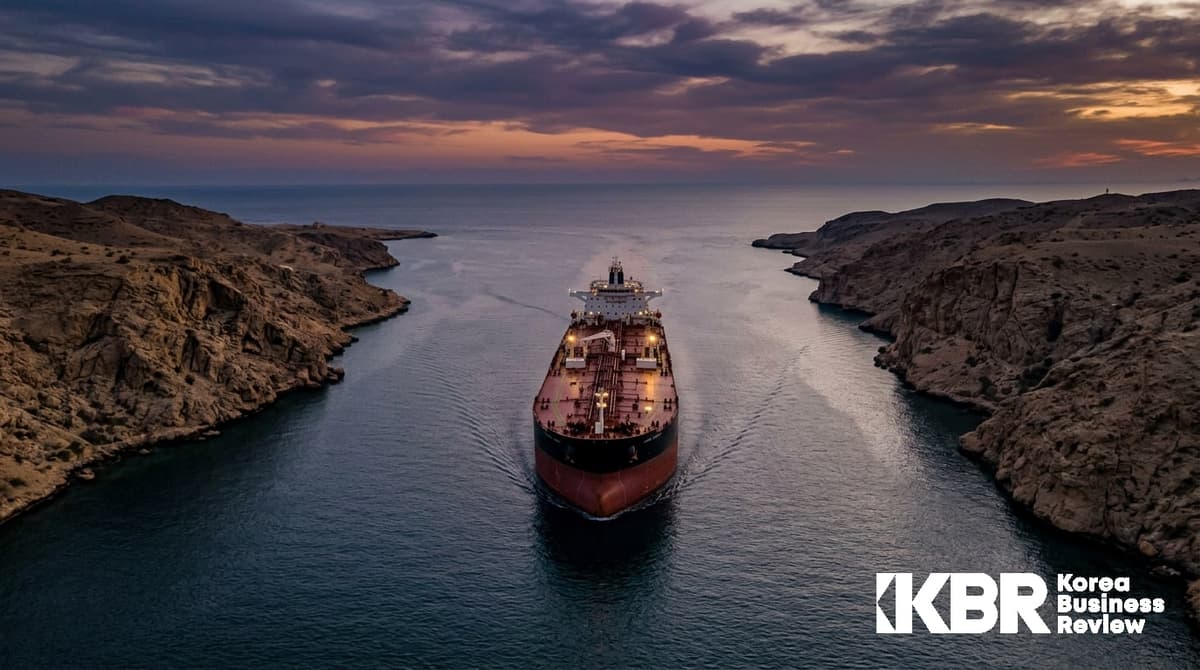
South Korea's combined government and private oil reserves stand at 200 days (ranking 6th globally by IEA standards), successfully shielding the nation from short-term supply and demand shocks. However, government reserves fell to around 80 million barrels following a record release of 22.46 million barrels in March. International crude oil prices peaked at $119 per barrel for Brent crude on March 8 and have since declined to the $90 range as of June, but remain over 50% higher than pre-crisis levels ($50-$60 range). May consumer inflation rose 3.1% year-on-year, the highest in two years and two months, with petroleum products alone surging 24.2%. Experts predict it will take at least six months for the perceived stabilization of inflation even after oil prices settle. Goldman Sachs and Morgan Stanley project Brent crude to settle at $90 by year-end based on a baseline scenario of resumed passage by late June, whereas RBC and IEA warn that cumulative supply losses could reach 1.5 billion barrels if the blockade is extended. This crisis has reconfirmed South Korea's structural vulnerability, with a 69% dependence on Middle Eastern crude and over 95% of it passing through Hormuz. Consequently, diversifying import sources and securing alternative shipping routes are more urgent tasks than ranking 6th in reserve days.
Inflation Shock of 3.1% Despite Securing 200 Days of Government and Private Reserves; Agencies View "Normalization of Passage in June as the Turning Point" The word that shook the global energy market in the first half of 2026 is undoubtedly "Hormuz." The crisis escalated on February 28 when the Islamic Revolutionary G…
KBR Access
KBR Analysis content is available to Premium members only
This content is available exclusively to Premium members. Premium comes as a 1-month pass (₩34,900, one-time payment, no auto-renewal) or a monthly subscription (₩29,900/month) — both available via Toss Payments. Premium unlocks core content including ESG, KBR Articles, and KBR Analysis.
FREE ACCOUNT · NO CARD REQUIRED
Create a free KBR account
Creating a KBR account is free and takes about a minute — no card required. You'll come straight back to this page once you're done.
KBR NEWSLETTER
Sign up for free and get the KBR Newsletter!
Sign up and opt in to the newsletter to receive KBR's curated business and economic insights by email.
LATEST IN TOPIC
Latest in this topic
 Even When U.S. Industrial Production Stagnates, Manufacturing Declines: Why Facility Investments Cannot Be Decided by Average Indicators
 Expanding High-Speed Rail Seats by 116,000 Weekly: How Much Will It Ease KTX Booking Struggles?
 Facility Investment Rose 7.5% While Consumption Dropped 2.4%: The Temperature Gap in Recovery Shown by July Industrial Indicators
RELATED CONTENT
Related Content