Korea Business Review

kbr-research-notes

How Much Do We Spend on AI Subscriptions a Month? "One in Four Users Are Paid Subscribers"

One in four domestic generative AI users (24.3%) are paying for subscriptions, with those in their 20s recording the highest payment rate at 30.1% (Korea Consumer Agency's '2025 Consumption Life Index'). Based on KB Kookmin Card payment data, generative AI subscription customers surged by 413% and spending jumped by 516% over two years, driven primarily by text-based AI. In the U.S., the median monthly expenditure for paying households stands at $20, effectively becoming the 'base rate,' but spending is shifting upward as users in the upper $21–$40 bracket increased by 50% compared to 2024 (BofA). 'Multiple subscriptions' are on the rise, with users averaging 4 tools and spending $66 a month, and a clear 'lock-in' phenomenon is evident as the average retention period reaches 7 months. Across the broader subscription market, AI subscriptions increased by 8.4 percentage points year-on-year, ranking first in growth, while content memberships dropped by 5.7 percentage points, ranking first in decline, confirming a shift in the landscape that is squeezing out OTT services (OpenSurvey).
김민경 책임기자Published 2026년 6월 15일Updated 2026년 8월 12일
Share
How Much Do We Spend on AI Subscriptions a Month? "One in Four Users Are Paid Subscribers"

One in four domestic generative AI users (24.3%) are paying for subscriptions, with those in their 20s recording the highest payment rate at 30.1% (Korea Consumer Agency's '2025 Consumption Life Index'). Based on KB Kookmin Card payment data, generative AI subscription customers surged by 413% and spending jumped by 516% over two years, driven primarily by text-based AI. In the U.S., the median monthly expenditure for paying households stands at $20, effectively becoming the 'base rate,' but spending is shifting upward as users in the upper $21–$40 bracket increased by 50% compared to 2024 (BofA). 'Multiple subscriptions' are on the rise, with users averaging 4 tools and spending $66 a month, and a clear 'lock-in' phenomenon is evident as the average retention period reaches 7 months. Across the broader subscription market, AI subscriptions increased by 8.4 percentage points year-on-year, ranking first in growth, while content memberships dropped by 5.7 percentage points, ranking first in decline, confirming a shift in the landscape that is squeezing out OTT services (OpenSurvey).

How Much Do We Spend on AI Subscriptions a Month? "One in Four Users Are Paid Subscribers"

Korea Consumer Agency survey shows 24.3% paid subscription rate; 20-somethings lead the trend, with growth ranking first across all subscription categories


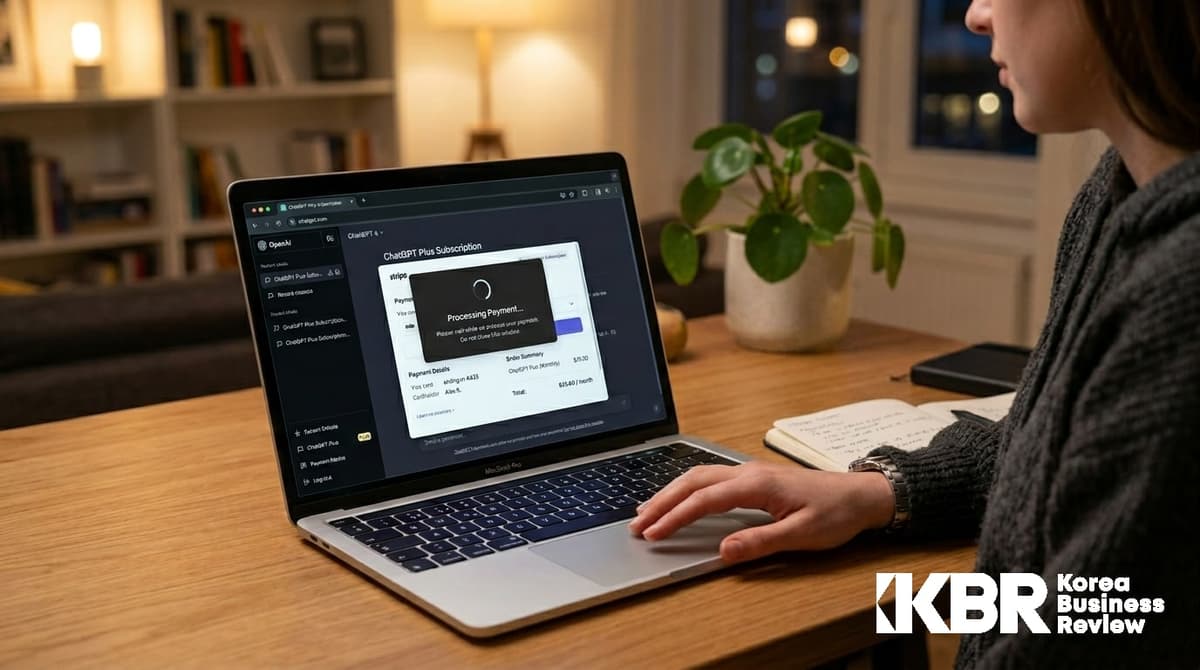
While many people contemplate canceling Netflix, surprisingly few think about canceling their ChatGPT or Claude subscriptions. This is because an AI subscription fee of around 20,000 won per month has quietly established itself as a "fixed expense," much like telecommunication or OTT bills. So, how much are people actually spending on AI, and how is that spending growing? Gathering the latest domestic and international data reveals that AI subscriptions are rapidly moving past the "trial" phase and entering the "lock-in" stage.


One in Four Domestic Users Have Paid Subscriptions

The most direct domestic indicator comes from the "2025 Korea Consumption Life Index" published by the Korea Consumer Agency at the end of May 2026. In the survey of 10,000 adults nationwide, 1,101 respondents stated they use generative AI services, and among them, 268—or 24.3%—were found to be using paid subscription services. This means that 1 out of every 4 people using AI is already opening their wallets.

The gap across age groups was pronounced. In the same survey, the paid subscription rate for those in their 20s was 30.1%, the highest among all age groups, while those in their 60s and above stood at just 5.3%. This directly reflects the difference in usage intensity: older generations feel free tools are sufficient, while younger demographics frequently hit limits and transition to paid options.

One denominator needs to be clarified here: 24.3% is not the "proportion of the entire population," but rather the "proportion among those who use AI." It should be read as the payment conversion rate based on the user base.


Explosive Growth Seen in Card Payment Data: Customers Up 413%, Amount Up 516% in Two Years

If surveys show "how many people use it," credit card payment data shows "how much money actually moved." The "Generative AI Subscription Customer Analysis" released by KB Kookmin Card in February 2026 is empirical data corresponding to the latter. Based on data from 348,000 customers who made payments at generative AI-related merchants using KB Kookmin credit and debit cards from January 2024 to December 2025, the analysis covered 14 types of services including text, image, video, information search, work assistants, music, and code generation.

The results are steep. As of the fourth quarter of 2025, the number of customers using generative AI subscriptions increased by 413% compared to the first quarter of 2024, and the transaction amount rose by 516% over the same period. The fact that the increase in spending amount was greater than the increase in the number of customers suggests that not only did new subscribers increase, but per capita spending by existing users also rose.

Text-based AI led the growth. The number of users in this field surged by 491% over two years, and transaction amounts skyrocketed by 609%. Image and video generation AI also joined the growth trend, with customer numbers increasing by 93% and amounts by 178% over the same period. However, since this data is limited to merchant payments from a single card issuer, it should be taken as a reference indicator showing general market trends rather than absolute totals.


"One Isn't Enough": The Normalization of Multiple Subscriptions

The second driving force behind increasing AI spending is "stacking." Because no single AI performs every task perfectly, a pattern has emerged of using different tools for different tasks—one for writing, another for coding, and yet another for searching.

According to the KB Kookmin Card analysis, the proportion of customers who subscribed to two or more generative AI products over the course of a year rose by 1.6 percentage points, from 4.9% in 2024 to 6.5% in 2025. U.S. data shows this tendency even more clearly. According to "Rise of the AI Subscriber," a survey of 2,000 U.S. AI users conducted in the fourth quarter of 2025 by payment technology firm Bango, paid users spent an average of about $66 a month across 4 AI tools, with 24% spending over $100 a month. It is also notable that a significant portion of respondents in the same survey answered that they prioritize AI subscriptions over streaming services.


The "Median" Spending Remains at $20 a Month… But Is Shifting Upward

Averages and medians tell different stories. A report released in March 2026 by the Bank of America (BofA) Institute, which analyzed about 70 million consumer accounts, showed that as of February 2026, the proportion of U.S. households paying for AI stood at around 3%. Although modest, the median monthly spending of these users rose 10.4% year-on-year to $20. With ChatGPT Plus, Claude Pro, and Google AI Pro all converging around the $20-per-month price point, this figure has effectively solidified as the market's "base rate."

The notable change is happening in the tiers above that. In the same BofA data, the proportion of subscribers spending $21 to $40 a month surged 50% compared to 2024. This is a signal that users moving beyond basic pricing plans to higher-tier plans are increasing rapidly. BofA analyzed that the number of households making AI payments itself increased by 38% compared to the 2024 average.

However, there are discrepancies in figures across institutions. PNC Bank estimated that about 2% of U.S. households use paid AI, with that proportion growing by roughly 155% year-on-year. The difference between BofA (3%) and PNC (2%) stems from differing samples and definitions of "AI services." Rather than concluding with one specific figure, it is safer to read both as pointing in the same direction: "low payment rates, rapid growth."


Why They Don't Cancel: The "Stickiness" of 7 Months

A decisive feature distinguishing AI subscriptions from other digital subscriptions is that users "do not cancel easily." According to PNC data, the average retention period for AI subscriptions is 7 months, which is closer to a pattern of continually recognizing value and maintaining the service rather than trial-based consumption where users try it for a month or two and terminate it.

Domestic card data points in the same direction. In the KB Kookmin Card analysis, 60% of paid subscription customers in 2025 maintained regular payments for 4 months or longer, while the share of long-term subscribers for 7 months or more reached 39%, and those for 10 months or more hit 21%. This means that once AI enters daily life and work, it is not easily removed.


The Reversal of the Subscription Landscape: AI In, Content Out

The rise of AI subscriptions is altering the center of gravity in the broader subscription market. According to the "Subscription Economy Trend Report 2026" published by OpenSurvey after surveying 1,500 people aged 20 to 59 nationwide, generative AI subscriptions recorded the largest year-on-year increase among subscription categories over the past year, rising by 8.4 percentage points. Conversely, content memberships experienced the largest drop, declining by 5.7 percentage points.

This data confirms a structural shift where AI is pushing aside the space previously occupied by OTT and content memberships within limited household subscription budgets. However, because these figures are based on self-reported surveys by respondents, it is necessary to consider that they may differ somewhat from actual changes in payment volumes.


Perceived as an "Investment in Productivity," Not an "Expense"

An interesting point is that users do not view AI subscription fees as "consumption" in the same way they view OTT bills. Even though 20,000 to 30,000 won a month can be more expensive than Netflix, industry analyses consistently show that many users accept this as an investment to boost personal productivity. BofA pointing to the middle-class income bracket of $75,000 to $125,000 as the group with the strongest growth in AI spending is in the same context. It reflects how AI is settling in as a practical tool for work and daily life rather than a luxury good.

Of course, this perception does not automatically guarantee "rational spending." As the U.S. data of an average of 4 tools and $66 a month demonstrates, stacking tools makes it easy for money to leak into subscriptions that are not actually being used. As AI subscriptions embed themselves deeper into daily routines, periodically checking what you are spending and on what is becoming equally important.

KBR Access

KBR Analysis 콘텐츠는 Premium 전용 콘텐츠입니다

이 콘텐츠는 Premium 회원에게 제공되는 프리미엄 콘텐츠입니다. Premium은 1개월 이용권 34,900원 또는 월 정기결제 29,900원이며, 결제 시 1개월 이용권(1회 결제·자동갱신 없음) 또는 월 정기결제(매월 자동결제)를 선택할 수 있습니다. ESG, KBR 아티클, KBR Analysis 등 핵심 프리미엄 콘텐츠를 열람할 수 있습니다.

이번 달 열람 현황: 0 / 0건 사용