Korea Business Review · Section
KBR NEWS
Free
ISSUE BRIEFING
The AI Job Threat Started with the 'Door That Closes First': Data-Identified Occupations Most Vulnerable to Shaking
In May 2026, U.S. layoffs reached their highest level since the pandemic at 97,000, with about 40% citing AI as the primary reason (surging from 7% in January to 40% in May), although prudent voices suggest AI may sometimes be used as a convenient excuse. The first sign of the AI shock is not mass layoffs, but rather barriers to entry for youth; employment rates for 22- to 25-year-olds in high AI-exposure jobs in the U.S. fell by about 14% compared to 2022. Clerical and administrative jobs are being most directly shaken: about 86% of the roughly 6.1 million high-exposure, low-adaptability workers in the U.S. are women, and similar signals are being captured in Europe (such as Ireland at 7% and Meta cutting 8,000 jobs). In South Korea, youth jobs shrank by 211,000 over the past three years (208,000 of which were in high AI-exposure industries) while jobs for those in their 50s increased by 209,000, leading the Bank of Korea to diagnose this as 'seniority-biased technological change'—matching the direction seen in the U.S. However, the WEF projects 92 million jobs replaced and 170 million created by 2030 (a net increase of 78 million), indicating that the core question is not whether jobs will disappear, but who will adapt first and how.
류현진 선임기자 · 06/16/2026
Read more →
KBR News
Why Claude Fable 5 Stopped: It Was Not a 'Technical Bug,' but a US Government Export Control Order
KBR 편집부 · 06/15/2026

DEEP ANALYSIS
Seoul Metropolitan Area Apartments Clash Between Record-Breaking Regulations and Record-Breaking Supply Shortages
강지혜 선임기자 · 06/11/2026

ISSUE BRIEFING
The Paradox of the 40 Trillion Won Delivery Era: Why Rider Incomes Are Moving Backward
류현진 선임기자 · 06/11/2026

DEEP ANALYSIS
Are Foreign Tourists Really Increasing in Korea?… The Current Status of Inbound Tourism in the First Half of 2026 Told by Numbers
최수진 기자 · 06/11/2026
DEEP ANALYSIS
What Jensen Huang's 4-Night, 5-Day Trip Left Behind: Can South Korea Become a 'Core Hub' in NVIDIA's AI Supply Chain?
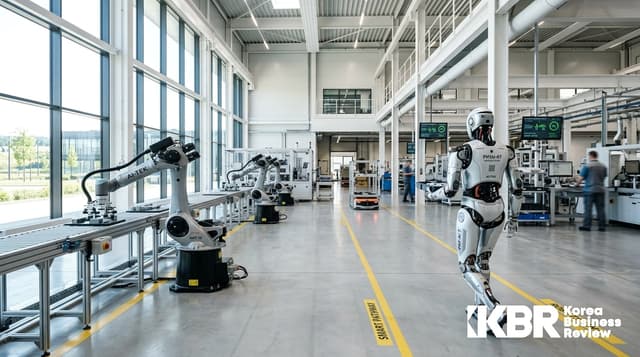
During his visit to South Korea, NVIDIA announced a long-term partnership with SK Group, including a multi-year HBM supply contract spanning over two years, and unveiled joint business plans with Naver and SK Telecom to build large-scale AI data centers, known as 'AI factories,' in the country. SK Group and NVIDIA established a long-term partnership lasting at least two years to pursue comprehensive cooperation, including the co-development of next-generation memory, memory supply for AI factories, and innovations in semiconductor design and manufacturing. Regarding whether South Korea can become a 'core hub,' the officially announced outcomes of this visit can be summarized as the long-term HBM supply contract, co-development of next-generation memory, joint AI factory business plans, and directions for expanded cooperation in robotics and physical AI.
박소유 책임기자 · 06/09/2026
ISSUE BRIEFING
Retail Funds Flock to AI Semiconductor ETFs: Why Samsung Electronics and SK Hynix Value Chains are Chosen
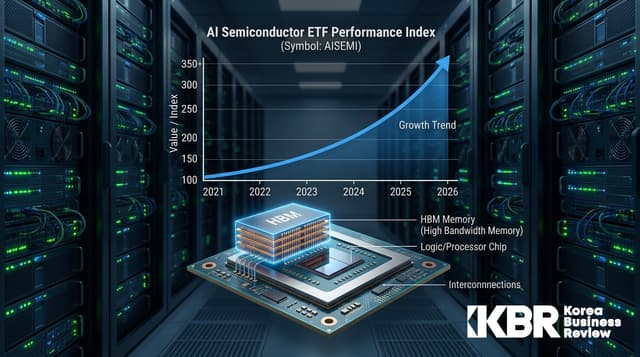
In the first half of 2026, retail investor funds are rapidly flowing into AI and semiconductor-themed products in the domestic ETF market. However, looking closely at the actual capital flows, rather than being evenly distributed across the entire semiconductor value chain, there is a clear pattern of stronger concentration in compressed ETFs with high weightings in Samsung Electronics and SK Hynix.
이우리 선임기자 · 06/09/2026
DEEP ANALYSIS
The Reality of the 'Gift' Jensen Huang Brought to South Korea: Strategic Implications of HBM Demand, AI Infrastructure, and Robot Cooperation
Jensen Huang, who visited South Korea again after 7 months, unveiled a three-way cooperation card involving HBM, AI infrastructure, and robotics. Ranging from the supply of 260,000 GPUs to recruitment for an R&D center, South Korea is put to the test of moving beyond a 'parts supplier' to become an 'AI co-designer.'
류현진 선임기자 · 06/05/2026

ISSUE BRIEFING
The Taxi Hailing App Era: Why the Elderly Face Longer Waits
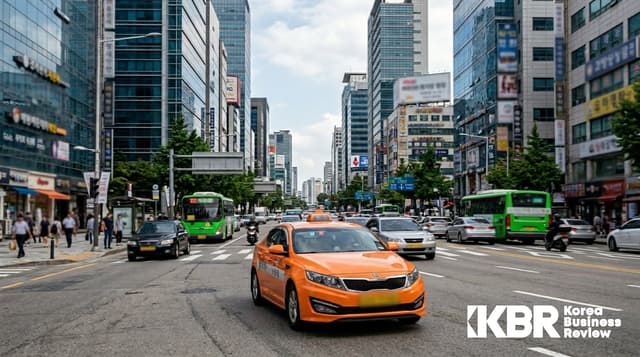
The fact that the convenience of mobility platforms does not operate equally for all citizens is emerging as a problem of taxi accessibility for the elderly and a new mobility divide.
강지혜 선임기자 · 06/05/2026
ISSUE BRIEFING
What Changed in SME Policy Funds for 2026: Risk Assessment and Financing Strategies
The Ministry of SMEs and Startups plans to supply SME policy funds for 2026, including loans and interest rate subsidies, focusing on promoting innovative growth and improving demand-centric support systems. Amid a shift in screening criteria from collateral-based to technological and growth potential evaluations, concurrent changes are underway in guarantee requirements from the Korea Credit Guarantee Fund and Korea Technology Finance Corporation, alongside stricter loan screenings by the Korea SMEs and Startups Agency. Small and medium-sized enterprises must proactively review risks related to policy fund dependency concentration, interest rate fluctuations, and repayment schedule management, while concurrently pursuing portfolio diversification strategies with private finance.
이우리 선임기자 · 05/28/2026