Korea Business Review · Section
KBR NEWS
Free
KBR COMPANY ANALYSIS
Krafton: Questioning the Quality of Growth | KBR Corporate Analysis
Krafton's next growth challenge lies in connecting the success of individual new titles to repeatable franchise expansion. Starting from PUBG's content and UGC expansion and its new IP strategy, KBR jointly analyzed the development organization and talent operations to execute this, the ESG oversight system, and financial performance.
KBR경영연구소 · 09/17/2026
Read more →
ISSUE BRIEFING
Children Who Are Good at Math but Struggle with Choices: Why Elementary Economic Education Is Needed
최수진 기자 · 09/16/2026

DEEP ANALYSIS
July M2 Rises 0.3%, Showing Divergence Between Corporate and Household Currency Holdings
강지혜 선임기자 · 09/15/2026

DEEP ANALYSIS
Half of South Korean Students Already Study with AI… Five Essential Competencies Our Children Need
최수진 기자 · 09/14/2026

ISSUE BRIEFING
"If You Can't Do AI, Even the CEO's Seat Is at Risk"... Global Executives Begin to Tense Up
최수진 기자 · 09/10/2026
ISSUE BRIEFING
GPT-6 Astra Resets the Standard for AI Competition: From 'AI That Answers' to 'AI That Works'
OpenAI unveiled its next-generation frontier model, GPT-6 Astra, on September 3, shifting the core of AI competition from 'answers' to 'task execution.' Astra significantly enhances computer use, coding, automation, and long-context processing capabilities, bringing it closer to an agentic AI that directly operates browsers, documents, spreadsheets, and development environments. Powered by a 1.05 million token context and enhanced tool-use capabilities, it demonstrated higher performance than GPT-5.6 Sol in complex enterprise tasks and long-duration development work. However, it does not outperform competitor models across all benchmarks, and its API pricing is higher than that of GPT-5.6 Sol, meaning actual adoption must weigh cost-performance against task completion. The core significance of GPT-6 Astra lies not in a 'smarter chatbot,' but in the full-scale advent of the AI agent era, which takes human instructions and executes real work through to completion.
이우리 선임기자 · 09/09/2026

ISSUE BRIEFING
"It Wasn't a Glacial Lake Outburst"... What is Known About the Cause of the Nepal Mega-Flood
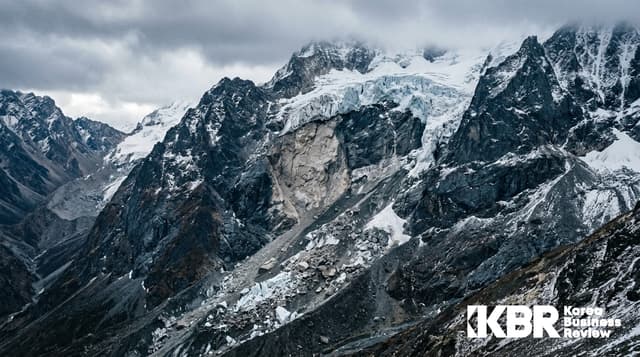
Around 8:37 AM on August 26, 2026, a massive glacier and rock collapse occurred in the high-altitude region of Langtang Lirung (7,234m) near the border of Nepal and China's Tibet. There was no heavy local rainfall. The US Geological Survey (USGS) revised a signal initially classified as a magnitude 4.4 earthquake to a collapse event equivalent to magnitude 5.2. The collapsed ice and rock turned into a torrent mixed with water and sediment, engulfing the downstream areas. Initial satellite imagery and expert analysis lean toward a glacier/rock slope collapse combined with valley blockage and its subsequent failure, rather than a typical GLOF where a glacial lake dam bursts. However, the exact chronological sequence of each stage can only be confirmed once field investigations are completed. The torrent swept through downstream gorges and settlements for about 100 km from Rende Kola through Bhotekoshi to Trishuli. As of August 29, Nepalese disaster authorities recorded 626 deaths and 2,426 missing persons, while China's Tibet separately reported 7 deaths and 554 missing persons. Hydropower sites were densely concentrated along the path of the torrent. The Independent Power Producers' Association, Nepal (IPPAN) stated that as of August 29, 13 business sites suffered direct damage, and communication was lost with 934 people across 11 of those sites. The 216 MW Upper Trishuli-1 (UT-1) project, a joint undertaking by Korea South-East Power (KOEN) and Doosan Enerbility, is one of them. At this site alone, the whereabouts of 576 people are unaccounted for, and 9 South Koreans remain out of contact, meaning that entire clusters of infrastructure in a single river basin were exposed to the same upstream risk.
이지영 기자 · 08/29/2026
ISSUE BRIEFING
Applying to 100 Places with No Response: The Urgent Need to Expand the Fair Recruitment Procedure Act Amid 'Recruitment Without Rejection Notices'
A 29-year-old job seeker who applied to roughly 100 companies this year received application-passing notifications from only 3, while the rest closed their job postings without disclosing any results. Statistics from the National Statistics Office show that youth employment declined for the 45th consecutive month in July, the youth unemployment rate rose to 6.8% for the sharpest increase in 5 years and 6 months, and an FKI survey indicated the document-screening pass rate dropped to 19.4%. Although Article 10 of the Fair Recruitment Procedure Act mandates the notification of hiring decisions, Article 10 itself lacks direct grounds for fines or corrective orders, meaning violations have been handled mainly through improvement recommendations, and workplaces with fewer than 30 employees are exempt. A full revision bill for the Fair Recruitment Act was scrapped in the 21st National Assembly, and while a partial revision bill introducing fines has been proposed in the 22nd National Assembly, it remains unconfirmed as of July 2026. Proposed directions for revision include securing the effectiveness of the notification obligation under Article 10, establishing new obligations to notify applicants of results and suspensions at each screening stage which are missing from current laws, and expanding the scope of application.
김민경 책임기자 · 08/22/2026

ISSUE BRIEFING
Why KDI Raised 2026 Growth to 3.2% While Lowering Employment Forecast to 110,000
On August 19, KDI raised its 2026 economic growth forecast from 2.5% to 3.2% (+0.7 percentage points), while simultaneously lowering the projected increase in employment from 170,000 to 110,000 (-60,000). Of the 0.7 percentage point upward revision, 0.6 percentage points came from the semiconductor effect, driving up exports (+4.1 percentage points), facility investment (+4.6 percentage points), and the current account surplus ($120.7 billion), whereas private consumption was raised by only 0.1 percentage point. KDI attributed the downward employment outlook to the relatively low employment-creating effect of semiconductors, sluggish business conditions in non-semiconductor and non-construction sectors, and slowing service sector employment, compounded by demographic shifts. July employment trends support KDI's diagnosis, showing consecutive declines in manufacturing employment for 25 months, construction for 27 months, and youth employment for 45 months. KDI's 3.2% projection is the highest among forecasters, surpassing the government's 3.0% and the Bank of Korea, OECD, IMF, and ADB's 2.6%, while next year's forecasts of 200,000 new jobs and 2.7% construction investment remain conditional on sustained AI investments and other factors.
이태민 책임기자 · 08/21/2026

DEEP ANALYSIS
“We're Hiring, But Fewer Than 10 People”… The 2026 Second-Half Recruitment Market Trend Through Hiring Data
According to a JobKorea survey of 569 human resources managers, 78.7% of companies plan to hire in the second half of the year, but 78.9% of them plan to hire 10 or fewer people, with 74.3% allocating budgets of less than 3 million won, pointing to the spread of 'long-tail hiring'. Data compiled by Catch showed that regular full-time job postings plummeted by 64% over two years, lowering their share to 50%, while the proportions of contract workers (from 25% to 34%) and interns (from 7% to 11%) increased. A Korea Chamber of Commerce and Industry (KCCI) survey found that postings exclusively for entry-level applicants stood at just 2.6%, while a Wantedlab survey showed that companies most frequently sought workers with 4 to 7 years of experience (49.7%), demonstrating a clear preference for personnel who can be immediately deployed to practical tasks. While sales maintained the largest scale based on JobKorea platform data, postings increased in human resources/HR (+12%), planning (+9%), and marketing (+7%), while AI, development, and data alone decreased (-4%), a decline JobKorea analyzed as the impact of shifting to ad-hoc, small-scale recruitment (JobKorea's own interpretation). Amid the July employment trends announced the same day showing the youth unemployment rate rising by 6.8%—the largest increase in 5 years and 6 months—various indicators commonly point to the likelihood that an increase in second-half job postings and 'narrow gates' will appear together.
이지영 기자 · 08/12/2026