Korea Business Review · Section
KBR NEWS
Free
ISSUE BRIEFING
White-Collar Employment and Organizational Restructuring Accelerate Amid AI Expansion
In May 2026, regular workers in South Korea decreased for the first time in 26 years and 5 months since the Asian financial crisis, with notable declines in professional, scientific, and technical services as well as among the younger generation. As global big tech companies such as Amazon, Microsoft, Meta, and Salesforce continue layoffs into 2026, Salesforce revealed that it reduced its customer support workforce by 45%, from 9,000 to about 5,000, following the adoption of AI agents. A 'Great Flattening' trend of shrinking middle management is corroborated by Gartner's forecasts and empirical data from Gallup and Live Data Technologies. The shock of restructuring is first manifesting at the entry points of the labor market—specifically fresh hiring—with Stanford studies showing relative declines in employment for newcomers aged 22-25 in high AI-exposure roles. However, NVIDIA CEO Jensen Huang and other industry leaders caution against blaming AI alone for layoffs, offering a balanced diagnosis that the current white-collar contraction is a complex phenomenon driven by a combination of economic slowdowns, cost-cutting, and over-hiring adjustments.
이지영 기자 · 08/10/2026
Read more →
DEEP ANALYSIS
Companies That Post the Same Job Openings All Year Long: Job Seekers Already Know
류현진 선임기자 · 07/18/2026

ISSUE BRIEFING
Samsung Injecting 200,000 Million Won into Samsung Miso Financial Foundation to Expand Low-Interest Loans for Vulnerable Groups and Self-Employed in Financial Blind Spots
이우리 선임기자 · 07/18/2026

ISSUE BRIEFING
Tesla Korea Raises Prices by Up to 7 Million Won Just a Day After Subsidy Confirmation: Why Tesla Prices Move Like Market-Priced Fish
류현진 선임기자 · 07/12/2026
DEEP ANALYSIS
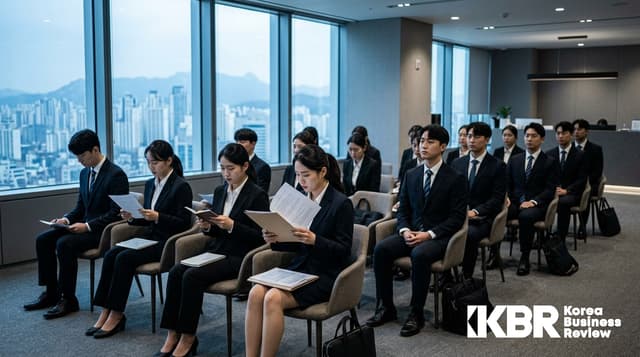
Are Job Postings Increasing or Decreasing? The Two Faces of the 2026 Hiring Market Told by Numbers
박소유 책임기자 · 07/10/2026
DEEP ANALYSIS
Claude Fable 5 Returns in 19 Days: Why the First Commercial AI Switched Off by the U.S. Government Came Back on July 1 with New Safeguards
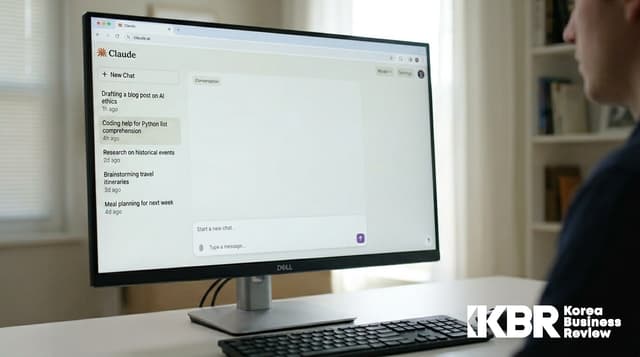
Anthropic's top-tier model, Claude Fable 5, returned globally on July 1, 19 days after its service was suspended. Launched on June 9, the service was completely halted three days later when the U.S. Department of Commerce imposed export controls following a 'jailbreak' report by Amazon researchers. Anthropic contested the basis of the action, arguing that other models yield the same results, and engaged in negotiations with the government for about two weeks. As a condition for the return, a new classifier capable of blocking the technique by over 99% was introduced, with Opus 4.8 responding in its place when blocked. Marking the first export control case applied to commercial AI, the incident leaves behind tasks such as refining AI regulatory procedures and the need for corporate model diversification.
강지혜 선임기자 · 07/02/2026
ISSUE BRIEFING
Gasoline Prices Heading Down to the 1,800-Won Range? Government Cuts Maximum Oil Prices for the First Time
The South Korean government has lowered the 7th ceiling of the maximum oil pricing system—introduced after the Middle East war—by 150 won per liter for the first time, bringing gasoline down to 1,784 won, diesel to 1,773 won, and kerosene to 1,380 won. This adjustment reflects easing tensions in the Middle East, including falling international oil prices and the normalization of navigation through the Strait of Hormuz, marking the first downward revision in 105 days since the system's implementation. While the government expects pump prices for gasoline to drop from the early 2,000-won range to the 1,800-won range, there may be a time lag before consumers feel the impact due to existing high-priced inventories. The maximum pricing system has been praised for its inflation-defense effects while simultaneously facing criticism for side effects such as distorted price signals, refinery losses, and expanding fiscal burdens. The government does not plan to terminate the system immediately and will apply the 7th pricing tier for 4 weeks, though discussions on an exit strategy could gain traction depending on future oil price stability and supply chain normalization.
이지영 기자 · 06/27/2026

ISSUE BRIEFING
Sole Proprietor Loan Overdue Dues Reach 14.6 Trillion Won… Era of 1 Million Closings, Alley Businesses Surviving on Debt
According to the 'Q1 2026 Small Business Trend Report' by Korea Credit Data, loan delinquencies for sole proprietors surged by 12.6% in a single quarter to 14.6 trillion won, with debt concentrating in high-interest non-banking sectors where insolvency risks are piling up faster. Based on National Tax Service statistics, business closures reached 1,008,282 in 2024, surpassing 1 million for the first time since data collection began, with the closure rate remaining above 9.0% for two consecutive years and the three-year survival rate for the top 100 lifestyle industries dropping to 52.3%, solidifying a deep-seated crisis. A Korea Economic Industries Association survey revealed that 34.0% of self-employed individuals reported monthly income falling short of the 2026 monthly minimum wage equivalent (2,156,880 won), while an analysis by the Korea Enterprises Federation showed that 4 in 10 small business owners earned less than 2 million won in operating profit, statistically confirming the reality of 'earning less than part-time workers.' The industry's long-standing demand for differential minimum wage application by sector was voted down once again at the Minimum Wage Commission on June 18, 2026, and labor and management remain far apart with discussions pointing toward a freeze around 12,000 won per hour for the 2027 minimum wage. Research institutes like the Hyundai Research Institute suggested combining management consulting and digital transformation support with re-employment and strengthened social safety nets, presenting targeted policies ranging from the establishment of a dedicated vice-minister for small businesses to sequential prevention, soft-landing, and revival strategies as key tasks.
김민경 책임기자 · 06/24/2026

DEEP ANALYSIS
Another Workplace After Clocking Out: A Growing Number of 4050 Breadwinners Are Working Second Jobs
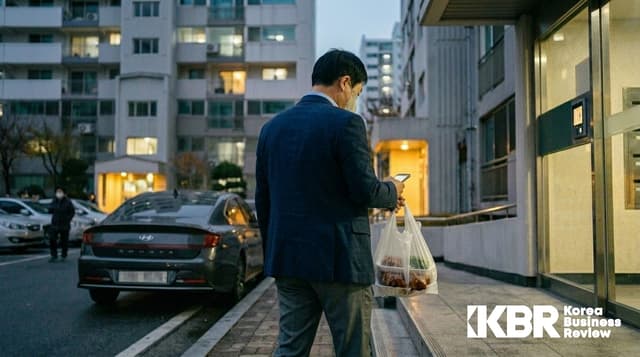
The number of multiple-job holders (side-hustlers) practicing a secondary occupation alongside their primary jobs reached an all-time high of approximately 680,000 as of early November 2025, continuing an upward trend for nearly two years. While the absolute scale remains largest among those aged 60 and older, growth is notably pronounced among youth and individuals in their 40s, highlighting subsistence-driven side jobs taken on by 40- and 50-year-old breadwinners simultaneously juggling children's education and housing costs. The types of side jobs have expanded beyond delivery and designated driving to micro-office tasks, online lectures, and data labeling, while rider app registrations among those in their 40s and 50s have also surged over the past few years. Although multiple-job holders generate higher total incomes, their hourly earnings are paradoxically lower, and their social insurance enrollment rates are low. Furthermore, an influx of delivery riders in 2026 has led to a decline in per-capita earnings. With falling real wages, record-high household debt, and employment instability overlapping to solidify side jobs as a survival strategy, extended working hours and blind spots in labor protection remain critical challenges.
강지혜 선임기자 · 06/24/2026
ISSUE BRIEFING
Government to Clear KRW 2.2 Trillion in Small Business Guaranteed Debt, Reopening Paths to Recovery Blocked by Arrears
On June 19, the South Korean government announced a comprehensive overhaul of the small business guarantee system through the 'Establishment Plan for a Sustainable Guarantee Support System' during a meeting of the Emergency Economic Headquarters. Over the five-year period from 2026 to 2030, the government will clear KRW 2.2 trillion in distressed guarantee assets through write-offs and debt adjustments, affecting an estimated 130,000 businesses. The plan reopens guarantee channels previously blocked by arrears and closures by permitting new guarantees for written-off businesses with cleared public records and for bankruptcy-exempt individuals who undergo rapid write-offs. To enhance the soundness of guarantee institutions, the government will prohibit full guarantees in principle, lowering the average guarantee rate from 94.3% to 90% by the end of 2027 and the re-guarantee rate from 50% to 30%. Additional goals include relaxing the guarantee limit to KRW 800 million for growth-oriented small businesses, introducing intellectual property (IP) guarantees, supplying KRW 2 trillion in region-specific guarantees by 2030, and reducing the subrogation rate from 5.07% at the end of 2025 to 3.2% by 2030.
이우리 선임기자 · 06/22/2026