Korea Business Review

deep-analysis

Another Workplace After Clocking Out: A Growing Number of 4050 Breadwinners Are Working Second Jobs

The number of multiple-job holders (side-hustlers) practicing a secondary occupation alongside their primary jobs reached an all-time high of approximately 680,000 as of early November 2025, continuing an upward trend for nearly two years. While the absolute scale remains largest among those aged 60 and older, growth is notably pronounced among youth and individuals in their 40s, highlighting subsistence-driven side jobs taken on by 40- and 50-year-old breadwinners simultaneously juggling children's education and housing costs. The types of side jobs have expanded beyond delivery and designated driving to micro-office tasks, online lectures, and data labeling, while rider app registrations among those in their 40s and 50s have also surged over the past few years. Although multiple-job holders generate higher total incomes, their hourly earnings are paradoxically lower, and their social insurance enrollment rates are low. Furthermore, an influx of delivery riders in 2026 has led to a decline in per-capita earnings. With falling real wages, record-high household debt, and employment instability overlapping to solidify side jobs as a survival strategy, extended working hours and blind spots in labor protection remain critical challenges.
강지혜 선임기자Published 2026년 6월 24일Updated 2026년 8월 12일
Share
Another Workplace After Clocking Out: A Growing Number of 4050 Breadwinners Are Working Second Jobs

The number of multiple-job holders (side-hustlers) practicing a secondary occupation alongside their primary jobs reached an all-time high of approximately 680,000 as of early November 2025, continuing an upward trend for nearly two years. While the absolute scale remains largest among those aged 60 and older, growth is notably pronounced among youth and individuals in their 40s, highlighting subsistence-driven side jobs taken on by 40- and 50-year-old breadwinners simultaneously juggling children's education and housing costs. The types of side jobs have expanded beyond delivery and designated driving to micro-office tasks, online lectures, and data labeling, while rider app registrations among those in their 40s and 50s have also surged over the past few years. Although multiple-job holders generate higher total incomes, their hourly earnings are paradoxically lower, and their social insurance enrollment rates are low. Furthermore, an influx of delivery riders in 2026 has led to a decline in per-capita earnings. With falling real wages, record-high household debt, and employment instability overlapping to solidify side jobs as a survival strategy, extended working hours and blind spots in labor protection remain critical challenges.


Multiple-job holders reach an all-time high of approximately 680,000… the highest level since statistics began in 2014


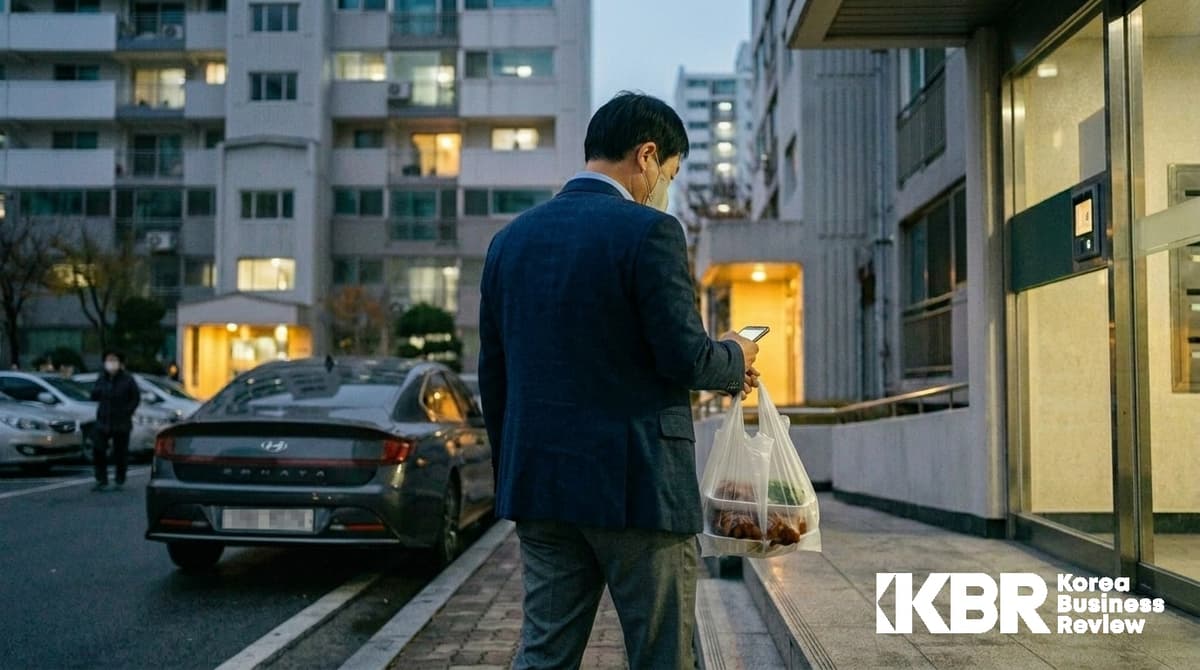
The scene of the evening commute doubling as the start of a second workday is increasingly confirmed by statistics. In the evenings after finishing their primary jobs, the sight of office workers pulling down helmets, carrying delivery bags, or waiting for designated driving calls is no longer unfamiliar and is becoming steadily more common. In particular, statistical and field observations repeatedly capture the tendency of 40- and 50-year-old breadwinner generations—who are responsible for family livelihoods—to fill their post-work hours with another form of labor after concluding that their primary job salaries alone are insufficient to cover rising living costs. Examining microdata from the Economically Active Population Survey by Statistics Korea (now the National Data Agency), experts suggest that this side-hustle population has shown an upward trajectory over the past few years, driven by a complex combination of structural factors including prolonged high inflation, wage stagnation, and employment instability.


The Side-Hustle Population by Statistics Reaches All-Time High Levels

The number of multiple-job holders undertaking side hustles has risen to its highest level since relevant statistics were first compiled. Media reports indicate that multiple-job holders pursuing side occupations alongside their main jobs—the so-called 'N-jobers'—reached an all-time high of approximately 680,000 as of early November 2025. Previously, statistics released for the second quarter of 2024 also showed monthly average multiple-job holders rising to the 670,000 range, meaning the upward trend has persisted for nearly two years. While the proportion of people engaging in side jobs among total employed persons remains relatively small at around 2% overall, its absolute scale is not considered massive. However, holding the highest level since the inception of related statistics in 2014, the phenomenon carries considerable implications for the labor market. Viewed on a quarterly basis, N-jobers were tallied at 679,367 for the third quarter of 2025, a figure also reported by some media outlets based on data from the National Data Agency. Although the approximate 680,000 and 679,367 figures cannot be readily grouped together as a single identical statistic due to differing measurement timing and aggregation methods, there is no difference in the fact that both figures commonly illustrate the broad trend of the side-hustle population reaching historically high levels.

Variations in figures exist depending on the survey methodology and the scope of the definition applied to side jobs. Microdata from the National Data Agency's Economically Active Population Survey shows that as of October 2025, side-job holders among regular and temporary workers stood at 404,409, an increase of over 6,000 compared to 397,739 during the same period of the previous year. However, because this figure exclusively counts regular and temporary workers while excluding self-employed individuals and daily laborers, its coverage scope differs from the aforementioned total multiple-job holder scale, making direct comparison difficult. Depending on whether figures are based on monthly averages or quarterly metrics and how broadly side jobs are defined, numbers vary. Yet, synthesizing various statistics, the trend of the side-hustle population approaching or breaking historical records is clear. The noticeable rise in content sharing side-hustle know-how on anonymous office worker communities and video platforms is also cited as a phenomenon illustrating these changes.


From Those in Their 60s to Their 40s: Different Faces of Side Jobs Across Generations

Examining the distribution of the side-hustle population by age group reveals different characteristics across generations. Analysis from the National Data Agency indicates that while individuals aged 60 and older preparing for or following retirement account for a large share in terms of absolute scale, increases in side-job participation are also prominent among the younger demographic and those in their 40s. While side jobs among those aged 60 and older strongly lean toward supplementary formats to fill income shortages where pensions fall short, side hustles among individuals in their 40s—who are simultaneously shouldering children's education and housing expenses during their prime earning years—are characterized by a strong survival-driven choice to protect household defensive lines. Even among the 2030 younger generation, where asset formation and housing stability are urgent, an atmosphere of accepting side jobs as a survival strategy is spreading. According to the Household Financial Welfare Survey by Statistics Korea's Korean Statistical Information Service (KOSIS), while the average assets of all households grew by 4.9% year-on-year in 2024, the net assets of households in their 30s slightly declined from the 360 million won range, making them the only bracket among all age groups to experience asset contraction. The sense of crisis that earnings from primary jobs are insufficient not only to grow assets but even to safeguard them is pointed to as the background driving individuals of all generations to turn to side jobs.


The Expanding Map of Side Jobs Beyond Delivery and Designated Driving

The types of side jobs have also broadened and diversified significantly compared to the past. Once heavily concentrated in specific occupations such as delivery and designated driving, choices for side hustles now branch out widely depending on an individual's time, skills, and personal preferences. Recently, mobile financial platforms have introduced services allowing users to search for side-job postings or receive corporate offers directly within their apps, alongside services connecting micro-office sectors accessible without high levels of specialized expertise. Representative examples include platforms assisting with the commission and execution of labor-intensive yet relatively simple tasks like presentation material editing, research, or basic design, with one-person businesses and early-stage startups facing labor shortages acting as the primary clients. Expanding one's talents into online lectures as a side hustle is also a noticeably growing trend. Furthermore, with the addition of low-barrier short-term tasks such as weekend or holiday wedding guest part-time work or data labeling for artificial intelligence training data, side jobs exhibit a pattern of deeply penetrating daily life regardless of occupation or format.

The rising trend of the side-hustle population is similarly reflected in private surveys. According to a survey conducted in November 2025 by Incruit, an HR tech company operating a gig worker platform, surveying 430 office workers regarding their side-job participation, 48.4% of respondents answered that they currently hold a side job. However, because this figure represents a sample survey independently conducted by a specific platform rather than official statistics, it has limitations in sample size and methodology, making it difficult to generalize as the overall side-job ratio for all office workers. Nevertheless, it is evaluated as holding meaning as a reference indicator gauging that the perception of side jobs no longer being a choice for a minority has settled among office workers. Analyses consistently point out that a substantial portion of side jobs go uncaptured by statistics. Given that a considerable number of companies maintain non-compete clauses in their employment rules, many office workers actively maintaining side jobs choose not to reveal them externally, indicating that official figures fail to capture the entire reality.


Breadwinners Heading to Deliveries, and the Landscape Altered by AI Dispatching

A representative workplace to which these individuals head is platform labor areas, including delivery and designated driving. This is because entry barriers are low, offering fewer time and location constraints and making it easier to secure tasks compared to conventional jobs. According to Mobile Index compilations, the number of users in their 40s and 50s registered on rider apps such as Coupang Eats Delivery Partner and Baemin Connect has increased significantly over the past few years. This is interpreted as a result of middle-aged and older individuals experiencing career interruptions or early retirement due to a narrowing regular recruitment market increasingly choosing the delivery industry as a channel to secure immediate income. Delivery is also accepted as a relatively accessible option for office worker breadwinners seeking to utilize short blocks of time after leaving work to secure extra income while maintaining their primary jobs.

Technological shifts are likewise altering the landscape of delivery labor. Woowa Brothers, the operator of Baedal Minjok, stated that following the pilot operation of 'Road Runner', an artificial intelligence-based dispatch system, in Hwaseong, the average monthly income of full-time riders working an average of 40 hours or more per week rose by approximately 29% from 3.29 million won during the six months prior to its introduction to 4.24 million won afterward. However, because this performance was independently compiled and announced by the company for a pilot operation zone and targeted full-time rather than side-job riders, caution is warranted before accepting it as an externally verified general income level. Nevertheless, such examples of income enhancement have acted as an incentive spreading the perception that 'doing delivery well pays better than an average office job,' drawing more people into the delivery market.


Increased Working Hours, Yet Reduced Hourly Earnings

However, whether a side job directly leads to an improvement in household finances is a separate matter. According to a panel brief titled 'Current Status and Characteristics of Multiple-Job Holders' analyzed by the Korea Labor Institute based on Korea Labor and Income Panel Study data, the average monthly income of multiple-job holders combining primary and secondary jobs stood at 2.947 million won—210,000 won higher than single-job holders—whereas hourly earnings were paradoxically lower at 13,000 won compared to 16,000 won. This is interpreted to mean that while total income increased by working longer hours, the quality of money earned per hour worked actually declined. The same report pointed out that side-job holders exhibited significantly lower enrollment rates in the National Pension and Employment Insurance compared to single-job holders, followed by analyses indicating that working conditions are frequently vulnerable in both primary and secondary jobs.

Recently, signs indicating strain within the structure of the delivery market itself have also been detected. According to some reports, as the supply of riders rapidly increased entering 2026, a phenomenon emerged where the income brought home by individual delivery workers decreased compared to the past. As major platform companies simultaneously expanded their businesses across e-commerce and mobility domains, personnel flowed excessively into the gig labor market, and those results directly translated into income instability for individual riders. Regarding the delivery unit-price structure, the delivery fees per transaction paid by restaurant owners to platforms are generally known to range from 1,900 won to 3,400 won, while amounts paid to riders range from 3,000 won to 7,000 won. Because these rates vary widely depending on platforms, regions, and promotional policies, they cannot be viewed as absolute standards. Nevertheless, it is clear that a structure is taking root where platform cost burdens expand alongside market growth. In a situation where tasks must be shared among an increased supply, concerns are raised that it is becoming increasingly difficult for individuals who jumped into delivery as a side job to secure the anticipated level of additional income.


Driven by High Inflation and Household Debt

Underpinning the expansion of side jobs are household conditions that show little sign of improvement. As high inflation drags on, real incomes are eroded, and the perception that primary job wage hikes fail to keep pace with rising living costs has spread broadly among office workers. According to wage statistics compiled by the Ministry of Employment and Labor, the average monthly real wage of workers in 2024 reflecting inflation adjustments stood at 3.573 million won, representing a decrease of 26,000 won—or 0.7%—compared to 3.599 million won in 2021 during the pandemic era. This signifies that even if nominal wages rose moderately, real purchasing power accounting for inflation remained stagnant for several years, making it possible to analyze that the perception of making it difficult to manage livelihoods on primary job income alone acts as a direct dynamic driving side jobs. The Ministry of Health and Welfare's decision to raise the standard median income for 2026 by a record-high 6.51% to 6.494738 million won for a four-person household similarly translates into an interpretation reflecting the reality that household-perceived living cost burdens have grown. The weight of household debt cannot be omitted as a background calling forth side jobs. According to household credit statistics announced by the Bank of Korea in May 2026, the household credit balance as of the end of March 2026 reached an all-time high of 1,993.1 trillion won, coming within striking distance of 2,000 trillion won since the compilation of related statistics began in 2002. Subsequently, household debt statistics by borrower for the first quarter of 2026 released by the Bank of Korea showed that newly originated mortgage loans averaged 229.39 million won per borrower, reaching all-time high levels. Household loans grew centered around those in their 30s and 40s, with the per-capita loan amount increase among borrowers in their 30s being the steepest across all age groups. This offers a glimpse into how the 3040 generation, simultaneously shouldering housing acquisition and child-rearing costs, is placed in a position where they have no choice but to seek additional income sources while burdened by principal and interest repayment obligations. Added to this are the circumstances of younger generations starting their first jobs from unstable employment formats, causing movements to supplement income outside primary jobs to spread broadly across generations. Employment environment anxieties are likewise cited as factors prompting side jobs. In a survey conducted by a private educational firm in September 2025 surveying 546 office workers, 49.5% of respondents answered that the business and employment environment for 2026 would be unstable. While sample sizes and methodologies have limitations, nearly half of respondents viewing the future of jobs as uncertain is cited as an indicator gauging anxiety sentiment among office workers. Structural shifts in the labor market are also mentioned as soil for side-job expansion. With increasing instances of starting initial jobs from short-term contracts or flexible work arrangements, an environment where securing stable income from a single primary job is difficult has solidified. Concerns surrounding job quality are simultaneously growing, with super-short-term workers laboring less than 15 hours per week reportedly surpassing 1.4 million. Amidst these trends, growing numbers of people are turning to side jobs to supplement income or explore new careers. Such tensions are similarly readable in employment trends announced monthly by the government. The Ministry of Employment and Labor holding a meeting to review employment conditions following the release of employment trends in May 2026 is interpreted as being underpinned by a problem awareness that it is necessary to examine job quality and stability issues concealed behind superficially favorable employment rate indicators.

This anxiety sentiment suggests the possibility of further increases in the side-hustle population going forward. In a private survey conducted by a global corporation in August 2025 targeting Gen Z office workers across five countries, approximately 80% of South Korean respondents answered that they were considering side jobs, introduced as showing a high proportion next to the United States. While bearing the limitation of being a corporate self-survey rather than official statistics, it reads as a reference indicator showing that office worker interest in side jobs is particularly high in South Korea. As the concept of a lifetime workplace weakens and the perceived reality of employment stability is shaken, diagnoses emerge among experts that movements to secure secondary income sources utilizing personal expertise and time could solidify beyond temporary trends into structural shifts. Academia projects that as long as high inflation and wage stagnation continue concurrently, office workers will likely move toward securing multiple income sources simultaneously rather than merely adding single side jobs one by one. With living expenses rising steadily while wages fail to keep pace, analyses are simultaneously presented that the perception of needing to earn ahead while possible is fueling side-job participation. Pointing out the necessity to examine the quality of labor hidden behind favorably compiled employment rate and unemployment rate figures gains weight in that it recalls the reality where growing numbers of people have no choice but to involuntarily take on side jobs.


Challenges Left Behind by the Side-Hustle Era

The expansion of side jobs casts shadows as a blind spot in labor protection alongside the positive aspect of acting as a household's last defensive line. Because working hours lengthen as individuals shuttle between primary and secondary jobs, the risk of overwork escalates, and instances of being placed outside the protection of industrial accident compensation or social insurance are not uncommon. In particular, platform- and freelance-format side jobs frequently lack sufficiently established standardized contracts or income tracking systems, drawing persistent criticism that workers are structured to bear risks entirely on their own. Experts are raising voices that minimum safety devices such as working-hour management, contract formulation, and social insurance and industrial accident coverage must be expanded even into side-job domains.

The steps of breadwinners heading toward another workplace after clocking out compactly illustrate a cross-section of the period the South Korean economy is traversing. Behind the numerical increases within statistics lie individual struggles to safeguard family livelihoods, and for those struggles to continue in a sustainable manner, tasks remain for the systems and safety nets surrounding side jobs to catch up with the pace of change. Amid a reality where side jobs have become living strategies rather than choices, weight gathers on the sentiment that social contemplation to ensure that increasing working hours does not directly translate into a degradation of quality of life is needed more than ever.

KBR Access

KBR News 월 열람 가능 횟수를 모두 사용했습니다

비회원은 KBR News 콘텐츠를 제한된 범위에서 열람할 수 있습니다. 계속 읽으려면 Free가입 또는 멤버십 안내를 확인해 주세요.

이번 달 열람 현황: 3 / 3건 사용