Korea Business Review

deep-analysis

Did the GTX Really Drive Up Housing Prices? A Complete Analysis of Price Fluctuations in Station Influence Areas Before and After Opening

GTX-A is undergoing phased openings starting with the Suseo-Dongtan section in March 2024, with the connection of the Seoul Station-Suseo Station section scheduled for the second half of 2026. While the Metropolitan Express Railway (GTX) has garnered high expectations from market participants for years under the label of a 'transportation revolution,' the actual movement of housing prices around station areas following the actual openings has drawn attention for tracing a trajectory quite different from those expectations.
이태민 기자Published 2026년 5월 11일Updated 2026년 8월 26일
Share
Did the GTX Really Drive Up Housing Prices? A Complete Analysis of Price Fluctuations in Station Influence Areas Before and After Opening

Audio Briefing

기사 내용을 음성으로 들어보세요.

GTX-A is undergoing phased openings starting with the Suseo-Dongtan section in March 2024, with the connection of the Seoul Station-Suseo Station section scheduled for the second half of 2026.

While the Metropolitan Express Railway (GTX) has garnered high expectations from market participants for years under the label of a 'transportation revolution,' the actual movement of housing prices around station areas following the actual openings has drawn attention for tracing a trajectory quite different from those expectations.

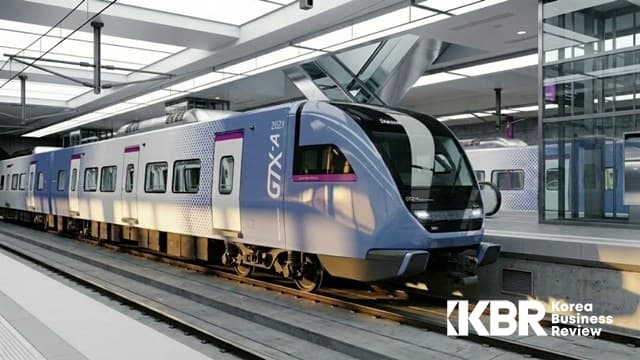
Following the nation's first partial opening of the GTX-A route between Suseo and Dongtan in March 2024, an additional section between Unjeong Jungang (Paju) and Seoul Station was opened in December of the same year, completing the framework of the metropolitan express railway network connecting the northern and southern parts of the metropolitan area over a total length of 82.1 km.

As of 2026, the connection between Seoul Station and Suseo Station is scheduled to open in the second half of this year. According to the latest stance from the Ministry of Land, Infrastructure and Transport and the Seoul Metropolitan Government, the opening originally scheduled for June 27 is expected to be slightly delayed to July or August due to construction schedule adjustments.

Subsequently, Samseong Station is scheduled to open sequentially in June 2027, and Changneung Station in 2030, completing a route that fully traverses the metropolitan area from the northwest to the southeast. However, each time an opening becomes a reality, the picture shown by price data repeatedly points to an uncomfortable fact: the market's long-standing formula of 'opening = rising housing prices' does not necessarily hold true. 

From Announcement to Construction: Expectations Swallowed Prices First


The most essential characteristic of the GTX station-area real estate market is that price increases are concentrated not after the opening, but before it—sometimes years in advance. This is a structural pattern consistently confirmed by repetitive actual transaction price data. GTX-scheduled areas have tended to see prices rise multiple times from the route confirmation stage to announcement, construction, and opening, with the magnitude of the increase being larger the closer the property is to the station. 

This trend is most clearly illustrated by the case of Yeonsinnae Station in Seoul. According to an analysis of Real Estate R114 data, compared to immediately after the start of GTX-A construction in 2019, the average housing price per household in Bulgwang-dong, Eunpyeong-gu (around Yeonsinnae Station) rose by approximately 48.5% as of the fourth quarter of 2022, recording the highest housing price growth rate among the four GTX stations in Seoul.

This represents an increase of nearly half in about three years since the construction announcement. The trend among station-area complexes within Gyeonggi Province was largely similar; various GTX station-area apartments in Gyeonggi Province saw their market prices rise by an average of more than 40% during the boom period from 2019 to 2021, nearly doubling the provincial average growth rate of 20% 

'Impact Analysis of the Opening of the Metropolitan GTX-A (Suseo-Dongtan)', Land Policy Brief No. 1036 published by the Korea Research Institute for Human Settlements in November 2024, supports this structure with figures. According to the report, apartment prices around GTX stations rose by an average of about 18% compared to comparison regions following the announcement of the GTX-A construction plan. By station, increases significantly outpaced comparison regions, recording 29.2% near Dongtan Station, 26.9% near Guseong Station, and 11.9% near Suseo Station.

This figure calculates the cumulative growth rate from the announcement of the GTX-A master plan to the time of opening compared to comparative station areas, with the core fact being that the increases were all concentrated in the pre-opening period.

The real estate industry analyzes that because GTX significantly reduces travel time compared to existing railways, price increase effects tend to appear repeatedly at each stage of route confirmation, construction, and opening. 

The Paradox Post-Opening: Riders Increased, but Housing Prices Diverged


Once the peak of expectations passed and the actual opening stage was reached, the market showed a different movement. Following the opening of the GTX-A Suseo-Dongtan section in 2024, short-term price drops or stagnant trends occurred repeatedly in major complexes such as Dongtan Station, Guseong Station, and Unjeong Station. 

However, as of May 2026, individual complex scorecards are showing a considerably mixed pattern. According to data based on the Ministry of Land, Infrastructure and Transport's actual transaction price disclosure system (as of May 11, 2026), Dongtan Station Lotte Castle's exclusive 84㎡ recorded a record high price of 1.9 billion won in February 2026, and the current asking price is formed at 1.95 billion won.

Dongtan Station Sibeom The Sharp Central City exclusive 84㎡ was also traded at 1.6 billion won in January 2026, and Dongtan Station Sibeom Hanwha Dream & Green Prestige exclusive 84㎡ recorded 1.495 billion won in the same month. This complex had previously fallen from its peak price of 1.45 billion won in 2021 down to the 1.065 billion to early 1.1 billion won range (based on a Youth Daily report in October 2025), but subsequently recovered to a level approaching 1.5 billion won as of January 2026. 

The number of passengers is also showing a steady upward trend. According to a Ministry of Land, Infrastructure and Transport press release dated April 2, 2025, the Suseo-Dongtan section recorded a cumulative 4.1 million users as of its 1st anniversary of opening, with daily average users more than doubling from 7,700 in April 2024 to 16,171 in March 2025, and increasing to 12,485 as of September 2025. The Unjeong Jungang-Seoul Station section recorded a cumulative 3.6 million users within three months of opening, reaching 45,701 daily average users as of September 2025, achieving 91.1% of the projected figure.

Paju Unjeong: Sharp Drop from Peak Followed by Readjustment Phase


Paju Unjeong New Town exhibits strikingly different results by complex even under the identical condition of being a GTX-A station area, revealing how precisely the real estate market's separation of the wheat from the chaff operates. Data based on the Ministry of Land, Infrastructure and Transport's actual transaction price disclosure system (as of May 11, 2026) can be summarized as follows.

Unjeong Hwaseong Park Dream Signature (Mokdong-dong) exclusive 84㎡ dropped from 950 million won (record high) in February 2022 to the 485 million to 498 million won range in January 2025, falling by about 450 million won from its peak.

Unjeong New Town Central Prugio exclusive 84.98㎡ fell from its peak of 940 million won in October 2021 to a recent transaction price of 631 million won in 2025, dropping by more than 300 million won. It saw a short-term rebound from 680 million won just before opening in December 2024 to 720 million won in April 2025, before being readjusted to 679 million won (19th floor) as of March 2026.

Sannae Village Complex 9 Hillstate Unjeong exclusive 59.98㎡ fell from a peak of 730 million won to an average level of about 498 million won as of March 2026, dropping by about 250 million won from the peak. After a slight additional decline from 497 million won (27th floor) in December 2024 just before opening to 480 million won (14th floor) in April 2025, it is currently hovering around the pre-opening level.

Hanul Village Complex 1 Unjeong New Town IPARK exclusive 84.91㎡ fell from its peak of 970 million won in July 2021 to 765 million won in February 2025, and then partially recovered to 750 million won (8th floor) in April 2025. However, volatility continues as some transactions in the 680 million won range have also been observed.

According to KB Real Estate Data Hub, for 15 weeks following the opening of the GTX-A northern section (from December 30, 2024, to April 14, 2025), Paju apartment prices fell by an average of -1.25%, more than four times the nationwide average drop of -0.29% over the same period. While representative complexes near station areas showed short-term rebounds of 40 million to 50 million won immediately after opening, as of 2025-2026, the trend of readjustment continues at levels still 200 million to 450 million won lower than their peaks. 

Structural factors work in combination behind these results. Paju apartment prices had previously experienced increases of 11.48% and 19.50% in 2020 and 2021, respectively, reflecting GTX opening expectations. However, analyses indicate that high interest rates, loan regulations, and a housing market slump coincided with the actual opening period, offsetting the favorable factor.

An important variable is also the fact that as of May 2026, GTX-A remains in a divided operation state.

Because the Suseo-Dongtan section shares tracks with the SRT, there is a limitation that makes it difficult to improve current 15-to-17-minute dispatch intervals in the short term, and this irregular dispatch interval issue is consistently pointed out as a factor hindering real-residence convenience. 

Same Route, Different Outcomes: The Era of Location Verification


The fact that the scorecard of station-area housing prices diverges significantly by complex and region, even along the same GTX-A route, proves that the GTX effect does not operate uniformly. The fact that Dongtan Station Lotte Castle's record high of 1.9 billion won in February 2026 and Paju Unjeong Hwaseong Park Dream Signature's 450-million-won drop from its peak coexist simultaneously on the same route encapsulates this.

The core variables creating this difference ultimately converge on the physical distance from the station, the adequacy of self-sufficient functions outside the station area, and whether the complex is equipped with transportation networks other than GTX.

This polarization is also clearly visible in the subscription market. 'Dongtan Forepark Xi & Prugio', which was offered for sale in May 2025 in Dongtan 2 New Town—where accessibility to Gangnam improved with the opening of the GTX-A Suseo-Dongtan section—received a total of 43,547 applications for first-tier subscriptions. The gap between regions where the practical value of transportation infrastructure has been sufficiently verified and those that have not is directly reflected in the real estate market.

The Suseo Station area is also showing a differentiated trend as development factors other than GTX become visible.

A development project for a complex transfer center of up to 26 stories, housing a Shinsegae Department Store, a 4-star hotel, and an R&D center on a 100,000㎡ site, is being pursued in the Suseo Station area, with a project cost of 1.6 trillion won, aiming for ground-breaking within the year and completion in 2033. Driven by these expectations, Suseo-dong Samik Apartment exclusive 60㎡ was traded at 2.35 billion won in November 2024. 

Turning Point in the Second Half of 2026: Changes Driven by the Seoul Station-Suseo Station Connection


Observations suggest that the second half of 2026 is likely to become a major turning point in terms of the GTX-A real estate effect.

If the Seoul Station-Suseo Station section is connected and opened between July and August 2026, it will become a reality for the first time to travel all the way from Paju Unjeong to Hwaseong Dongtan in the 50-minute range in one go. This also means that the limitations of 'half-line operation,' which GTX users have cited as the most inconvenient factor, will be largely resolved.

About 30% of non-GTX users answered that they would "ride the GTX once Samseong Station opens," raising expectations that the connection between Seoul Station and Suseo Station alone—prior to the opening of Samseong Station—could lay the groundwork for expanding demand based on actual users. 

The Korea Research Institute for Human Settlements also supports through analysis that transportation infrastructure improvements are creating substantial changes in areas beyond real estate. According to Land Policy Brief No. 1036 (November 2024), GTX-A performs a wide-area transportation function that improves accessibility between the southern metropolitan area and Seoul, such as saving 20% to 60% in public transportation travel time, and analyzes that travel time reductions due to GTX use lead to increased activity time for socializing and shopping, contributing to regional economic revitalization.

Specifically, as figures by section cited in media, an instance where the travel time between Suseo Station and Dongtan Station was shortened from 99.3 minutes to 35.2 minutes (a reduction of about 64.6%) has been presented, but the exact calculation basis for the 20% to 60% range requires verification from the original report. 

While the GTX project shows price movements at each stage of plan announcement, construction, and opening, it takes time for accessibility verified through actual operation to elevate location value, and some regions experience a period of adjustment after the early reflection of favorable factors. How the opening of Samseong Station in 2027 resets this equation remains a key point to watch in the metropolitan real estate market. 

Conclusion: A Market Where Expectations Became Housing Prices, Now Location Answers


The most accurate answer to the question of whether GTX raised housing prices is close to 'it has already risen considerably,' which is a common view among market experts.

The period when expectations drove up prices was already completed years ago when the route announcement and construction took place, and the market post-opening has entered a phase of ex-post verification of pre-reflected prices, many analyses suggest. The results of that verification are clearly split by complex even under the identical condition of being a 'GTX station area'.

While Dongtan Station Lotte Castle, which offers direct underground access to GTX-A and SRT, recorded a record high price of 1.9 billion won, some complexes in Paju Unjeong on the same route are trading at levels more than 400 million won lower than their 2021 peaks. Amid evaluations that the formula 'it rises if it's a GTX station area' is clearly being replaced by a much more precise conditional formula—'which station, how close, and are self-sufficient functions sufficient?'—attention is focused on how the connection of the Seoul Station-Suseo Station section in the second half of 2026 and the opening of Samseong Station in 2027 will alter the topography of the metropolitan real estate market.


경영연구 및 사례분석 연구 : KBR경영연구소

저작권자 ⓒ 코리아비즈니스리뷰(Korea Business Review). 무단 전재 및 재배포 금지