Korea Business Review · Section
GLOBAL RADAR
Standard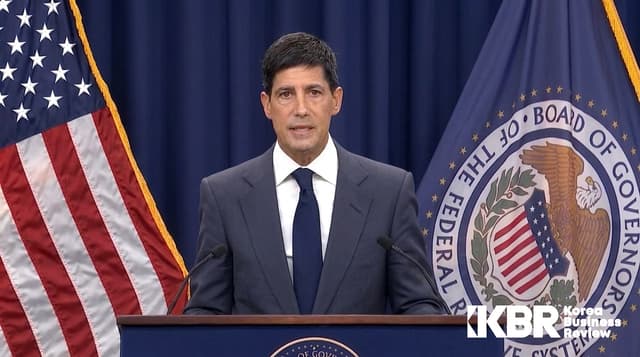
Global Economy
Rate Cuts Are Over, Hikes Are Next: How the Warsh Fed Reversed the Course of Interest Rates
At its first FOMC meeting under the Warsh regime, the Federal Reserve kept its benchmark interest rate frozen at 3.50–3.75% for the fourth consecutive time. However, the dot plot signaled the possibility of a rate hike within the year, effectively declaring the end of the easing cycle. International oil prices have surged due to military conflicts between the U.S. and Iran in the Middle East, and May inflation indicators rose to the low-4% range, signaling a re-acceleration of inflation. U.S. employment indicators remained robust in May with 150,000 to 200,000 job additions and an unemployment rate in the low-to-mid 4% range, weakening the justification for rate cuts with this 'high inflation and solid employment' combination. In South Korea, amid an environment of a 2.50% base rate, a won-dollar exchange rate of 1,530–1,560 won, and 3.2% consumer inflation, the Bank of Korea's monetary policy dilemma is deepening as it must simultaneously account for the exchange rate, inflation, and household debt. U.S. interest rates are entering a phase shifting from 'higher for longer' to simply 'higher,' making it time for businesses and investors to redesign their foreign exchange hedging, financing, and portfolio strategies based on scenario-driven response systems rather than relying on 'rate cuts within the year.'
강지혜 선임기자 · 07/04/2026
Read more →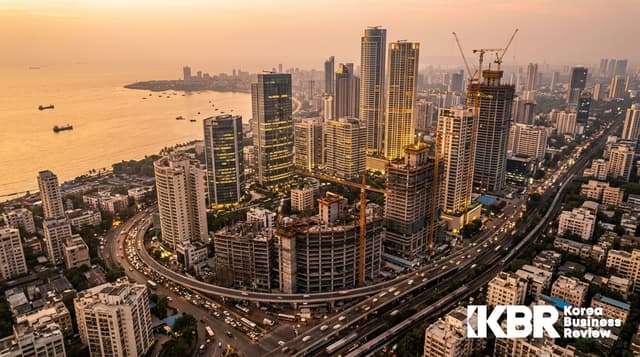
Biz / Investment
India, the 'Paradox of the 6th Rank'… The World's Fastest-Growing Economy is Redrawing the Global Map
김민경 책임기자 · 07/02/2026
Biz / Investment
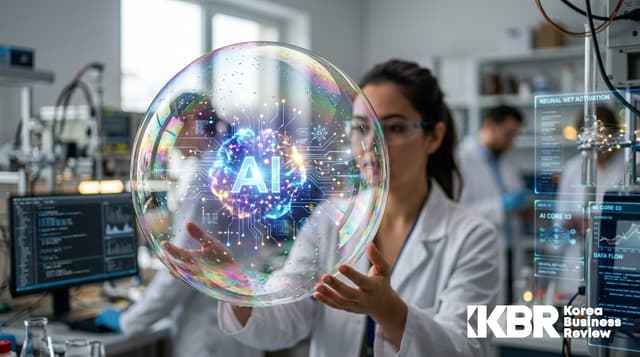
The Two Faces of the AI IPO Boom: China Surges Fivefold While OpenAI Delays Listing
류현진 선임기자 · 06/27/2026

AI / Tech
Global AI Smart Glasses: Current Status and the Breaking of Meta's Monopoly Among Samsung, Google, and China
강지혜 선임기자 · 06/22/2026

Global Economy
New Zealand's 'Brain Drain' Warning: Why Young People Are Leaving for Australia
박찬호 선임기자 · 06/16/2026
Global Economy
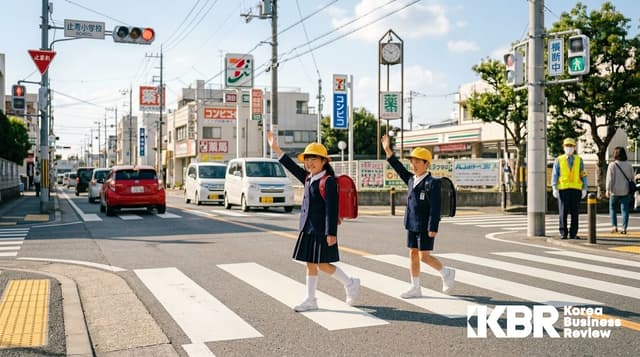
The Fourfold Invoice of Low Birth Rates: Labor, Pensions, Domestic Demand, and Fiscal Health Shaken Simultaneously
As of 2026, about 80 countries worldwide have fallen below the replacement fertility rate of 2.1, with South Korea, China, and Japan forming the most severely affected group in East Asia. Low birth rates simultaneously present four types of costs: labor shortages, contraction of domestic consumption, structural deficits in pensions and health insurance, and fiscal pressure on the state. Japan walked this path 30 years earlier, where social security spending eroded national finances, and is now pivoting toward policies that adapt to population decline alongside encouraging childbirth. China entered the same path faster and on a larger scale after its population began declining in 2022, facing a more difficult adaptation process of aging before becoming rich. However, institutions like IIASA argue that the equation of low birth rates equating to economic crises is exaggerated, emphasizing education, productivity investment, and institutional reform. For businesses, this also represents an opportunity for new demand in areas such as automation, healthcare, and eldercare.
최수진 기자 · 06/15/2026
Global Economy
"The $200 Billion Illusion" — The True Structure of World Cup Host Country Economic Impacts
The 2026 North American World Cup is expected to have an economic ripple effect of approximately $40.9 billion on global GDP, as estimated by FIFA and the WTO, but the actual growth impact on the host countries may be limited. The United States, Canada, and Mexico have chosen a lightweight hosting model that utilizes existing stadiums and infrastructure to reduce cost burdens and the risk of "white elephants." Independent economists view the World Cup effect as positive for short-term tourism, accommodation, and consumption, but see weak evidence that it leads to mid- to long-term GDP growth. As an official FIFA mobility partner, Hyundai Motor Group can expect brand exposure and trust-building effects in the North American electric vehicle market. Ultimately, the core of the World Cup's economic impact depends not on the hosting itself, but on whether the cost structure, infrastructure utilization, and tourism and brand effects translate into actual assets after the tournament.
이태민 책임기자 · 06/15/2026

Biz / Investment
Can Vietnam Become the 'Second China'? The Race Toward an Asian Hub and Three Gateways
Vietnam surpassed $500 billion in GDP (approx. $514 billion) in 2025 with an 8% growth rate, entering upper-middle-income status with a per capita GDP of $5,026, and maintained momentum with 7.83% growth in the first quarter of 2026. While 2026 growth forecasts range from 6.3% (World Bank) to 7.6% (AMRO), the Vietnamese government has set an aggressive target of 10%, making the gap between ambition and reality a key watchpoint for the second half of the year. Korean investments—such as Samsung Electro-Mechanics' 1.8 trillion won FC-BGA investment, LG Innotek's Hai Phong expansion, and 74 MOUs signed at the April Korea-Vietnam Business Forum, totaling approximately $90 billion cumulatively—are elevating Vietnam from a 'low-wage assembly plant' to an 'AI substrate and R&D hub.' The U.S. 20% reciprocal tariff actually highlights Vietnam's price competitiveness compared to China (55%), but a 40% transshipment tariff pressures the simple assembly model, making the enhancement of local content a core task for Korean companies. Although the effective date of FTSE Emerging Market inclusion on September 21, 2026, opens capital market opportunities, the conclusion remains that Vietnam can only become an independent Asian hub—rather than a second China—if it clears three gateways: power infrastructure, competition with India, and policy consistency.
이태민 책임기자 · 06/11/2026
Global Economy
US Inflation Re-ignites at 4.2% & Launch of Warsh Fed: South Korea's Economy Navigates Dual Turbulence of High Exchange Rates and High Oil Prices
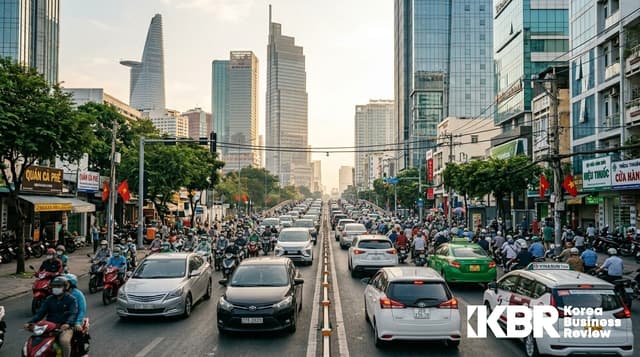
With the concurrent convergence of three variables—re-igniting inflation, robust employment, and new Federal Reserve leadership—the South Korean economy faces dual pressures of a won-dollar exchange rate soaring to the mid-1,500 KRW range and high oil prices hovering around $90 per barrel. If shocks originating from energy spill over into services and wages, pushing core inflation upward, the prolonged period of high U.S. interest rates will become a fait accompli, potentially extending the upward pressure on the strong dollar.
이지영 기자 · 06/11/2026
AI / Tech
Apple's 'Siri AI' Gamble: Can a Late Chase Protect the iPhone Ecosystem?
At WWDC 2026, Apple unveiled a completely rebuilt 'Siri AI', introducing a standalone app, screen recognition, and multi-step command execution. Powered by next-generation Apple Foundation Models based on Google Gemini, this marks a strategic shift that effectively abandons its insistence on proprietary models. Stock prices traded lower on the announcement day, with the market focusing on the 'absence of a confirmed release date' rather than the features themselves. Extensive child safety features, including Child Accounts and 'Ask to Browse', were heavily expanded. This marked CEO Tim Cook's final keynote, with John Ternus set to succeed him as CEO on September 1.
강지혜 선임기자 · 06/09/2026