Korea Business Review · Section
GLOBAL RADAR
Standard
Global Economy
European Central Bank Rate Hike: How Will Loan Interest, Export Proceeds, and Costs Change for Korean Companies?
Analyzing the ECB's September rate hike through the time lags between policy rates, corporate borrowing, receivables collection, and cost adjustments. It separates forecasts from actual performance and outlines contract-by-contract responses required for European business planning.
류현진 Editor · 09/16/2026
Read more →
AI / Tech
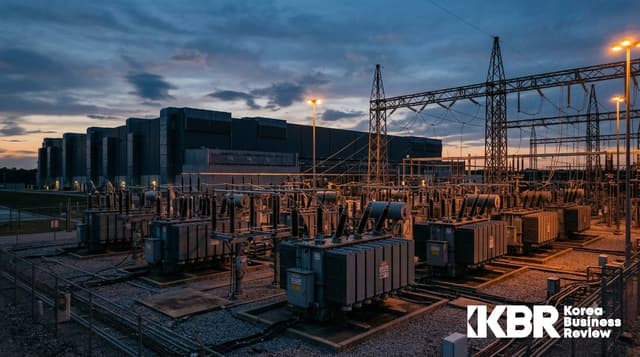
The Next Bottleneck for AI Data Centers is the Power Grid
류현진 Editor · 09/15/2026

Global Economy
Corporate Risks of Waiting Solely for US Interest Rate Cuts
강지혜 선임기자 · 09/14/2026
AI / Tech
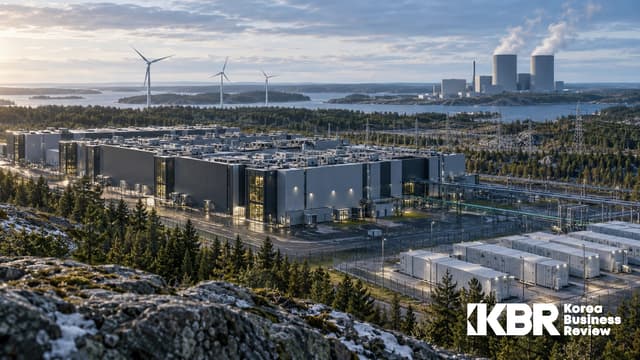
Why Did Google Contract with Nuclear Power Plants? The Power Grid Map of the AI Competition
박소유 책임기자 · 09/14/2026

AI / Tech
Waymo at 500,000 Weekly Rides, Tesla Cybercab... The Autonomous Driving War Has Truly Begun
박찬호 선임기자 · 09/10/2026
AI / Tech
Qualcomm and Amazon Partner on AI Chips Tied to Up to $60B: Will Nvidia's Monopoly Be Shaken?
Qualcomm and Amazon will jointly develop multi-generation custom semiconductors for AI inference and 1.6T-class optical interconnect solutions. The $60 billion figure is not a confirmed Amazon purchase order, but a maximum payout tied to the phased vesting of Qualcomm warrants. Despite AWS custom chip revenues exceeding an annual run rate of $25 billion, AWS is broadening its procurement portfolio by adding an external custom chip supplier. While Nvidia's position is unlikely to be shaken in the short term, the expansion of the inference market and the growth of hyperscaler custom chips are long-term variables. Opportunities may arise for South Korean memory, foundry, and optical interconnect companies, but Qualcomm's manufacturing and memory suppliers for Amazon-bound chips have not yet been disclosed.
이지영 기자 · 09/09/2026
AI / Tech
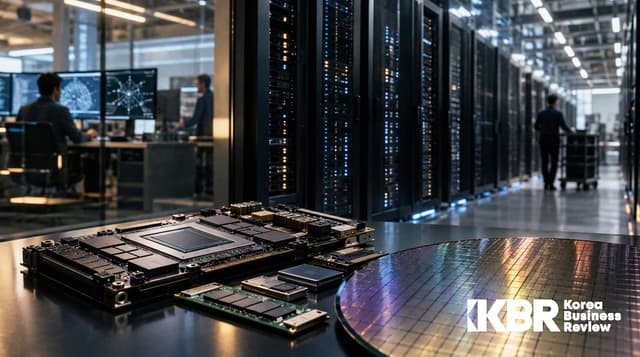
GPT-6 Astra Reignites 'AI Replacement' Fears: Why the U.S. is Nervous First and the Impact on South Korean Industry
Following OpenAI's release of GPT-6 Astra, concerns have resurfaced in the U.S. that AI agents could replace certain corporate software tasks, triggering a revaluation of software company valuations. With U.S. corporate AI adoption already at 17-20% and reaching 37% for enterprises with over 250 employees, the industrial foundation for agentic AI is taking shape. South Korea is a direct beneficiary of expanding existing AI infrastructure investments, as seen in August semiconductor exports surging 209% year-over-year to $46.65 billion. Conversely, if AI begins directly manipulating enterprise software, industries with a high proportion of repetitive knowledge work—such as SaaS, SI, consulting, accounting, and HR—face mounting pressures to restructure pricing and workforce models. The Korea Development Institute (KDI) estimates that generative AI could cumulatively increase South Korea's total factor productivity by 1.5% to 3.5% over the next decade, while simultaneously suggesting downside pressures on employment in medium- and high-skilled occupations.
류현진 선임기자 · 09/09/2026

AI / Tech
Why NVIDIA Bet $12.9 Billion on Hugging Face: The Reality of Open-Weight AI
NVIDIA agreed to acquire Hugging Face for $12.93 billion on September 3, with regulatory reviews and other procedures remaining before the actual transaction closes. Open-weight AI discloses model weights but not necessarily the training data and training code, distinguishing it from open-source AI. A core reason companies review open-weight models is not merely cost reduction, but data control and managing dependency on specific AI operators. Hugging Face serves as an open-model distribution infrastructure utilized by more than 3 million models and 18 million developers, for which NVIDIA proposed a corporate value of $12.93 billion. A key focal point following the acquisition is whether Hugging Face can maintain its existing neutrality and openness without leaning toward specific NVIDIA hardware.
KBR 편집부 · 09/05/2026

Global Economy
US Manufacturing PMI at 54.6: Why Costs Refuse to Fall Despite Slowing New Orders
The US manufacturing PMI for August stood at 54.6, remaining above the threshold of 50 to continue its expansion phase, though down from July. The new orders index fell to 53.7, indicating that while demand is still growing, the pace of growth is slowing. The prices paid index stayed high at 71.1, matching July's level and showing that manufacturers' cost pressures are not easily easing. Tariffs, energy prices, electronic component supply issues, and labor costs are acting simultaneously, creating a pattern of slowing orders coupled with rising costs. Korean companies need to examine changes in US orders, tariff structures, inventory replenishment demand, and local cost shifts on a category-by-category basis.
강지혜 선임기자 · 09/05/2026

Biz / Investment
From 44% to 70%: How a Single Remark from NVIDIA Upended the AI Infrastructure Landscape
Nvidia reported fiscal Q2 2027 revenue of $96.221 billion (+106%) and data center revenue of $89.0 billion (+117%), beating both market consensus and its own guidance. CFO Colette Kress provided a preliminary outlook for fiscal 2028 revenue growth of approximately 70% during the earnings call—not an official formal guidance, but an unusual statement far exceeding the existing analyst consensus of 44-45%. The company explained that 70% is a figure reflecting supply constraints, and customer demand forecasts point to roughly double that level. Gross margins were guided down to 71-72% in Q4—with the direct cause being memory costs rather than competition, interpreted as a sign of strengthened pricing power for Samsung Electronics and SK Hynix. AWS plans to deploy 2 million additional GPUs from 2027 to 2028 (this quarter to fiscal Q2 2029), and order backlogs for South Korea's three major power equipment makers have exceeded 36 trillion won, though the $500 billion capital financing platform with six financial institutions is still in the promotion stage prior to final contracts amid an ongoing circular financing debate.
류현진 선임기자 · 08/29/2026