

GLOBAL ECONOMY
US Manufacturing PMI at 54.6: Why Costs Refuse to Fall Despite Slowing New Orders
The US manufacturing PMI for August stood at 54.6, remaining above the threshold of 50 to continue its expansion phase, though down from July. The new orders index fell to 53.7, indicating that while demand is still growing, the pace of growth is slowing. The prices paid index stayed high at 71.1, matching July's level and showing that manufacturers' cost pressures are not easily easing. Tariffs, energy prices, electronic component supply issues, and labor costs are acting simultaneously, creating a pattern of slowing orders coupled with rising costs. Korean companies need to examine changes in US orders, tariff structures, inventory replenishment demand, and local cost shifts on a category-by-category basis.
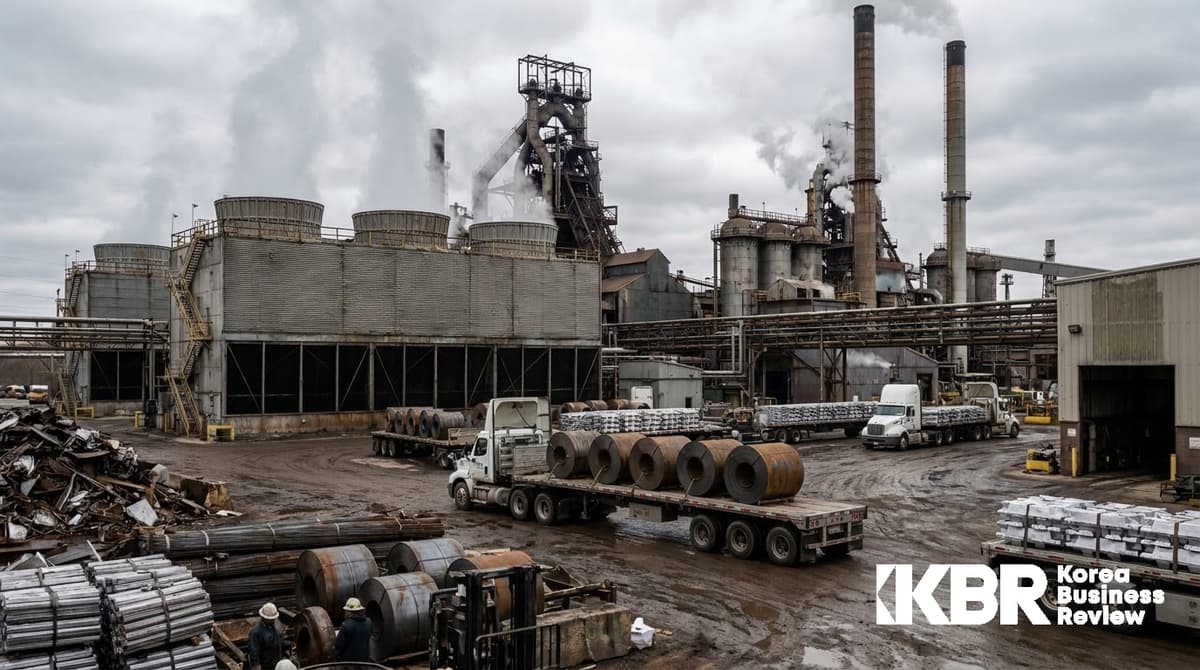
US Manufacturing PMI at 54.6: Why Costs Refuse to Fall Despite Slowing New Orders American manufacturing continues to expand, but a closer look reveals signals slightly different from before. The Institute for Supply Management (ISM) reported on September 1 that the manufacturing Purchasing Managers' Index (PMI) for August registered 54.6. While still above the threshold of 50 that separates economic expansion from contraction, it was lower than July and missed the market consensus compiled by Reuters. What matters in this indicator is not just the headline figure of 54.6. When breaking down the sub-indexes that show the actual currents of manufacturing, the growth in new orders noticeably weakened, whereas the input prices borne by companies remained at elevated levels. The employment index also barely scraped past 50. In short, the growth rate of demand has moderated while cost burdens…
KBR Access
Read this Global Radar article now
Buy this article for ₩3,900 (30 days of access), or get KBR+ 10 — 10 paid articles for ₩9,900 (₩990 each). KBR Members (free sign-up) read one paid article free every month.
✓ No account needed · Checkout is in Korean
Best value
KBR+ 10 · ₩9,900
An insight pass that opens 10 KBR+ articles, one at a time, whenever you like
10 KBR+ articles including KBR Analysis — ₩990 each. Use them within 60 days.
Get KBR+ 10KBR NEWSLETTER
Sign up for free and get the KBR Newsletter!
Sign up and opt in to the newsletter to receive KBR's curated business and economic insights by email.
LATEST IN TOPIC
Latest in this topic



Related Content
Why IKEA Entered Douyin: Meeting Customers Before They Search for Furniture
KBR+Expanding AI Adoption in European Enterprises: The Next Connection Korean Suppliers Need to Find
KBR+A Different Starting Point for Entrepreneurship Found in Small Business Successions in Japan: Taking Over Customers and Equipment First