Korea Business Review

global-economy

Rate Cuts Are Over, Hikes Are Next: How the Warsh Fed Reversed the Course of Interest Rates

At its first FOMC meeting under the Warsh regime, the Federal Reserve kept its benchmark interest rate frozen at 3.50–3.75% for the fourth consecutive time. However, the dot plot signaled the possibility of a rate hike within the year, effectively declaring the end of the easing cycle. International oil prices have surged due to military conflicts between the U.S. and Iran in the Middle East, and May inflation indicators rose to the low-4% range, signaling a re-acceleration of inflation. U.S. employment indicators remained robust in May with 150,000 to 200,000 job additions and an unemployment rate in the low-to-mid 4% range, weakening the justification for rate cuts with this 'high inflation and solid employment' combination. In South Korea, amid an environment of a 2.50% base rate, a won-dollar exchange rate of 1,530–1,560 won, and 3.2% consumer inflation, the Bank of Korea's monetary policy dilemma is deepening as it must simultaneously account for the exchange rate, inflation, and household debt. U.S. interest rates are entering a phase shifting from 'higher for longer' to simply 'higher,' making it time for businesses and investors to redesign their foreign exchange hedging, financing, and portfolio strategies based on scenario-driven response systems rather than relying on 'rate cuts within the year.'
강지혜 선임기자Published 2026년 7월 4일Updated 2026년 8월 12일
Share
Rate Cuts Are Over, Hikes Are Next: How the Warsh Fed Reversed the Course of Interest Rates

At its first FOMC meeting under the Warsh regime, the Federal Reserve kept its benchmark interest rate frozen at 3.50–3.75% for the fourth consecutive time. However, the dot plot signaled the possibility of a rate hike within the year, effectively declaring the end of the easing cycle. International oil prices have surged due to military conflicts between the U.S. and Iran in the Middle East, and May inflation indicators rose to the low-4% range, signaling a re-acceleration of inflation. U.S. employment indicators remained robust in May with 150,000 to 200,000 job additions and an unemployment rate in the low-to-mid 4% range, weakening the justification for rate cuts with this 'high inflation and solid employment' combination. In South Korea, amid an environment of a 2.50% base rate, a won-dollar exchange rate of 1,530–1,560 won, and 3.2% consumer inflation, the Bank of Korea's monetary policy dilemma is deepening as it must simultaneously account for the exchange rate, inflation, and household debt. U.S. interest rates are entering a phase shifting from 'higher for longer' to simply 'higher,' making it time for businesses and investors to redesign their foreign exchange hedging, financing, and portfolio strategies based on scenario-driven response systems rather than relying on 'rate cuts within the year.'


Dot Plot Reverses to Indicate 'Hikes' Despite Four Consecutive Freezes… South Korea Trapped at a 2.5% Base Rate, What Are the Options in the Era of the 1,500 Won Exchange Rate?


Background: Expectations for Rate Cuts Have Effectively Vanished

Expectations for interest rate cuts by the U.S. Federal Reserve (Fed) have effectively been dashed.

At the June Federal Open Market Committee (FOMC) meeting, the Fed kept its policy rate frozen at 3.50–3.75% for the fourth consecutive time.

While outwardly a 'status quo' decision, the accompanying dot plot revised the end-2026 benchmark interest rate projections upward compared to the March meeting, formalizing the possibility of a rate hike within the year.

In essence, the Fed has reversed direction just as it was beginning to discuss rate-cut pathways.

For South Korea, trapped with a base rate of 2.50%, the calculus of monetary policy is growing increasingly complex amid the dual pressures of a 1,500 won-to-dollar exchange rate and 3% consumer inflation.


Background: Middle East Oil Shocks Revive Inflation

During the second half of 2025, the Fed lowered its base rate by a total of 0.75 percentage points across three successive cuts, entering an easing cycle.

However, the situation changed dramatically entering 2026.

Unrest in the Middle East driven by military clashes between the U.S. and Iran triggered a sharp rebound in international oil prices, and energy and transportation costs began to stoke inflation.

The U.S. Consumer Price Index (CPI) for May rose in the low-4% range year-on-year, continuing a trend of exceeding the Fed's 2% target for several years running.

Core CPI, which excludes energy and food, has also faced delayed downward stabilization around the 3% mark.

The labor market similarly undermined the justification for rate cuts.

Non-farm payrolls in May increased by 150,000 to 200,000, roughly meeting or slightly exceeding market expectations, while the unemployment rate has remained largely unchanged in the low-to-mid 4% range for nearly a year.

The combination of 'high inflation and robust employment' creates an environment that directly contradicts the need for monetary easing.

While the Fed could have theoretically dismissed oil-driven price increases as a temporary supply shock, the prevailing judgment appears to be that it can no longer ignore unstable inflation expectations at a time when inflation has already been outpacing targets for multiple years.

According to the minutes of the April FOMC meeting, multiple participants noted that policy firming could become appropriate if inflation persistently stays above 2%.


Case Study ①: The First FOMC Under the Warsh Regime, Declaring the 'Abolition of Forward Guidance'

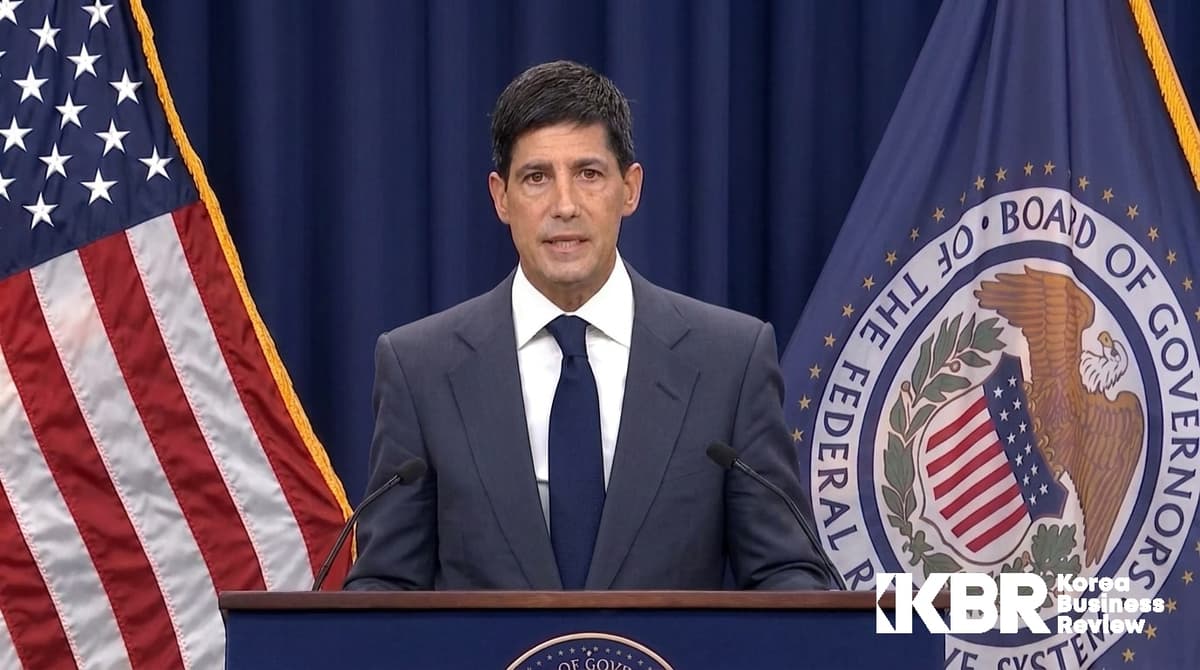
The June FOMC was the first meeting chaired by newly appointed Fed Chair Kevin Warsh.

Warsh passed Senate confirmation in May to succeed former Chair Jerome Powell, while former Chair Powell remains on the Board of Governors with an FOMC vote.

Chair Warsh's debut meeting was unconventional in both form and substance.

The policy statement was significantly shortened, and traditional forward guidance phrases providing explicit hints about future rate trajectories were effectively removed from the statement.

Expressions conveying an 'easing bias' found in previous statements were also omitted.

During his press conference, Chair Warsh emphasized, "The statement communicates facts only as far as we can ascertain them," adding, "FOMC members have reached a clear and unanimous consensus to decisively achieve price stability."

While the rate freeze itself passed with a unanimous 12–0 vote, internal divergence over the future path was stark, with about half of the 18 dot-plot participants projecting a hike within the year and the remainder forecasting a freeze or minor cuts.

The Fed sharply revised up its personal consumption expenditures (PCE) inflation projections for 2026 compared to the previous meeting, and presented core PCE forecasts well above target.

Conversely, growth forecasts were lowered slightly to the mid-2% range.

Based on CME FedWatch data, markets are currently pricing in a 0.25 percentage point hike as early as October.


Case Study ②: The 1,500 Won Exchange Rate and Eight Consecutive Freezes, The Bank of Korea's Dilemma

The hawkish pivot by the U.S. delivered a direct blow to South Korean financial markets.

The won-dollar exchange rate fluctuated between 1,530 and 1,560 won per dollar from late June to early July, approaching its weakest levels since the global financial crisis in March 2009.

Foreign investors continued net selling in the domestic stock market, intensifying capital outflow pressures. Coupled with a surge in overseas securities investments by domestic retail investors, this created a dynamic where dollar demand vastly outpaced supply.

The Bank of Korea's base rate stands at 2.50%, leaving the gap with the upper bound of the U.S. rate (3.50–3.75%) at 1.25 percentage points.

This rate inversion has persisted for nearly four years since mid-2022, and the gap is cited as a core factor structuring a strong preference for the dollar and a weak won.

Inflationary pressures are also alarming.

According to data from the National Statistics Office and the Bank of Korea's inflation monitoring reports, the consumer inflation rate for June hit 3.2% due to strength in petroleum prices and wider gains in agricultural, livestock, and fishery products.

With oil- and exchange-rate-driven inflationary pressures overlapping, consumer inflation has stayed in the 3% range for two consecutive months.

BOK Governor Rhee Chang-yong noted during his confirmation hearing prior to taking office, "Considering South Korea's high sensitivity to oil prices, we will place greater emphasis on price stability."

This explains why market attention is heavily focused on what decision the Bank of Korea will make at its July 16 meeting, following eight consecutive freezes up to the May Monetary Policy Board meeting.

While some voices mention the possibility of a rate hike to defend against inflation and exchange rate pressures, a significant weight of opinion suggests that premature hikes are difficult given household debt and domestic demand burdens.


Analysis ①: U.S. Interest Rates Shifting from 'Higher for Longer' to 'Higher'

Synthesizing available data, the near-term direction of U.S. interest rates can be summarized as 'a freeze followed by consideration of a hike.'

Both dot plot medians and market pricing point in the same direction.

However, a hike is not guaranteed.

A significant portion of the 18 committee members project a freeze within the year, and if oil prices stabilize and core inflation moderates, room remains for the Fed to maintain a wait-and-see approach.

As the April minutes hinted, a pronounced softening of the labor market could also revive discussions of rate cuts.

In short, the current baseline scenario is 'around one rate hike within the year or a prolonged freeze,' and it is reasonable to view the aggressive rate-cut scenario as effectively dead.

The July 28–29 FOMC meeting serves as the next inflection point.

A notable medium-to-long-term observation is that the Fed's long-term neutral rate projection remains anchored in the low-3% range.

This implies that while the ultimate destination envisioned by the Fed has not drastically changed, it intends to maintain current restrictive levels for longer before reaching that point.

Furthermore, Chair Warsh announced the formation of five task forces covering monetary policy operations, communications, data utilization, productivity and labor markets, and inflation drivers to comprehensively review the Fed's overall policy framework within the year.

Observers point out that interpreting the new Fed through the 'data-dependent' grammar of the former Powell regime risks misreading signals, given that this is a transitional period where the Fed's decision-making structure itself is shifting beyond mere rate path adjustments.


Analysis ②: Threefold Ripples Impacting the South Korean Economy

First is the exchange rate trajectory.

If U.S. interest rates remain high or are raised further, the South Korea-U.S. interest rate gap will persist or widen, and downward pressure on the Korean won is likely to remain structural.

This raises concerns over a vicious cycle of 'exchange-rate-driven inflation,' where rising import prices stimulate domestic inflation.

Second is capital flows.

Amid ongoing outflows of foreign capital from domestic equities, a surge in outbound securities investment by domestic investors has created a structure where dollar demand overwhelms supply.

If the preference for dollar assets intensifies, domestic foreign currency supply and demand risk becoming locked in a state of excess demand.

Third is the real economy.

Bolstered by strong semiconductor exports, the Bank of Korea upgraded its growth forecast for this year to the upper-2% range; however, if high exchange rates, high oil prices, and high interest rates persist over the long term, asymmetrical shocks could materialize, hitting domestic consumption and corporate funding conditions first.

In particular, warnings are growing that if the exchange rate remains permanently stuck in the 1,500-won range, sequential impacts will follow, including cost pressures on dollar-settling sectors such as aviation, refining, and food; deterioration of the services balance due to overseas study and business travel; and secondary consumer inflation spikes from the pass-through of imported raw material prices.


Analysis ③: Checkpoints for Businesses and Investors

For export-oriented companies, high exchange rates serve as a short-term price competitiveness factor, but firms with high dependencies on raw material and energy imports face compounding margin pressures.

Reassessing foreign exchange hedging ratios and diversifying settlement currencies have emerged as practical working tasks.

From an asset management perspective, while dollar-denominated short-term bonds retain relative attractiveness in an environment where short-term U.S. yields remain high, portfolios must prepare for heightened volatility in growth stocks and long-term bonds if rate hikes resume.

For the South Korean bond market, the BOK's July decision and foreign supply-demand dynamics are expected to dictate near-term direction.

On the corporate finance front, companies that have postponed variable-rate borrowing or refinancing under the assumption of 'rate cuts within the year' should reconsider fixed-rate conversions and maturity dispersion.

Firms with dollar revenues need to review foreign exchange exposures beyond natural hedging boundaries, while those with dollar liabilities should conduct stress tests on repayment burdens under scenarios of further exchange rate appreciation.


Outlook: Two Inflection Points Two Weeks Apart on July 16 and July 28–29

Over the coming month, market attention is fixed on two dates.

The Bank of Korea's Monetary Policy Board meeting on July 16 and the FOMC meeting on July 28–29.

These present a two-edged choice: if the BOK continues its freeze, exchange rate burdens mount; if it opts to hike, domestic consumption and debt burdens intensify.

If the Fed maintains a freeze in July while sustaining a hawkish message, the probability of an October hike could solidify further.

One thing is certain:

Investment and financial plans built upon the premise that 'rate cuts will soon resume' now require revision.

KBR's analysis suggests that at an inflection point where the direction of monetary policy shifts, establishing a scenario-based response system takes priority over trying to guess the exact destination.

KBR Access

Global Radar 콘텐츠는 Standard 이상 열람할 수 있습니다

이 콘텐츠는 Standard 이상 회원에게 제공됩니다. Standard는 인사이트 4.0, 정책인사이트, Global Radar 등 일반 멤버십 콘텐츠를 이용할 수 있습니다.

이번 달 열람 현황: 0 / 0건 사용