Korea Business Review · Section
MANAGEMENT ARTICLE
Premium
경영 아티클
Can an Organization Grow Without Delegation? Gallup and McKinsey Data Reveal the Upper Limit of Growth
The upper limit of growth is a leader's capacity to delegate — A 2014 Gallup study of 143 Inc. 500 CEOs showed that executives with high delegating talent achieved a 3-year growth rate of 1,751%, outperforming peers by 112 percentage points, and generated 33% higher revenue in 2013 ($8 million vs. $6 million). The 2026 managerial collapse heightens the urgency of delegation — The Gallup 2026 report showed manager engagement dropped from 27% to 22%, the largest decline on record for managers, demonstrating that the middle-management model of bearing responsibility without authority has reached its limit. Delegation creates a multiplier effect on decision-making — In a benchmark study by McKinsey, organizations combining empowerment and coaching were 3.2 times more likely to have delegated decisions that were both high-quality and fast, while outperforming peers in financial performance. In the AI era, delegation has become a talent strategy — According to Deloitte's 2026 report, 7 out of 10 leaders cited agility as a core strategy, and because judgment cannot be cultivated without the experience of delegation, delegation is a prerequisite for talent development in the AI era. Delegation must be a system, not a decision — Four principles—categorizing decisions, result-oriented delegation, accompanying coaching, and safe spaces for failure—transform delegation from an individual leadership trick into an organizational capability.
박소유 책임기자 · 07/07/2026
Read more →
경영 아티클
The Illusion That 'Those Who Stay Late Work Best': Shorter Hours Improve Productivity, Hiring, and Retention
박소유 책임기자 · 06/24/2026
경영 아티클
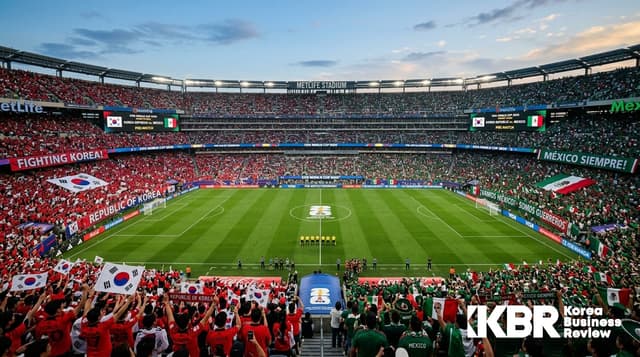
Learning Management from the 90-Minute Pitch: Strategic and Tactical Lessons the 2026 World Cup Offers to Businesses
강지혜 선임기자 · 06/19/2026

경영 아티클
Feedback Focused on Strengths Boosts Profitability by 8.9% — The Principles of High-Performing Organizations Through Data
박소유 책임기자 · 06/18/2026

경영 아티클
People Don't Leave Companies, They Leave Managers: The True Cause of the Engagement Crisis
박소유 책임기자 · 06/15/2026
경영 아티클
How Far Can a CEO Really Shape Organizational Culture?
According to Gallup's 2026 survey of 141,444 respondents, global employee engagement stands at 20%, its lowest level since 2020. Manager engagement has plummeted from 31% to 22%, turning managers into the weakest link in corporate culture. McKinsey's OHI research shows that healthy organizations achieve total shareholder returns (TSR) three times higher than unhealthy ones, with leaders who combine decisiveness and empowerment acting as key variables for organizational health. While 82% of CEOs prioritize culture, only those classified as 'culture accelerators'—who directly link culture to strategy—achieved a twofold revenue growth gap (9.1% vs. 4.4%). Because direct supervisors account for 70% of the variance in team engagement, a CEO's most powerful cultural investment is not slogans, but managerial capability and engagement. In 2026, when only 12% of CEOs report tangible benefits from AI investments, a receptive organizational culture has become the deciding factor in the success or failure of AI transformation—proving that culture is not the speeches a CEO makes, but the accumulation of their decisions.
김민경 책임기자 · 06/11/2026

경영 아티클
What Makes Performance Management Different in Successful Global Companies—Why Adobe and Microsoft Abandoned Annual Reviews and the Truth About Performance Management Through Data
Annual evaluations can no longer drive people. Every year-end, countless organizations worldwide repeat the same routine where managers spend days filling out review forms, and employees sigh over scorecards that compress a year of performance onto a single page, which then serve as the basis for compensation and promotions. Do these familiar procedures actually drive people to work harder and lead organizations in a better direction? Many leaders hesitate before this question, as they merely operate existing systems without seriously considering whether they truly work.
KBR 편집부 · 06/10/2026

경영 아티클
The Requirements of a Leader Who Leads Through Respect, Not Fear
A respected leader is not someone who achieves goals through team members, but someone who helps team members grow on their own. The crisis of leadership and the meaning of respect: the success or failure of an organization depends on people, not strategy, and this is especially true when that person is a leader.
강지혜 기자 · 04/29/2026

경영 아티클
Companies That Change How They Work with AI Surpass Those That Merely Adopt It
In April 2026, executives at numerous companies are grappling with a familiar dilemma: why nothing changes despite subscribing to AI services and having employees use them. The answer is surprisingly simple, as adopting AI and changing the way of working with AI are fundamentally different stories.
박홍석 기자 · 04/22/2026

경영 아티클
To Forgive an Employee Who Caused Customer Harm or Establish Principles — A Leader's Most Difficult Decision
The most uncomfortable question for leaders. Every leader eventually faces this situation: a trusted longtime employee or a developing team member causes irrevocable harm to a customer. It could be a mistake, a misjudgment, or, in some cases, a clear ethical violation.
KBR 편집부 · 04/14/2026