Korea Business Review · Section
ISSUE BRIEFING
Free
ISSUE BRIEFING
Sole Proprietor Loan Overdue Dues Reach 14.6 Trillion Won… Era of 1 Million Closings, Alley Businesses Surviving on Debt
According to the 'Q1 2026 Small Business Trend Report' by Korea Credit Data, loan delinquencies for sole proprietors surged by 12.6% in a single quarter to 14.6 trillion won, with debt concentrating in high-interest non-banking sectors where insolvency risks are piling up faster. Based on National Tax Service statistics, business closures reached 1,008,282 in 2024, surpassing 1 million for the first time since data collection began, with the closure rate remaining above 9.0% for two consecutive years and the three-year survival rate for the top 100 lifestyle industries dropping to 52.3%, solidifying a deep-seated crisis. A Korea Economic Industries Association survey revealed that 34.0% of self-employed individuals reported monthly income falling short of the 2026 monthly minimum wage equivalent (2,156,880 won), while an analysis by the Korea Enterprises Federation showed that 4 in 10 small business owners earned less than 2 million won in operating profit, statistically confirming the reality of 'earning less than part-time workers.' The industry's long-standing demand for differential minimum wage application by sector was voted down once again at the Minimum Wage Commission on June 18, 2026, and labor and management remain far apart with discussions pointing toward a freeze around 12,000 won per hour for the 2027 minimum wage. Research institutes like the Hyundai Research Institute suggested combining management consulting and digital transformation support with re-employment and strengthened social safety nets, presenting targeted policies ranging from the establishment of a dedicated vice-minister for small businesses to sequential prevention, soft-landing, and revival strategies as key tasks.
김민경 책임기자 · 06/24/2026
Read more →
ISSUE BRIEFING
Government to Clear KRW 2.2 Trillion in Small Business Guaranteed Debt, Reopening Paths to Recovery Blocked by Arrears
이우리 선임기자 · 06/22/2026

ISSUE BRIEFING
The AI Job Threat Started with the 'Door That Closes First': Data-Identified Occupations Most Vulnerable to Shaking
류현진 선임기자 · 06/16/2026

ISSUE BRIEFING
The Paradox of the 40 Trillion Won Delivery Era: Why Rider Incomes Are Moving Backward
류현진 선임기자 · 06/11/2026
ISSUE BRIEFING
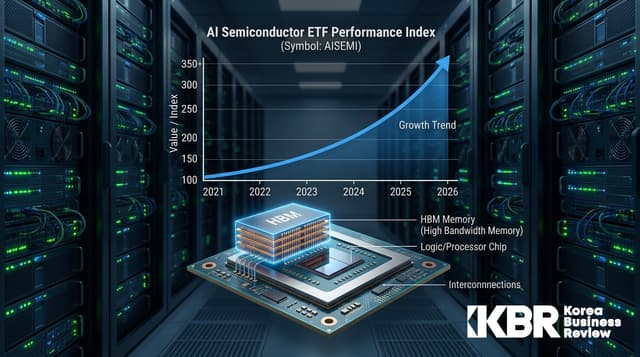
Retail Funds Flock to AI Semiconductor ETFs: Why Samsung Electronics and SK Hynix Value Chains are Chosen
이우리 선임기자 · 06/09/2026
ISSUE BRIEFING
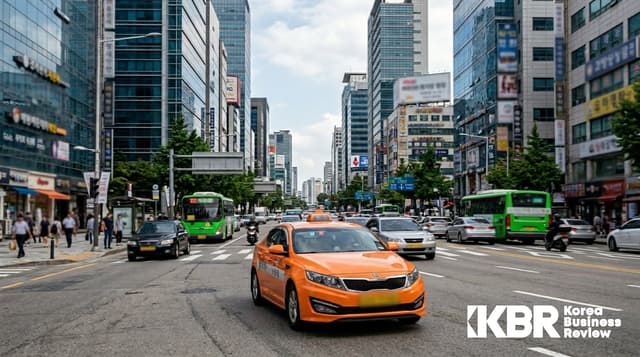
The Taxi Hailing App Era: Why the Elderly Face Longer Waits
The fact that the convenience of mobility platforms does not operate equally for all citizens is emerging as a problem of taxi accessibility for the elderly and a new mobility divide.
강지혜 선임기자 · 06/05/2026
ISSUE BRIEFING
What Changed in SME Policy Funds for 2026: Risk Assessment and Financing Strategies
The Ministry of SMEs and Startups plans to supply SME policy funds for 2026, including loans and interest rate subsidies, focusing on promoting innovative growth and improving demand-centric support systems. Amid a shift in screening criteria from collateral-based to technological and growth potential evaluations, concurrent changes are underway in guarantee requirements from the Korea Credit Guarantee Fund and Korea Technology Finance Corporation, alongside stricter loan screenings by the Korea SMEs and Startups Agency. Small and medium-sized enterprises must proactively review risks related to policy fund dependency concentration, interest rate fluctuations, and repayment schedule management, while concurrently pursuing portfolio diversification strategies with private finance.
이우리 선임기자 · 05/28/2026

ISSUE BRIEFING
5 Macroeconomic Variables That Korean Companies Must Track This Week
While the Bank of Korea signals a potential rate hike in July and strong semiconductor exports are driving growth rates, a significant gap remains with domestic consumption sentiment. The Consumer Price Index (CPI) rose 2.6% year-on-year in April, sustaining inflation pressures, with rising oil prices cited as a major cause. A hawkish stance was confirmed in the Federal Open Market Committee (FOMC) minutes, and some market experts project that there may be no U.S. rate cuts in 2026, making an urgent reassessment of foreign exchange and financing strategies imperative for Korean companies.
이지영 기자 · 05/27/2026
ISSUE BRIEFING
“Unions Aiming at Unions” — Samsung Electronics and LG Uplus Union Conflict Poses New Fracture in South Korea's Labor Movement
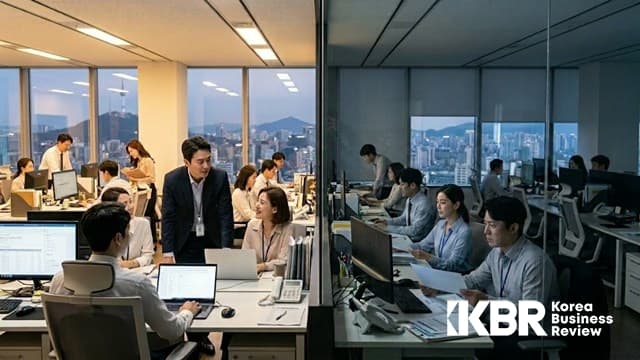
In May 2026, the bulletin boards of South Korea's largest manufacturer, Samsung Electronics, are flooded with unusual declarations of withdrawal directed not at management, but at the union itself. With daily opt-out requests exceeding 1,000, the dispute has highlighted severe intra-labor conflicts rooted in performance-based pay gaps and spilled over into inter-union friction.
최수진 기자 · 05/04/2026
ISSUE BRIEFING
Fuel Surcharge Shock Remaps the Overseas Travel Landscape
With the fuel surcharge for a round-trip ticket to New York exceeding 1.12 million won, airline engines are carrying heavier costs than ever before. Driven by Middle Eastern geopolitical risks, the international route fuel surcharge for 2026 has surged to the 33rd tier, the highest level in history since the current system was introduced in 2016, leading to a rapid contraction in overseas travel demand among South Koreans.
강지혜 기자 · 04/27/2026