Korea Business Review · Section
ESG POLICY & STRATEGY
Premium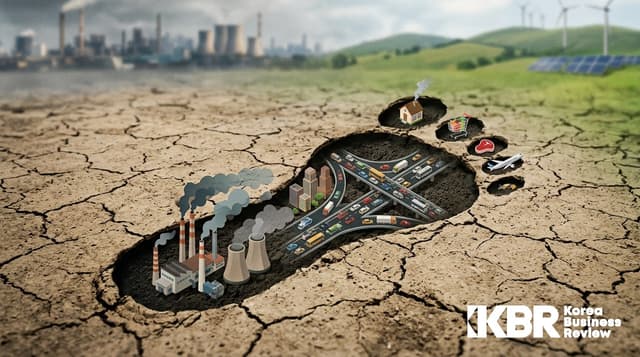
ESG Policy & Strategy
Carbon Footprint Is No Longer 'Feel-Good Marketing' — It Becomes a 'Second Cost' in 2026
With the full implementation of the CBAM in January 2026 and the finalization of the KSSB in February, the carbon footprint has shifted from a 'measurement target' to an object of 'payment and reporting.' The EU CBAM imposes carbon costs on the import of six categories including steel and aluminum, with the certificate price for the first quarter announced at 75.36 euros per ton (April 2026). As the CSRD, Green Claims, and Digital Product Passport (DPP) intersect, regulatory focus is narrowing beyond company-wide levels to questioning the carbon of a 'single product' (PCF). South Korea will begin disclosures starting with KOSPI-listed companies with assets of 30 trillion won or more in 2028 (FY2027), while providing a three-year grace period until 2031 for Scope 3, which is the most challenging. Ultimately, companies equipped with verifiable carbon data infrastructure will reduce costs and gain bidding leverage, meaning the grace period is a 'preparation period,' not an 'exemption.'
이우리 선임기자 · 06/24/2026
Read more →
ESG Policy & Strategy
Why Climate Risk Must Be Brought to the Boardroom
강지혜 선임기자 · 06/16/2026

ESG Policy & Strategy
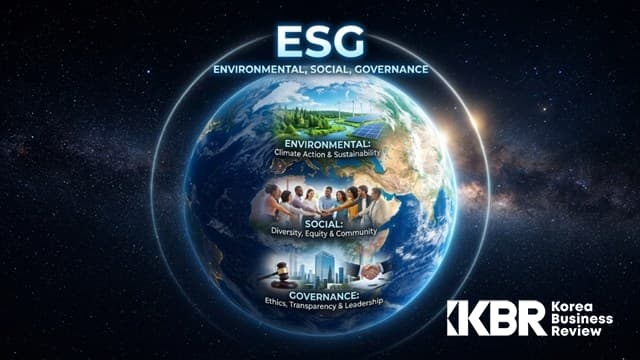
Are Korean Companies' ESG Management Strategies Properly Aligned with Global Standards?
KBR 편집부 · 06/11/2026
ESG Policy & Strategy
The Era of the "Second Financial Statement" Begins — Significance of Korea's Finalized ESG Disclosure Roadmap and Corporate Tasks
KBR 편집부 · 05/07/2026

ESG Policy & Strategy
ESG Management Set to Become a Condition for Survival by 2030
이우리 기자 · 04/28/2026
ESG Policy & Strategy
ESG Organizations: 'Functioning', Not Just 'Existing', Is Now the Standard
ESG management is not just the responsibility of a dedicated team. The moment business departments discuss and execute together, the organization finally begins to function. [Photo = Korea Business Review DB] The Crisis of the ESG Organization: Why Redesign Is Needed Again Now. The question of 'Will we do ESG?' is already over.
강지혜 기자 · 04/20/2026

ESG Policy & Strategy
ESG Disclosure Roadmap Nears Finalization This Month
Five Years of Uncertainty Nearing Its End. It has been exactly five years since the Financial Services Commission first formalized the mandatory ESG disclosure roadmap in 2021. In the meantime, the mandatory implementation timeline has repeatedly shifted from 2025 to 2026 and back to 'undetermined.'
김민경 기자 · 04/15/2026

ESG Policy & Strategy
Carbon Cost is Now Due — EU CBAM Enters Definitive Period, Marking Real Burden for South Korean Exporters
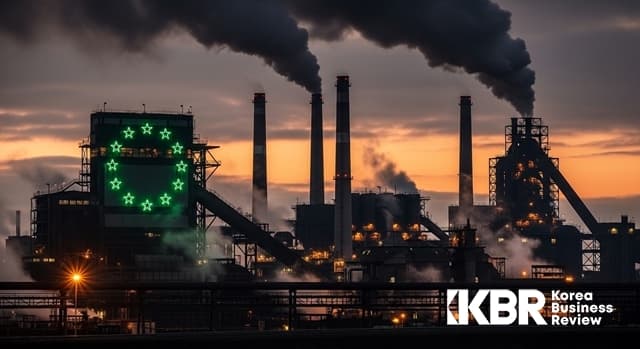
January 2026, from 'reporting' to 'payment': On January 1, 2026, the EU Carbon Border Adjustment Mechanism (CBAM) officially entered its definitive period following the conclusion of its transition period (October 1, 2023–December 31, 2025).
박소유 기자 · 04/07/2026
ESG Policy & Strategy
ESG Investment Shifts from Belief to Structure — The 2026 Global Capital Market Upheaval
EXECUTIVE SUMMARY The 2026 ESG investment market stands at three structural turning points. First, despite the "anti-ESG backlash," global institutional capital continues to steadily flow into physical energy infrastructure and climate finance.
강지혜 기자 · 04/06/2026
ESG Policy & Strategy
ESG: From Choice to Obligation — Korean Companies Facing the Wave of Global Regulations
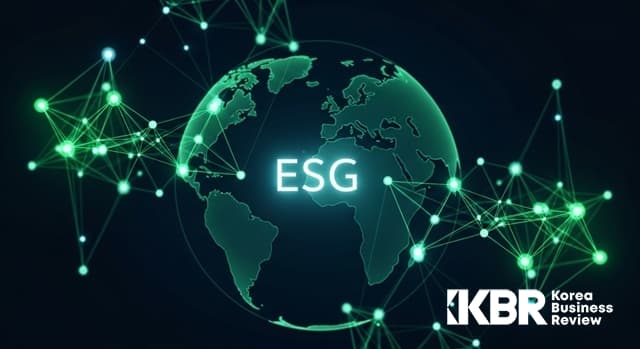
A composite image superimposing ESG indicators and renewable energy facilities over a carbon-emitting factory. Global carbon regulations taking full effect from 2026 make establishing data management systems in industrial sites an essential task for companies. [Image = AI-generated image] Lately, calls from corporate legal teams to the ESG dedicated team at a large law firm in Yeouido, Seoul, have been non-stop.
김민경 기자 · 04/04/2026