Korea Business Review · Section
INSIGHT 4.0
Standard
ORGANIZATION & HR
How to Design Competency Modeling Tailored to Your Organization
Competency modeling is the process of identifying required competencies based on specific behaviors observed in high performers within an organization. It is theoretically grounded in the Spencer family's iceberg model, which encompasses self-concept and motives alongside knowledge and skills. Competencies must be approached through three distinct tiers—company-wide core competencies, leadership competencies by rank, and job-specific competencies—as combining them into a single standard easily leads to a model disconnected from the field. The execution process spans six stages: setting objectives and scope, selecting target groups, data collection via behavioral event interviews or expert panels, developing a provisional model, validation, and finalization into a competency dictionary. This work should be carried out jointly by business unit leaders and management rather than the HR team alone. Rather than directly importing external frameworks, a hybrid approach that starts from and refines the actual behaviors of an organization's high performers is realistic, utilizing public standards such as the National Competency Standards (NCS) as reference frameworks. Once completed, the competency model serves as a common standard across all areas of human resource management—ranging from hiring interviews, competency evaluations, training, and succession planning to placement and compensation linkage—and risks remaining merely a document without regular reviews.
김민경 책임기자 · 08/10/2026
Read more →
ORGANIZATION & HR
Can a Company Without an Org Chart or Reporting Structure Really Function?
박소유 책임기자 · 08/10/2026
AI & DIGITAL INNOVATION
Successful AX: What and How to Succeed — 5 Conditions That Determine Performance
강지혜 선임기자 · 07/18/2026

ORGANIZATION & HR
Characteristics of Companies Where Employees Stay Long-Term — Respect, Not Salary, Drives Long-Term Employment
김민경 책임기자 · 07/10/2026

LEADERSHIP
What Problems Arise in an Organization Led by a Leader Without Principles?
박찬호 선임기자 · 07/07/2026
MANAGEMENT & STRATEGY
In an Era Overflowing with One-Person Startups, What Are the Conditions Needed to Survive?
According to a survey by the Ministry of SMEs and Startups, domestic solo creative businesses surged by 15.4% year-on-year to exceed 1.16 million, while globally, solo startups are estimated to account for about 36% of new ventures. Success stories of ultra-small organizations, such as Gumroad (generating $23.8 million in revenue after dissolving its staff) and Base44 (sold for $80 million with 8 employees), have proven the viability of 'AI-driven one-person enterprises.' The first condition for survival is not AI technology itself, but 'problem definition capability,' with practical career-experienced founders equipped with industrial expertise (domain knowledge) emerging as the new mainstream. The second condition is orchestration capability, operating AI not as individual tools but as a 'virtual organization,' where context engineering serves as a substitute for organizational strength. The third condition is niche focus and capital efficiency, with the power to endure the average 29.8-month 'death valley' until reaching the breakeven point stemming from low fixed costs and reliable revenue sources.
류현진 선임기자 · 07/04/2026

AI & DIGITAL INNOVATION
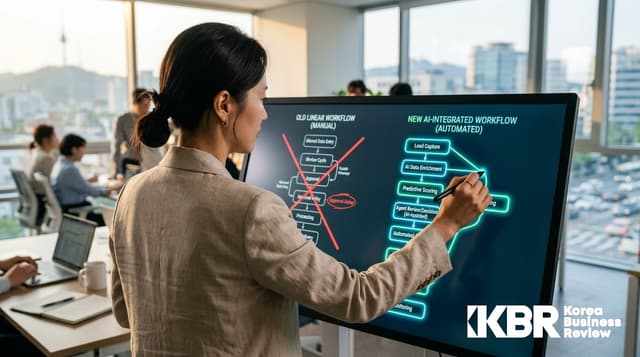
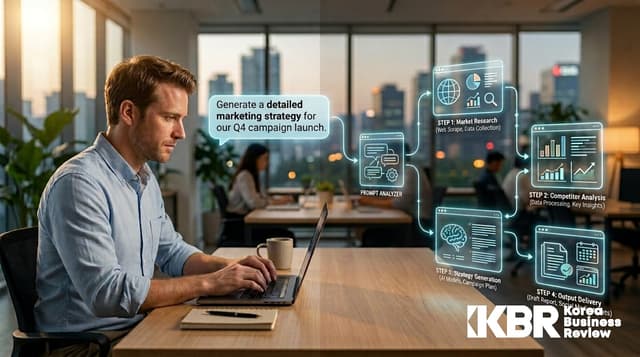
How AI Agents are Changing the Way We Work: Digital Transformation is About 'Work Redesign,' Not 'Tool Adoption'
As AI agents spread in 2026, corporate digital transformation challenges are shifting from simply introducing AI tools to redesigning work processes themselves. Although many companies have adopted generative AI, only a small number have translated this into actual revenue and cost-saving results, revealing a wide gap between adoption rates and performance. Unlike simple response-based chatbots, AI agents understand goals, plan tasks, and execute them, requiring delegation, accountability, and review systems to be designed together. Major South Korean conglomerates such as Samsung, SK, and LG are also viewing AI as an enterprise-wide work innovation platform, simultaneously pursuing organizational restructuring, talent acquisition, and governance reorganization. Ultimately, the core factor dividing AI performance is not the performance of the tool, but the capability to redesign workflows so that agents operate within actual work processes.
최수진 기자 · 06/27/2026
MANAGEMENT & STRATEGY
How Booyoung Group Became a 'Respected Company'
In 2024, Booyoung Group became the first in South Korea to introduce a childbirth incentive of 100 million won per child, distributing a cumulative 13.4 billion won through 2026, while the number of newborns within the company increased from an annual average of 23 to 28. The condition-free design—which provides funds even to those who give birth on their first day of work and imposes no obligation to return the money upon resignation—proved the sincerity of the system, and that trust returned as a recruitment competitiveness of up to 180 to 1 in open recruitment. A company's internal welfare led to the legislation of '100% tax exemption for childbirth support funds' and spread across peer industries such as Krafton and KAI, moving beyond a one-off event to influence national policy and the broader industrial sector. The childbirth incentive is a branch of consistent social contribution functioning as a foundation where people grow and stay, following rental housing and educational donations, serving as an example where the core business and social responsibility point in the same direction. However, the absolute sole-proprietorship governance that made all these decisions possible is also the two-sided risk of a lack of checks and balances, and sustainable respect is completed not through the buzz of good deeds, but through transparent governance and core business competitiveness.
김민경 책임기자 · 06/22/2026

ORGANIZATION & HR
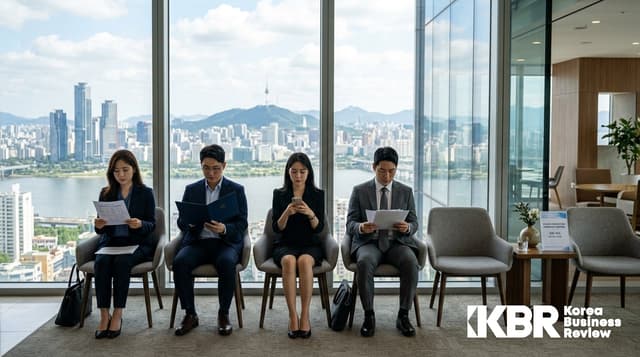
You See the True Face of a Company During the Interview — The Real Reasons Candidates Walk Away
The center of gravity in the hiring market has shifted toward candidates, turning it into an era where key talent chooses companies among multiple offers rather than employers selecting applicants. According to a JobKorea survey, about 87% of job seekers have experienced unpleasantness during interviews, and over 80% reported that an interviewer's attitude alone changed their decision to join—making the interviewer's attitude more powerful than an acceptance notice. Companies must give candidates trust out of practical necessity rather than mere courtesy. The cost of hiring failures has grown, top talent evaluates companies based on their interview experience, and that experience spreads by word of mouth to dictate the employer brand. Interviews must project three elements: a prepared attitude toward the candidate, an unembellished reality of the role, and consistent and fair evaluation criteria that do not waver depending on the interviewer. The feeling left with candidates is a balance of hospitality and accurate evaluation, completed by details like advance notice, punctuality, and prompt result notifications along with interviewer training—interviews serve as a mirror reflecting the company, and candidates are already looking into that mirror.
김민경 책임기자 · 06/18/2026
ORGANIZATION & HR
MBO vs OKR: What's the Difference and Which Goal Management System Should Your Organization Adopt?
MBO is a goal management philosophy introduced by Peter Drucker in 1954, while OKR was developed by Intel's Andy Grove by combining it with 'Key Results,' meaning both share the same lineage. The essential difference is that MBO is a control tool linking goals to evaluation and compensation, whereas OKR is a tool that drives alignment and focus based on company-wide transparency. While MBO is annual, top-down, and assumes 100% achievement, OKR is quarterly, a hybrid of top-down and bottom-up, and views around 70% achievement as an appropriate stretch goal. MBO's strengths lie in clarity and stability, but its limits are conservative goal setting and rigidity; OKR's strengths are agility and stimulating innovation, but it easily becomes hollowed out without cultural maturity. The answer depends on an organization's volatility, cultural maturity, and operational purpose, though a phased strategy combining MBO for evaluations and OKR for directional alignment is also effective.
강지혜 선임기자 · 06/17/2026