Korea Business Review · Section
ESG
Premium
ESG Policy & Strategy
Global Warming Threshold Crossed Again: National Targets Set for 2035, Carbon Budget at 4 Years
In August 2026, the global average temperature was 1.65℃ higher than pre-industrial levels, exceeding the monthly average 1.5℃ threshold for the first time since November 2025. Fossil fuel CO₂ emissions in 2025 reached a record high of approximately 38.1 billion tons, leaving a remaining 1.5℃ carbon budget with a 50% probability of about 170 billion tons, equivalent to roughly four years at current emission rates. Latest UNFCCC analyses indicate that implementing new NDCs will reduce 2035 emissions by approximately 12% compared to 2019, falling short of the roughly 60% reduction required for the 1.5℃ pathway. South Korea is pursuing a 2035 reduction target of 53 to 61%, a 2030 target of 100 GW in renewable energy expansion, and a 50% increase in paid allocation for power sector emission allowances. While SBTi participation and clean energy investments are growing, global financial alliances are winding down or restructuring, placing companies in an environment where they must simultaneously manage regulations, power supply, and carbon costs.
이우리 선임기자 · 09/13/2026
Read more →
ESG MARKET & CASES
Nike Shareholders Ask Again: Can the 2030 Reduction Targets Really Be Met?
최수진 기자 · 09/09/2026
ESG Policy & Strategy
5 Things Small and Medium-Sized Manufacturing Enterprises Must Check Before Adopting AI Industrial Safety Technologies
이우리 선임기자 · 09/05/2026
ESG Policy & Strategy
Environmental Permitting Pressure on Automotive and Secondary Battery Plants: Integrating Environmental Permits into a Single System
이태민 책임기자 · 08/29/2026

ESG Policy & Strategy
What Is Ongoing Emissions Responsibility? The New Net-Zero Standard of SBTi 2.0
박소유 책임기자 · 08/21/2026
ESG Policy & Strategy
Safety is Now Public: August 2026 Marks the Dawn of the Corporate 'Safety Report Card' Era
The Occupational Safety and Health Disclosure System takes effect on August 1, 2026, requiring companies with 500 or more regular employees and construction contractors with a project value of 120 billion won or more to publicly disclose their safety and health status annually. Although fatal accidents in the first half of 2026 hit a record low of 253, a clear polarization by accident type emerged, with falls decreasing while fires and explosions actually increased. Over four and a half years of Severe Accidents Punishment Act enforcement, court rulings have repeatedly pointed to a lack of risk identification and improvement procedures, as well as inadequate criteria for evaluating responsible personnel, while the suspended sentence rate reached 85.7%. Safety leadership manifests not through declarations, but through resource and time allocation and the fostering of psychological safety, while safety culture matures in stages, akin to the Hudson model or Bradley curve. With international standards such as the ISO 45001 revision and the ISSB human capital project also expanding safety into the realms of culture and well-being, businesses must transition from lagging to leading indicator management.
이태민 책임기자 · 08/13/2026
ESG MARKET & CASES
Beyond Paper Checks: Hyundai Motor's Supply Chain ESG Moves to On-Site Verification at Mines and Smelters
Hyundai Motor conducted ESG written assessments for 2,086 suppliers and on-site audits for 25 suppliers in 2025, while 25 suppliers with potential regulatory violations completed corrective action plans. Independent third-party RCS Global audited 3 mines and smelters in the Democratic Republic of Congo and Indonesia, identifying 58 non-conformities (47 major, 11 minor), with corrective actions currently underway. Legal experts generally view the EU Omnibus Directive, which took effect in March 2026, as clarifying risk-based due diligence rather than simply reducing audit volume. Through a mutual growth agreement signed with the Korea Fair Trade Commission in July, primary suppliers are paid within an average of 10 days post-closing instead of the statutory 60 days, while tier-2 and tier-3 suppliers are supported through training, incentives, and shared growth payments (benefiting an estimated 5,500+ companies). Despite achievements such as achieving RE100 across all operations in Europe, North America, and India, expanding the depth of in-depth audits and securing visibility into tier-2 and tier-3 suppliers remain future tasks.
류현진 선임기자 · 08/10/2026

ESG MARKET & CASES
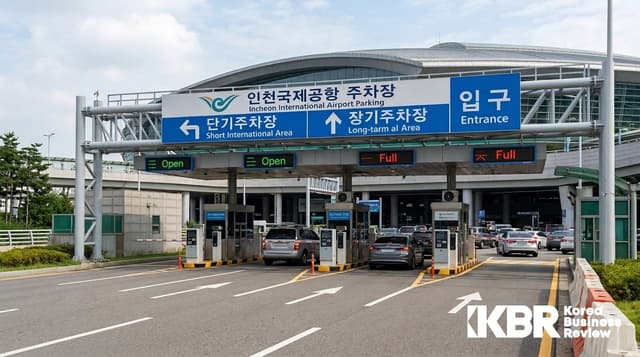
Incheon Int'l Airport Corporation, Equipped with an ESG Committee, Failed to Stop Rampant Issuance of Parking Passes
An audit by the Ministry of Land, Infrastructure and Transport revealed that 31,265 regular parking passes—accounting for 84.5% of Incheon Airport's total 36,971 parking spaces—were issued without limit to employees and others. Short-term parking lots closest to the terminals were operated primarily for employees, reducing spaces available to general passengers by more than half. Numerous instances of private use were uncovered, including 1,220 cases of free parking during vacations, with waived fees amounting to 4.1 billion won in 2025 alone. As this occurred in a public enterprise equipped with an ESG committee and internal control systems, the gap between formal governance and substantive control has become a core issue. With improvement measures implemented in July sparking controversy over subsidiary discrimination, executing full recovery and disciplinary actions alongside equitable follow-up measures remains a pressing task.
강지혜 선임기자 · 07/10/2026
ESG MARKET & CASES
The Final Puzzle of Successful ESG Management: How to Design Organizational Culture
In 2026, ESG is in a paradoxical phase. While the US-driven backlash has reduced the usage of the term 'ESG,' regulations and practical demands are actually intensifying through EU CSRD/CBAM, Brazil's ISSB mandates, and South Korea's disclosure roadmap. Recent research and HR data show that corporate cultural orientation correlates significantly with ESG performance, employee satisfaction, and pride, suggesting that the success or failure of ESG depends on organizational culture rather than systems. Patagonia embedded its mission into its institutional and daily operations through benefit corporation conversion, ownership changes, environmental internships, and trust-based autonomy, realizing 'ESG driven by culture.' Unilever connected strategy, employee well-being, and ESG into a single operating system through the USLP, while global companies like Microsoft drive cultural shifts by linking executive compensation to sustainability metrics such as climate, workforce, and ethical AI. Principles of organizational culture design that South Korean companies can adopt include leadership internalization, institutionalization of values, employee participation experiences, speak-up cultures, and prudent compensation/KPI alignment. KBR's perspective is that as the regulatory phase deepens, only 'ESG embedded in culture' can withstand the post-ESG debate.
이지영 기자 · 06/30/2026

ESG MARKET & CASES
A New ESG Issue in the AI Era: How Data Center Power and Water Consumption Are Changing Corporate Sustainability
Driven by the proliferation of AI, global data center electricity demand is projected to surge from 415 TWh in 2024 to approximately 700 to 1,300 TWh by 2030 (945 TWh under the IEA baseline scenario), with demand for AI-specific data centers expected to increase approximately threefold over the same period. Water consumption per prompt varies significantly depending on the measurement methodology, ranging from about 0.26 mL (five drops of water) based on actual Google Gemini measurements to about 45 mL based on Mistral disclosures, while total global data center water consumption could rise from approximately 560 billion liters in 2023 to about 1.2 trillion liters by 2030. Microsoft reported that its total emissions increased by 23.4% compared to 2020 due to AI and cloud expansion, with Scope 3 (indirect emissions) accounting for approximately 97% of the total, bringing resource efficiency across the supply chain to the forefront as a key challenge. Domestic data center electricity demand is expected to grow at an annual average of 11% through 2028, and power applications for data centers in the Seoul metropolitan area alone reach approximately 20 GW (equivalent to 20 nuclear power plants), pointing to grid bottlenecks and supply imbalances as structural risks. The KSSB finalized Sustainability Disclosure Standards Nos. 1 and 2 based on the ISSB in February 2026, and under the Financial Services Commission's roadmap draft, ESG disclosures are scheduled to become mandatory for KOSPI-listed companies with assets of 30 trillion won or more starting in 2028, making data center power and water usage a 'disclosure item right next to the financial statements.'
박소유 책임기자 · 06/27/2026