At the forefront of global business in 2026, three structural changes are unfolding simultaneously.
These are the "energy supply pressure" where AI power consumption tests national infrastructure, the "AI governance realignment" where the US, EU, and South Korea move in different directions, and the "ESG paradox" where carbon reduction mandates and expanded AI investments collide head-on.
These three trends are not separate issues. They are a single connected structural pressure that representative Korean companies such as Samsung Electronics, SK, and Naver must respond to simultaneously right now.
1. Electricity is AI Competitiveness — The Reality of Energy Supply Pressure
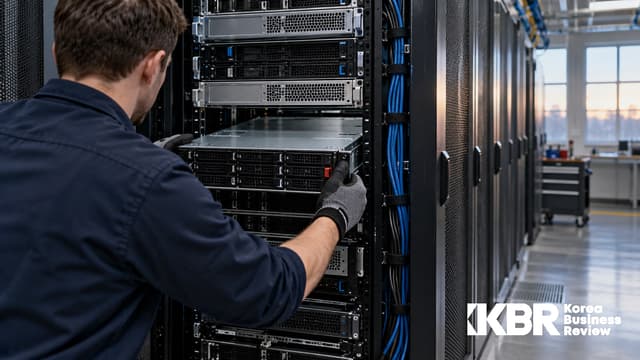
"The speed of laying power lines is slower than the speed of building data centers." The most realistic bottleneck in the 2026 global AI industry is not algorithms or semiconductors, but electricity.
Facility investments (CAPEX) for data centers by the top five US hyperscalers (Amazon, Microsoft, Google, Meta, Oracle) in 2026 are projected at approximately $700 billion, nearly double the roughly $387 billion in 2025. Where this investment is heading is not simple server rooms, but so-called "AI factories," namely hyperscale data centers specialized for AI computing.
Scenario analyses by the International Energy Agency (IEA) are frequently cited as representative figures to gauge the scale of power consumption. According to analyses citing forecasts from specialized institutions like the IEA, energy consumption by global data centers due to increased AI technology usage is estimated to reach up to 1,050 TWh in 2026. Furthermore, advanced AI services like AI chatbots are reported to consume about 10 times more electricity than Google searches. However, these figures correspond to high-end estimates by scenario, and actual consumption may vary depending on the pace of technological efficiency improvements.
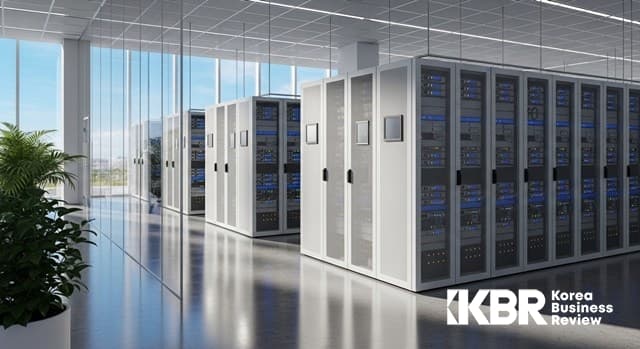
The reason why the power demand of AI data centers is on a completely different dimension from existing ones is also clear. The National Assembly Research Service estimated that AI data centers consume up to six times more electricity than traditional data centers, pointing out that preparing countermeasures for power supply and demand is urgent. While traditional data centers consumed 10–25 MW of power, hyperscale AI data centers require over 100 MW. Although these figures may vary depending on workload configurations, they are commonly used in the industry as a benchmark indicating that the power density of AI-specialized facilities is fundamentally different from the past.
This issue is already a reality confirmed by figures in South Korea. As of the end of 2023, there were 150 domestic data centers with a total power capacity of 1,986 MW, a level equivalent to the operation of more than two 1,000 MW nuclear power plants. The power capacity requested for new data centers to be built by 2029 reaches 49,397 MW. To cover this, it is estimated that 53 additional 1.0 GW-class generators must be built and distribution-stage transformers with a scale of 77,168 MVA must be newly expanded.
The structural time lag between supply and demand is the core risk. Data centers can become operational in 2 to 3 years, but transmission lines and power generation facilities take at least 5 to 7 years. Ultimately, as the "time lag" between supply and demand accumulates, the current domestic power grid, which relies on large-scale centralized power generation and long-distance transmission, faces structural difficulties in responding to rapidly increasing AI power demand.
This power pressure is not limited to South Korea. Taiwan, centered around the world's largest foundry enterprise TSMC, also halted nuclear power due to a nuclear phase-out policy, but discussions for restarting began in just 10 months. The background includes a surge in power demand caused by the operation of AI data centers and semiconductor plants, geopolitical risks stemming from an LNG dependency of over 50%, and the reality that TSMC alone accounts for approximately 9% of Taiwan's national power consumption.
The competition for AI hegemony is increasingly taking on the aspect of energy hegemony competition. In 2026, competition is accelerating not only in AI technology itself, but also in securing the infrastructure and energy to support it. Competition to secure hyperscale data centers equipped with the design, location, and power grids capable of stably running high-density GPUs—rather than simple server rooms—is expected to intensify further, centered around global big tech companies.
2. The Three-Way Regulatory Battle — Directions Emphasized by Each Country as of 2026
Another front surrounding AI is taking place in the realm of regulation. As of 2026, the United States is leaning toward lowering regulatory burdens and emphasizing private sector-led innovation, the EU toward meticulously designing risk-centric regulations, and South Korea toward seeking a balance between regulation and promotion. However, the policy directions of each country remain subject to future change.
The United States is clearly maintaining a deregulatory stance. President Trump emphasized the necessity of minimizing regulations to maintain AI industry competitiveness, announcing policy initiatives prioritizing private sector-led technological innovation while limiting government intervention. Recognizing that disparate state-level AI regulations could hinder corporate activity and slow innovation, the administration is reportedly also pursuing limits on state governments' AI regulatory authority and establishing a unified federal regulatory framework.
The EU is moving in the opposite direction. The EU AI Act pursued by the European Union is facing a high possibility of delayed regulatory implementation due to its overly complex structure and administrative limitations. Provisions related to high-risk AI systems, originally scheduled to apply from August 2, 2026, are projected to be significantly postponed. However, even if the implementation timeline is adjusted, the sanction structure itself—imposing fines of up to 7% of a company's global revenue for detecting high-risk AI system violations—remains unchanged.
South Korea has chosen an independent path amidst this. South Korea implemented the Basic AI Act starting in January 2026, becoming the second country in the world after the EU to establish a comprehensive AI governance system. This organizes 19 AI-related clauses and legislative elements previously scattered across individual laws into a single integrated framework, structuring everything from research support to safety and ethics.
The core of South Korea's Basic AI Act is the balance between regulation and promotion. The Korean law places slightly more weight on "industrial promotion" than Europe does. While the EU AI Act stipulates fines of up to 7% of a company's global revenue for specific types of violations, South Korea's Basic AI Act is designed without criminal punishment provisions and with administrative fines of up to approximately 30 million KRW for most violations, making the enforcement intensity relatively low.
However, as long as Korean companies cannot abandon the European market, they also face the task of effectively meeting EU standards. All high-risk AI systems launched in the EU market after August 2026 must fully comply with the AI Act, with no retroactive application possible. Even products already on the market may face sales halts if they fail to meet regulatory requirements. Particularly for Korean medical AI companies, the threshold for entering the European market is expected to rise further.
The current period, when regulations are relatively loose, paradoxically presents an opportunity for companies to refine their technologies through market testing and accumulate know-how to proactively respond to regulations that will be introduced in the future. As global consulting and policy reports commonly point out, carbon neutrality, supply chain security, and AI have now established themselves as the three pillars of corporate strategy.
3. The ESG Paradox — The More You Grow AI, the More Carbon Increases
The third challenge created by AI is ESG. The structural contradiction in which companies that have declared sustainability pour hundreds of trillions of won into AI infrastructure that consumes massive amounts of electricity has emerged as a core dilemma in global corporate strategy as of 2026.
Energy efficiency, water usage, and carbon emissions have now established themselves as core indicators for judging the business feasibility of data centers. In particular, as regulations and investment criteria are strengthened primarily in Europe, data centers that fail to present quantitative indicators are increasingly likely to lose their footing in the market.
The water usage issue cannot be overlooked either. Considering that 80% of the water consumed during data center cooling processes simply evaporates, energy efficiency is synonymous with water resource conservation. Consequently, the industry believes that the yardstick determining data infrastructure competitiveness after 2026 will not simply be fast computing, but how stable a hardware environment can be built with minimal energy.
Liquid cooling is drawing attention as a technological breakthrough for this ESG dilemma. Liquid cooling methods can reduce cooling power by more than 50% compared to air-cooling methods, making them evaluated as a core technology for improving energy efficiency and reducing carbon emissions.
US-based Vertiv is cited as a representative company that has preempted this market. Vertiv announced that it recorded annual net sales of $10.23 billion and an organic sales growth rate of 26% in 2025. The company has guided its organic sales growth rate for 2026 to be in the range of 27% to 29%.
Korean startups are also moving quickly in this trend. Domestically, KoolMicro, co-founded in 2022 by researchers from KAIST, Georgia Tech, and Samsung Electronics, drew attention with its semiconductor chip-level liquid cooling solution and announced that it secured Pre-A investment from Silicon Valley venture capitalists in the first quarter of 2026.
Policy support has also become tangible. The Basic AI Act implemented in 2026 designated AI as a national core infrastructure, and the Ministry of Economy and Finance is pursuing tax reductions of up to 50% for AI R&D costs and up to 25% for data center construction costs.
The linkage of renewable energy and energy storage systems (ESS) was also specified as a policy goal. To secure grid stability following the expansion of renewable energy, the government plans to secure 23 GW of long-duration ESS by 2038. In particular, the 2.1 GW volume required for 2028–2029 will be proactively secured starting in 2026 and prioritized for deployment in grid-saturated regions.
The battery industry is a direct beneficiary of this trend. Driven by the surge in power demand from AI data centers, the industry, including Samsung SDI's research institutes, forecasts that the global ESS market could grow approximately threefold from 399 GWh in 2024 to about 1,232 GWh by 2035. LG Energy Solution has placed LFP battery-based ESS solutions at the forefront, and Samsung SDI has also provided guidance targeting mass production of its LFP-based SBB 2.0 in December 2026.
Corporate Case 1: SK Telecom — A 500-Billion-Parameter Challenge Toward "Sovereign AI"
One of the Korean companies moving most strategically across the three fronts of energy, regulation, and ESG is SK Telecom.
SKT unveiled its ultra-large AI model "A.X K1" with 500 billion (500B) parameters for the first time domestically at the "1st Presentation of the Sovereign AI Foundation Model Project" hosted by the Ministry of Science and ICT. As a representative national AI company, SKT is continuing investments aiming to propel South Korea into the global top 3 in AI.
SKT stated that it has built a manufacturing AI cloud utilizing NVIDIA's manufacturing AI platform Omniverse for the first time in Asia, providing it to manufacturing startups and others, and also held an executive vision workshop with Amazon Web Services (AWS) for cooperation in the physical AI sector.
SKT's building of its own ultra-large model is not a simple technological competition. Sovereign AI goes beyond operating a model within one's own country; it signifies a movement to secure control over data, models, and operational environments overall.
Member states of the EU and countries like the UAE have already executed massive investments in Sovereign AI, starting with the development of LLMs reflecting their native languages and cultures. SKT's actions hold significance that transcends simple corporate investment in that they align with national strategy aimed at breaking away from dependency on global AI models.
Corporate Case 2: SK ecoplant — Breaking Through the ESG Contradiction with "Green Data Centers"
In the data center market, where the dual demands of energy consumption and ESG obligations must be met simultaneously, SK ecoplant is pushing forward with "green data centers" as its core business.
As the domestic data center industry rapidly reorganizes due to the proliferation of generative AI, "green data centers" that achieve sustainability and technological innovation simultaneously are emerging as a new solution. Recently, there has been a movement to relocate candidate sites for data centers away from the metropolitan area to provincial regions near power plants, coastal areas, or locations with easy access to water resources, where the power grid has more capacity and energy utilization efficiency is higher.
The liquid cooling-based green data centers promoted by SK ecoplant have a structure where market competitiveness increases in tandem with strengthened ESG regulations.
The status of data centers themselves is also changing. They are beginning to be evaluated not as passive facilities that consume power, but as active assets that can contribute to power grid stability, which directly impacts regulatory responses and investment criteria.
What Korean Companies Must Decide Now
There is one common thread running through all three fronts. AI, energy, ESG, and regulation are not separate issues, but a single connected equation.
In a survey conducted by global consulting group McKinsey of corporate practitioners operating in 105 countries, 88% of all respondents answered that they regularly utilize AI in at least one business function. This is a 10 percentage point increase compared to 2024 (78%). However, 60% of respondents answered that AI adoption still lingers in the experimental or pilot operation stage and has not yet expanded enterprise-wide.
The gap between leading companies and lagging companies is widening rapidly. Multiple global consulting reports commonly analyze that the difference between leaders and laggards goes beyond simple performance gaps and is highly likely to expand into structural gaps that are difficult to catch up with in a short period.
Carbon neutrality, supply chain security, and AI have established themselves as core tasks commonly pointed out in major global consulting and policy reports. The fate of a company depends on how well it reads these three massive policy trends and aligns them with its own strategy, which is the reality of the business environment in 2026.
The place for Korean companies does not lie in choosing one of the three fronts. They must design an integrated strategy right now: procuring AI power with renewable energy, turning regulations from market entry barriers into differentiation opportunities, and protecting data sovereignty with their own capabilities. In April 2026, that clock is already ticking fast.