A Constitutional Body Safeguarding the Weight of Every Vote, and the Homework Left Behind in June 2026
The Invisible System Guarding the Weight of a Single Vote
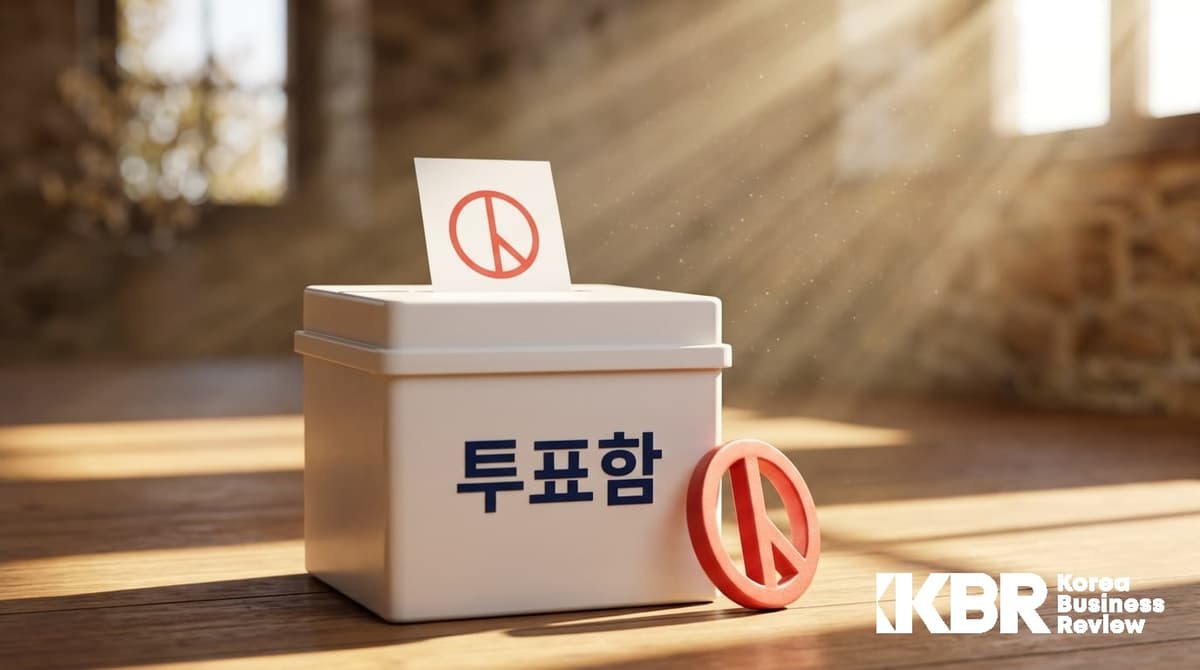
On the morning of an election day, a voter enters a polling station, verifies their identity, receives a ballot, marks it, and places it into the ballot box. Once this simple-looking act is finished, most citizens return home. However, from the moment that single vote enters the box through the counting process until the winner is finalized, a massive administrative system operates to ensure that the vote is not lost, altered, or manipulated halfway. The organization responsible for this system is none other the Election Commission. The fairness of an election is directly linked to the legitimacy of democracy, and the practical work underpinning that legitimacy is precisely election management. Based on the systems and facts as of June 2026, this article outlines where the election management agency belongs, what status it holds, what roles it performs, and through what procedures actual elections are managed.
Neither the Executive nor the Legislature, but an Independent Constitutional Body
The core fact to understand first when examining South Korea's election management agency is its affiliation. While it is easy to assume it is one of the government ministries, the National Election Commission does not belong to the executive branch. Established pursuant to Article 114 of the Constitution to handle administrative affairs concerning the fair management of elections and referendums as well as political parties, it is an independent, collective constitutional body that stands alongside the National Assembly, the Government, the Courts, and the Constitutional Court. In other words, it means a separate independent organization directly guaranteed by the Constitution, subordinate to none of the legislature, executive, or judiciary.
This independence was not gained by coincidence but stems from historical scars. During the First Government, election administration was managed by an organization under the Ministry of Home Affairs, and it was difficult for an agency affiliated with the executive branch to act as a fair referee. The April 19 Revolution of 1960 broke out in resistance to the March 15 fraudulent election perpetrated by the Rhee Syngman administration through an election management body lacking independence and fairness. Afterward, a provision was newly established in the Second Republic Constitution, making the National Election Commission a body constitutionally separated and independent from the executive branch. Then, through the 5th Constitutional Amendment of the Third Republic in 1962, the Election Commission was stipulated as a constitutional body, and with the enactment and promulgation of the Election Commission Act the following year, the National Election Commission was inaugurated on January 21, 1963. In other words, the background of the NEC existing today as an independent constitutional body carries the heavy historical significance of reflection upon fraudulent elections.
This independence has not remained an abstract declaration but has been reaffirmed through concrete authority. On February 27, 2025, the Constitutional Court ruled in a competence dispute case between the NEC and the Board of Audit and Inspection that the National Election Commission, as an independent constitutional body, is not subject to the job inspection of the Board of Audit and Inspection. This judicially reconfirmed that the NEC is an institution granted such a high degree of independence that even other state agencies cannot arbitrarily inspect its duties.
Who and How the Commission is Formed
The very design of how the National Election Commission is formed contains a design to protect its independence. The National Election Commission is a collective body consisting of a total of nine members—three appointed by the President, three elected by the National Assembly, and three nominated by the Chief Justice of the Supreme Court—with a 6-year term of office for members. The source of power is evenly distributed among the executive, legislative, and judicial branches to prevent any specific power from dominating the commission. Members are appointed, elected, or nominated after undergoing confirmation hearings at the National Assembly, and the Chairperson and standing commissioner are elected from among the members, with the Chairperson customarily being a Supreme Court Justice.
The political neutrality of the members is also institutionally mandated. While members of the Election Commission are vested with the duty of neutrality, prohibiting them from joining political parties or engaging in politics, their status is guaranteed such that they cannot be dismissed except by impeachment or the sentencing of imprisonment without prison labor or heavier punishment. It is a structure that simultaneously grants status security and the duty of neutrality so that they can perform their duties as referees without being mindful of either political faction.
A Four-Tiered Organizational Network Densely Covering the Country
Election management is not carried out by a single central agency alone. Because polling stations and counting stations across every nook and cranny of the country must be managed simultaneously, a multi-layered organizational network corresponding to administrative units is required. The Election Commission consists of four tiers: the National Election Commission, City/Provincial Election Commissions, District/City/County Election Commissions, and Town/Ship/Neighborhood Election Commissions. As of 2026, corresponding to administrative agencies, there are 17 City/Provincial Election Commissions, 255 District/City/County Election Commissions, and 3,555 Town/Ship/Neighborhood Election Commissions. The core point is that the commission reaches down to the lowest town, township, and neighborhood units, and because of this dense web, elections held simultaneously nationwide on the same day can be managed under unified standards.
This organization goes beyond a mere administrative processing body and possesses certain directive powers over administrative agencies. The Constitution stipulates that election commissions at all levels may issue necessary directives to relevant administrative agencies regarding election affairs, such as the preparation of the electoral register, and referendum affairs, and that the responding administrative agencies must comply. To smoothly conduct the national event of an election, effective authority has been granted to mobilize administrative resources while remaining an independent institution.
How Actual Elections Are Managed
The actual flow of election management begins with candidate registration and proceeds to campaign management, voting, vote counting, and the finalization of successful candidates. The schedule of the 9th simultaneous local elections held on June 3, 2026, well illustrates this flow. Candidate registration applications took place from May 14 to 15, the election campaign period started on May 21, early voting was conducted from May 29 to 30 between 6:00 AM and 6:00 PM, and Election Day voting was held on June 3 from 6:00 AM to 6:00 PM. As such, each stage has legally designated periods and times, and the NEC manages each step to proceed according to regulations.
When voting closes, vote counting—the most tense phase of election management—begins. The vote counting process is designed with multiple stages of cross-verification so that the results are not dictated by the arbitrary will of a single individual. Once voting closes, voting observers move with the ballot boxes to the counting station. At the counting station, the ballot boxes and related documents are checked and received, and after verifying the integrity of the seals on the ballot boxes under the observation of counting observers, the boxes are opened. Afterward, ballot-sorting machines sort ballots by candidate, while ballots difficult for machines to judge are placed in the unclassified box. All sorted ballots are then manually reviewed and verified in their entirety. Attending committee members, including members recommended by political parties, inspect the vote counts and invalid votes for each candidate, after which the chairperson announces the vote-counting results. A distinctive feature is that a step of re-checking with human eyes is mandatorily placed after machine sorting, allowing machines and humans to complement each other.
The most important principle in the vote-counting procedure is transparency. All processes of vote counting are observed by persons recommended by political parties and candidates, and vote-counting results are distributed to counting observers and press reporters while also being published on the internet homepage. General voters can also participate in observation. Ahead of the 9th local elections, applications for voter counting observers were held from May 9 to 13, and eligible voters could apply by visiting the National Election Commission homepage or the competent district, city, or county election commission. Counting votes under the watchful eyes of all competing parties and citizens, rather than by power or a specific faction, forms the foundation of trust in vote counting.
Challenges and Responses Surrounding Trust
Election management is not completed merely by the perfection of procedures. If an increasing number of people distrust the results, the legitimacy of any sophisticated system will be shaken. Recently in South Korea as well, various suspicions surrounding early voting have been raised, and the NEC has been responding to them with fact-checking and information disclosure. Regarding concerns about the transparency of ballot box storage, the National Election Commission responded to fears of fraudulent elections by explaining that early voting boxes are stored under 24-hour CCTV surveillance. Technological development also creates new threats; the fact that the NEC separately prepared guidelines concerning election campaigns utilizing deepfake videos is likewise an example of how the system has responded to a changing environment.
The reason these responses are important is clear. Distrust in election results does not stop at shaking a single election; it erodes the legitimacy of the entire elected power and the integration of society. Therefore, the role of the election management agency goes beyond the technical task of counting votes accurately to include creating enough trust that even the losing side can accept the outcome.
Why This Matters So Much
The fundamental reason election management is important is because it is the final bastion supporting the legitimacy of democracy. For the act of citizens choosing power to have meaning, that choice must be tallied without distortion, and anyone must be able to trust the results. If election results can be manipulated, or if even reasonable suspicions regarding the possibility of manipulation are not resolved, elected power loses its justification for governance.
South Korea’s placement of the election management agency as an independent constitutional body subordinate to no power, its configuration of members by dividing power into three parts, its maintenance of organizations down to the lowest administrative units, and its allowance of all competing parties to observe vote counting all point toward a single goal. It is to create a fair playing field where anyone can accept the results no matter who wins. This system, built upon the painful history of fraudulent elections, continues to be constantly tested before new suspicions and technological threats, and protecting it is no different from protecting the weight of each and every one of our votes.
However, the Warning Faced in June 2026
However, the fact that such a system is well-established does not directly guarantee flawless operations in the field. On the day of the main voting for the 9th simultaneous local elections held on June 3, 2026, an unprecedented situation occurred in which ballot papers ran out at some polling stations, including around Jamsil in Songpa-gu, Seoul. On this day, ballot papers ran short at 50 polling stations nationwide, and among them, voting was temporarily suspended at 22 locations—a rare occurrence in election administration history.
Situations where ballot papers ran out from around 1:00 PM and voters had to wait continued at the 6th polling station in Jamsil 2-dong, the 3rd polling station in Garak 2-dong, Jamsil 4-dong, and Munjeong 2-dong in Songpa-gu. Some voters waited for tens of minutes only to eventually give up voting and return home. Although the Election Commission took handling measures such as issuing waiting numbers to voters who entered polling stations before 6:00 PM to enable them to vote and extending voting hours until 10:00 PM, trust once damaged and the single votes of voters who turned away could not be fully restored.
The fallout left by this incident went beyond mere administrative setbacks. Triggered by the ballot paper shortage controversy, large-scale protests shouting for re-elections and fraudulent voting continued around the Jamsil counting station, spreading into social conflict surrounding the election results. Regarding the causes of the incident, an analysis was raised that it was an administrative accident where a decision to lower the minimum limit for ballot paper printing from the existing 60% to 50% overlapped with miscalculated distribution predictions by district and city election commissions, but the responsibility attribution and exact details remain in the process of investigation.
Whatever the nature of the cause, one clear fact does not change. If voters arrived at polling stations for any reason and failed to exercise a single vote, it means that the citizens' right to vote guaranteed by the Constitution was substantially infringed. As examined earlier, election management is the work of creating a fair playing field where everyone can accept the results regardless of who wins, and the moment the entrance to that playing field is blocked, trust in the entire system is shaken. Therefore, this incident must not be passed off as a one-time mishap.
All of our citizens must clearly recognize the seriousness of this matter, and a thorough and transparent investigation into its causes and responsibility must without fail follow so that the same thing is never repeated.
This is because safeguarding the weight of a single vote does not end with having a well-designed system, but is finally completed by taking full responsibility until the end to ensure that the system operates in the field without missing the rights of even a single person.