
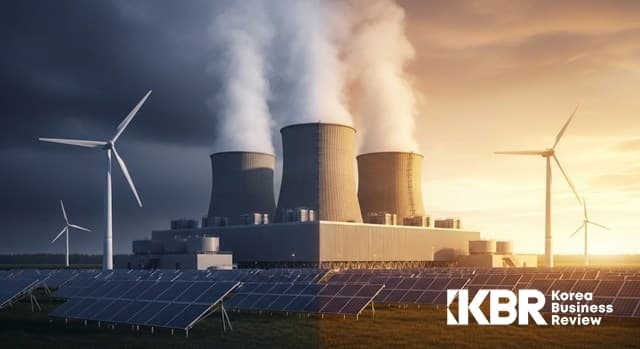
Morningstar projects that U.S. data center power demand will increase about threefold by 2030, with renewable energy coverage estimated at only around 25%.
Is ESG Dead, or Has It Evolved?
As of 2026, an increasing number of companies are hesitant to openly use the word 'ESG' itself. In the United States, anti-ESG political sentiment has strengthened, and some global asset managers have withdrawn from ESG coalitions, giving rise to the narrative that "ESG is over." However, actual capital market flows tell a completely different story.
According to TD Securities analysis, global sustainable bond and loan issuance (including labeled bonds and sustainability-linked bonds) reached approximately $1.6 trillion in 2025, representing only a single-digit percentage decline compared to 2024 (approximately $1.7 trillion). According to the 2025/2026 Sustainable Investing Trends Report published by US SIF, assets under management in the U.S. incorporating sustainability strategies such as ESG integration and screening are estimated at approximately $6.6 trillion.
Numbers are objective. While the label "ESG" may change, investor demand for its substance—climate risk management, natural capital assessment, and socially responsible management—is actually strengthening. The common message from major market analytical institutions such as TD Securities, S&P Global, and US SIF is that the focus is shifting "from goals to execution and performance."
While the frequency of using the term ESG may decrease, major institutions share the diagnosis that the practical scope of sustainability regulations and implementation is expanding, and in many cases, becoming stricter.
In 2026, sustainability agendas are being pursued with a clearer direction centered around energy security, infrastructure resilience, and innovation-led growth.
ESG has not regressed; rather, it is becoming more precise and more realistic. We examine five core trends that must be understood to grasp the 2026 ESG landscape.
Trend 1. Financialization of Natural Capital — Biodiversity Becomes an Investment Criterion
If climate change was the ESG agenda of the 20th century, loss of natural capital is rapidly emerging as the core risk of the 21st century. In 2026, 'nature' is no longer the language of environmental campaigns; it has become an investor portfolio screening criterion.
The EU Nature Restoration Law entered into force in 2025 with phased implementation underway. Regarding budget allocation, some analyses and policy discussions are examining plans to allocate a certain percentage (up to around 10%) of the EU budget for 2026–2027 to biodiversity protection and restoration. A roadmap for establishing standards and methodologies for the nature credits market has also been initiated.
The investment market is also moving rapidly. According to Morningstar, biodiversity-linked bonds accounted for only about 5% of green bond issuance in 2020, but grew to about 16% by 2023. Ecuador executed a 'debt-for-nature swap' worth approximately $1.6 billion in 2024, and Goldman Sachs launched a $500 million biodiversity bond fund in 2025.
Changes are also being detected at the corporate level. According to the TNFD (Taskforce on Nature-related Financial Disclosures) 2025 status report, more than 730 organizations globally reported supporting and adopting the TNFD recommendations, including 179 financial institutions holding approximately $22 trillion in assets. However, practical corporate-level responses are still in the early stages. According to the S&P Global Corporate Sustainability Assessment, only about 8% of companies worldwide have officially established biodiversity protection commitments.
This gap is simultaneously an opportunity. The ISSB (International Sustainability Standards Board) is conducting preparatory work aimed at releasing an exposure draft on nature-related disclosure standards, and the market views COP17, to be held in Armenia in October 2026, as a significant milestone in these discussions.
Once standards are established, natural capital risks will be incorporated directly into financial risks. The gap in 'capital accessibility' between companies that proactively establish nature strategies and those that do not is expected to widen further.
Trend 2. AI and Data Centers: The New Irony of ESG
The most contentious point of debate in the 2026 ESG discourse is artificial intelligence (AI). AI is a powerful tool for ESG data analysis and carbon reduction efficiency, but it is simultaneously the main culprit behind the 'green paradox,' consuming massive amounts of energy and water.
Morningstar projects that U.S. data center power demand will increase to about three times its current level by 2030. It is estimated that only about 25% of this will be met by renewable energy, with the remainder covered by natural gas (approximately 60%) and nuclear power (approximately 15%). These figures are based on Morningstar's projection scenarios, and actual energy mixes may vary depending on policy changes.
Water issues are also severe. According to scenario analysis by S&P Global (2026), approximately 43% of existing data centers are already located in areas of high water stress, and some analytical scenarios suggest that within this decade, about 60% of data center assets in China and about 38% in the U.S. could be exposed to high water stress.
Morningstar expects that during the 2026 shareholder meeting season, shareholder resolutions targeting major big tech companies such as Amazon, Meta, and Alphabet will follow one after another, pointing out the discrepancies between ambitious climate pledges and actual increases in carbon emissions.
This presents companies with a dual challenge: how to explain and manage the increase in carbon emissions resulting from AI adoption.
The development of low-power AI models, the establishment of renewable energy-powered data centers, and investments in liquid cooling technology are becoming the core directions for ESG technology investments in 2026. "What kind of energy powers the AI" rather than "what kind of AI is used" is becoming a new variable in ESG evaluations.
Trend 3. Climate Adaptation — Moving from Mitigation to Survival Strategy
"Is carbon reduction first, or is climate adaptation first?" The weight of this question is shifting within the 2026 ESG investment community. Now that climate disasters have become a reality, adaptation is no longer a secondary tool for mitigation.
According to analysis by global reinsurer Aon, economic losses suffered worldwide due to climate disasters in the first half of 2025 alone exceeded approximately $162 billion.
While estimates regarding the growth potential of the climate adaptation technology market vary by institution, multiple studies suggest that if private capital inflow begins in earnest, a market worth hundreds of billions of dollars will form by 2030. Private capital has begun to flow in earnest into this sector, which was previously dominated by public and development financial institutions accounting for over 85% of capital.
Climate finance discussions took concrete shape through COP29 and COP30. The New Collective Quantified Goal (NCQG) adopted at COP29 (Baku, Azerbaijan, November 2024) consists of two tiers. The binding core goal is for developed countries to lead the mobilization of at least $300 billion annually for developing countries by 2035, while a vision calling on all actors to expand this to at least $1.3 trillion annually, combining all public and private sources, is written alongside as an overarching goal.
At the subsequent COP30 (Belém, Brazil, November 2025), a political agreement was reached on the direction of tripling adaptation finance for developing countries by 2035 at a minimum. This is interpreted as aiming for roughly three times the benchmark of about $40 billion established at COP26, translating to around $120 billion. However, experts evaluate this as an agreement at the level of a political objective rather than a legally binding obligation, and the actual financing methods and assignment of responsibilities are scheduled to be materialized in subsequent discussions from 2026 onward.
Regarding the scale of adaptation investment, the range of estimates is wide depending on institutional scenario assumptions, such as Singaporean sovereign wealth fund GIC estimating climate adaptation and resilience investment opportunities at up to $9 trillion by 2050.
Major institutions such as S&P Global and UNEP also share a unified view that the current scale of adaptation finance falls far short of actual demand.
Funds and bond products investing in adaptation solutions within infrastructure, agricultural systems, and urban design sectors exposed to climate risks are growing rapidly, and concerns are mounting within the insurance industry regarding the sustainability of existing products that fail to reflect climate risks.
Trend 4. Reorganization of the Carbon Market — Post-COP30, 'High Quality' Becomes the Standard
The Voluntary Carbon Market (VCM) is facing a critical turning point in 2026. At COP29 (Baku, November 2024), a political agreement was reached on operational rules for the international carbon market based on Article 6 of the Paris Agreement, an issue that had failed to reach consensus at previous COPs for years.
The core agenda of COP30 (Belém, November 2025) was the 'transition from negotiation to implementation.' Discussions on additional criteria surrounding the specific registration and certification procedures for the Article 6.2 mechanism—which permits cross-border carbon credit trading—and the Article 6.4 UN-supervised credit system are continuing into 2026. Technically complex issues such as permanence, reversal risks, and leakage are still under negotiation, and market participants are closely monitoring the results of additional discussions in the second half of 2026.
For carbon credits to have practical efficacy as part of corporate ESG strategies, the normalization of the Article 6.4 registry operation and the completion of the phased-out procedures of the Kyoto Protocol's Clean Development Mechanism (CDM) are necessary. The CDM is scheduled to officially end practical operations by the end of 2026 following transition rules, but detailed regulations such as how to handle carried-over credits are still under discussion.
The scope of carbon pricing application is also expanding. Synthesizing data from multiple institutions, including the World Bank’s 'State and Trends of Carbon Pricing' report, it is estimated that as of 2024, approximately 25% to 30% of global carbon emissions are subject to some form of carbon pricing, such as a carbon tax or emissions trading system.
South Korea also operates its Emissions Trading System (K-ETS), and the EU Carbon Border Adjustment Mechanism (CBAM) began applying mandatory certificate purchases in phases starting January 1, 2026, following a transition period from 2023 to 2025. Consequently, carbon emissions have begun to transition from a simple environmental indicator into a tangible export cost item.
Companies must now consider not whether to buy carbon credits, but what quality of credits to utilize through what strategy.
The Core Carbon Principles of the ICVCM (Integrity Council for the Voluntary Carbon Market) are establishing themselves as the de facto quality standard of the market.
Trend 5. The Rise of Asia — ISSB-Based Disclosures Expansion Shapes a New ESG Capital Landscape
The center of gravity of ESG is shifting from West to East. While the U.S. wavers amid political anti-ESG currents, major Asia-Pacific nations are strengthening sustainability disclosure frameworks, creating new standards for global capital flows.
Around 2025–2026, select Asia-Pacific countries such as Australia, China, Hong Kong, and Japan have finalized mandatory disclosures based on IFRS S1 and S2, or are announcing and pushing forward phased mandatory implementation plans based on these standards. Whether mandatory adoption is finalized, the targets applied, and implementation timelines vary by country, generally proceeding in the direction of expanding disclosure scopes in stages, centered on listed and large enterprises. These countries are positioned at the center of manufacturing, finance, and technology supply chains that hold significant weight in global GDP, trade, and capital flows.
What this means for South Korean companies is clear. Domestic companies connected to these markets and supply chains must meet the ESG requirements of their trading partners. In Korea's case, the Financial Services Commission has released a draft roadmap for the sustainability disclosure system and is reviewing and promoting phased mandatory adoption from 2026 onward, while the KSSB (Korean Sustainability Standards Board) has released draft sustainability disclosure standards. However, the specific mandatory implementation timing and target entities had not been finalized as of April 2026, and are scheduled to be materialized through future legislative processes.
According to LSEG analysis, ahead of COP30, around 70 countries accounting for a significant portion of global emissions set 2035 reduction targets. China set an absolute carbon reduction target for the first time in its history and continues massive investments in clean energy.
Investment sentiment also maintains a positive trend. According to a survey by the Morgan Stanley Institute for Sustainable Investing, approximately 88% of individual investors worldwide responded that they are interested in sustainable investing, and about 86% of asset owners stated plans to increase their sustainable investment share within the next two years. According to the US SIF 2025/2026 Trends Report, ESG integration remains the dominant investment strategy, with approximately 77% of survey respondents stating they utilize it.
In-Depth Analysis: From Greenwashing to Greenhushing — A New Credibility Crisis
At the forefront of 2026 ESG communication lies a paradox: in attempting to avoid greenwashing (exaggerated eco-friendly claims), companies are falling into the opposite risk—greenhushing (downplaying the announcement of sustainability achievements).
In the EU, regulations targeting greenwashing are being strengthened in phases. Through amendments to the current EU Unfair Commercial Practices Directive (UCPD), regulations against unsubstantiated environmental claims have already begun to apply, and the EU Green Claims Directive is undergoing legislative negotiations as of 2026. If the directive is finally adopted and takes effect, comprehensive expressions such as 'sustainable' and 'eco-friendly' are expected to be prohibited in principle without prior third-party verification. The final adoption timing and specific provisions are still in the coordination stage.
As political headwinds and legal litigation risks mount, asset managers are becoming more cautious in how they communicate sustainability capabilities to the outside world. Multiple asset manager research and consulting institutions forecast that in 2026, ESG-related language will become simpler, clearer, and focused on measurable financial results.
Ultimately, the foundation of trust is not "what you claim," but "what you prove." Sustainability research institutions analyze that in 2026, stakeholders have come to demand evidence of substantive ownership beyond simple goal setting, such as scenario analysis, board oversight, and integration into corporate risk management systems. Experts warn that companies failing to execute this may face investor pressure, lawsuits, or reputational damage.
Conclusion: The Beginning of 'ESG Generation 2' — From Norms to Mechanisms
Even in 2025, global sustainable bond and loan issuance maintained a level of approximately $1.6 trillion, and U.S. assets under management to which ESG strategies were applied are estimated at around $6.6 trillion.
TD Securities estimates global sustainable fund assets under management at approximately $3.9 trillion as of the fourth quarter of 2025, evaluating that it recorded double-digit growth year-over-year. Looking solely at these figures, ESG-related capital is still on an expanding trajectory.
ESG in 2026 has clearly changed. Data, verification, and feasibility have taken center stage over flamboyant goals and declarations. Natural capital is being incorporated into financial risks, the energy consumption of AI is dictating corporate ESG ratings, and strengthened disclosures by major Asia-Pacific nations are forming new entry criteria for global supply chains.
The common message from TD Securities, S&P Global, and US SIF is one: ESG is now evaluated not by "what is promised," but by "what is proven." ESG Generation 2 is evaluated by performance, not beliefs.