

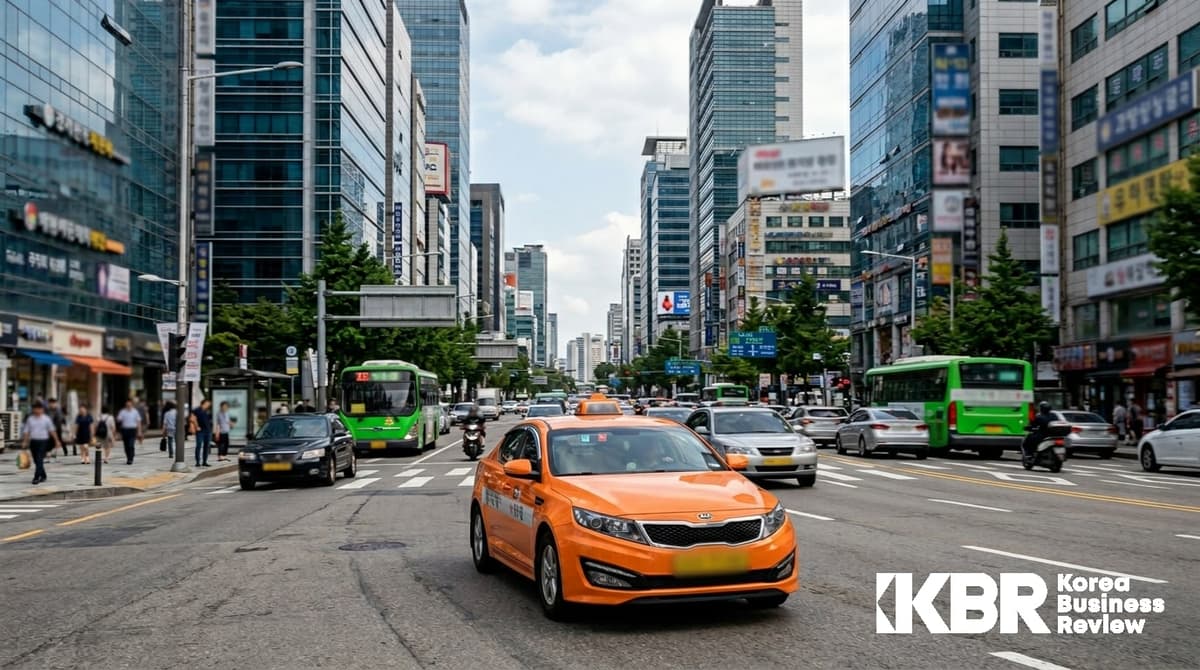
How Apps Changed the Taxi Ecosystem, Leaving the Elderly Behind
Calling a taxi via a smartphone app has already become a part of everyday life in South Korea's cities. According to the "2024 Citizens' Satisfaction Survey on Taxi Use" conducted by the Seoul Metropolitan Government, the proportion of people using smartphone apps to hail taxis in Seoul reached approximately 80%. As major hailing platforms, led by KakaoT, effectively dominate the dispatch structure of the taxi market, traditional methods of hailing empty taxis by raising a hand on the street are gradually being pushed to the periphery of the market, experts note.
The problem is that this transition does not operate as an equal opportunity for all citizens. Pointing out that the elderly, who are unfamiliar with digital devices, find it increasingly difficult to catch a taxi even when standing on the same road at the same time, concerns have been raised everywhere. The core of these concerns is that, coupled with the rapid spread of platform technology, inequality in the right to mobility is quietly deepening in an unnoticeable way.
Digital Information Divide Erodes the Mobility Rights of the Elderly
According to the "2024 Survey on the Digital Divide, Web Accessibility, and Smartphone Overdependence" released in March 2025 by the Ministry of Science and ICT (MSIT) and the National Information Society Agency (NIA), the digital capability level of vulnerable groups stood at 77.5% of the general public as of 2024. Among them, the digital capability level of the elderly rose by about 0.7 percentage points from the previous year (70.7%) to 71.4%, but still fell short of the overall average. Through this survey, the government diagnosed that while the digital divide is generally showing a tapering trend, a digital divide among certain groups, such as the elderly, still remains. Furthermore, the results of the "2025 Survey on the Digital Divide, Web Accessibility, and Smartphone Overdependence" released by the MSIT in March 2026 confirmed that while the level of digital informatization itself improves every year, the information utilization levels of the elderly and low-income groups remain relatively low, showing that the same trend continues.
The essence of this gap lies not simply in whether one owns a smartphone, but in the capability gap regarding whether one can proficiently use the services in practice. Various policy materials and media reports consistently point out that services requiring multiple digital procedures—such as membership registration, registration of payment methods, and consent to the provision of location information, like taxi-hailing apps—can act as higher entry barriers for groups with lower digital capabilities. Ultimately, the analysis that a structure is being formed where the gap in the ability to install and utilize apps directly translates into a gap in mobility accessibility is gaining persuasive traction.
Generational differences are also clearly evident in actual usage patterns. As explained by the Seoul Metropolitan Government based on the "2024 Citizens' Satisfaction Survey on Taxi Use," more than 60% of people in their 20s to 40s hail taxis via apps, whereas about 80% of those aged 60 and older rely on the so-called "cruising operation" method of hailing taxis by raising their hands on the street. Entirely different usage paths are taking root by generation within the same taxi market. The aforementioned digital divide survey supports the background of this gap, showing that the age-based digital informatization level—calculated with the general public set at 100—stops at the high 70% range for those in their 60s and the low 50% range for those aged 70 and older.
The Elderly Left Behind in Street Hailing
For many elderly individuals, the most realistic option remains waiting for an empty taxi on the street or relying on traditional telephone call taxis. However, numerous testimonies indicate that as platform hailing becomes deeply rooted in the market, taxi drivers are increasingly prioritizing dispatches coming through apps. Various media reports have repeatedly introduced the experiences of middle-aged and elderly people stating that vehicles displaying "reserved" signs instead of "empty" signs simply drove past them even when they raised their hands.
In this process, elderly people who rely on street hailing frequently face situations where they have to wait longer or fail to catch a taxi altogether, even when standing at the same time and place. This supports the observation that the issue goes beyond simple inconvenience, edging close to a structural problem where a specific demographic is effectively excluded from a primary means of transportation.
The Shadow of Platform Concentration and Dispatch Algorithms
It is generally evaluated that the domestic taxi-hailing market is solidified into a structure led by a small number of large platforms, including KakaoT. These platform operators enhance dispatch efficiency through algorithms that match supply and demand in real time. However, this system has limitations in that it is fundamentally designed on the premise of calls made through apps or linked call centers.
Consequently, passengers who do not use apps or telephone and web services linked to apps are often not captured as input values in the platform dispatch system. Concerns have been raised that this can structurally widen the gap in waiting times and dispatch success rates between platform users and non-users. Various reports confirm that app-based dispatches often operate as the main route of use during times when demand is concentrated, such as late-night hours or commutes to and from work. At this time, elderly people who cannot use apps are placed in a situation where they must give up using taxis or wait on the street for a much longer time than app users. In other words, a paradox is occurring where the efficiency of the platform actually restricts the mobility rights of a specific demographic.
Responses from Local Governments and the Industry
As awareness of this issue spreads, some local governments and private operators are successively releasing supplementary measures for vulnerable digital groups such as the elderly. The MSIT and the NIA stated that, as part of digital inclusion policies, they are expanding digital education programs targeting the elderly and continuously promoting support measures to boost the digital capabilities of vulnerable groups.
Starting July 7, 2025, the Seoul Metropolitan Government launched a pilot operation of the "Donghaeng Onda Call Taxi" for the digitally marginalized. According to Seoul's explanation, when a user calls a dedicated call center (1855-0120) and states their departure point and destination, a counselor inputs the information into the "Onda Taxi" web dispatch system operated by Tmoney Mobility Co., Ltd. to assign a nearby taxi, and the confirmed dispatch information is delivered via text message or KakaoTalk notification. This service is designed so that anyone can use it without separate membership registration or hailing fees, and Tmoney Mobility, which is in charge of operation, bears the entire system establishment and operating costs while supporting taxi operators with an incentive of 1,000 to 2,000 won per trip. Explaining this project with the intent of enhancing the mobility convenience of the elderly and transportation-vulnerable individuals who are unfamiliar with app hailing, the Seoul Metropolitan Government stated that it would also review expanding the operating hours (9:00 AM to 10:00 PM) to 24 hours after passing the pilot operation period.
Private platforms are also making partial responses. Kakao Mobility announced in 2024 that, in cooperation with the Seoul Digital Foundation, it would produce a series of educational videos on "How to Use KakaoT Taxi" for senior users and carry out a campaign guiding them through step-by-step usage methods such as app installation, hailing, and payment. However, evaluations suggest it is too early to conclude the effectiveness of these attempts, as it has not yet been systematically confirmed through statistics how many elderly people these efforts actually reach and what the regional and demographic variances are.
The Mobility Divide Returns as a Social Cost
The issue of movement restrictions for the elderly can lead to matters directly tied to overall societal costs beyond mere transportation inconvenience. Visiting medical institutions, utilizing welfare and public services, participating in social activities, and purchasing everyday necessities all presuppose a certain level of mobility. Research and policy reports continuously suggest that the poorer the accessibility to public transportation including taxis, the more the health management and social participation of the elderly can contract.
In particular, elderly individuals with limited mobility or chronic illnesses rely heavily on door-to-door transportation such as taxis for regular hospital visits and prescription refills. The issue is handled more gravely because if these groups are pushed out in the hailing competition, they may miss medical treatment times or give up going out altogether, leading to deteriorated health and increased caregiving costs.
South Korea is one of the countries aging at the fastest pace in the world, and the proportion of the elderly population is projected to continue increasing. In this situation, analysis carries weight that the mobility divide generated during the digital conversion process is highly likely to return as a larger scale of social costs and welfare burdens over time. Furthermore, because the right to mobility is closer to a basic condition for maintaining activities and relationship networks as a member of society rather than a mere matter of convenience, it is also pointed out that if a specific generation is structurally excluded from transportation, the impact can spread beyond individual daily life to the overall vitality of the community.
Tasks for Platform Companies and the Public Sector
From a management and policy perspective, platform companies face the task of simultaneously considering service inclusiveness alongside the maximization of efficiency. Analysis indicates that designing alternative access paths for groups alienated from the benefits of digital transformation goes beyond the dimension of corporate social responsibility and is directly linked to the long-term sustainability of the market. As the proportion of the elderly population among all consumers grows, service designs that exclude them or make utilization practically difficult will ultimately result in the self-reduction of the potential market.
On the policy side, sharp pointers emphasize that it is important for platform operators, local governments, and the central government to clearly divide their roles and institutionalize a cooperative structure. This requires a three-dimensional approach, such as flexibly linking telephone and offline channels to the platform dispatch system and designing digital capability education and policies supporting the transportation-vulnerable to interlock together.
There is little disagreement that the starting point is facing the reality that convenience created by technology becomes a barrier of exclusion for certain demographics. To prevent the mobility divide in the era of taxi-hailing apps from becoming entrenched as structural inequality in an aging society, experts' views are converging on the point that the direction the platform economy must pursue lies in specifically designing a dispatch system where efficiency and inclusiveness go hand in hand.